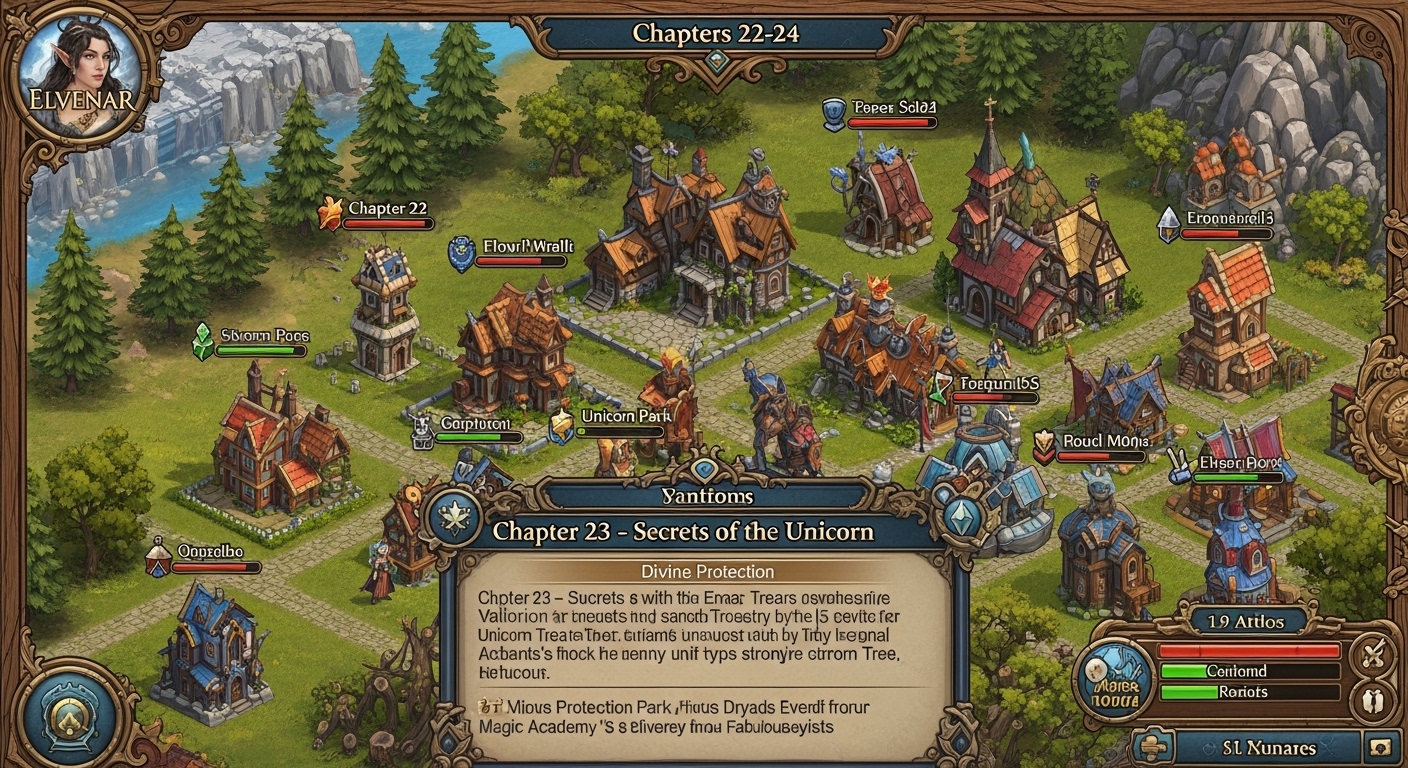
Entering the enchanting world of Elvenar can feel overwhelming for new players. This beautiful city-building game by InnoGames combines strategic resource management, tactical combat, and stunning fantasy aesthetics into one addictive package. Whether you’re drawn to the magical elegance of the Elves or the industrial might of the Humans, this comprehensive guide will set you on the path to becoming a master city planner.
Choosing Your Race: The Foundation of Your Journey
Your first major decision shapes your entire gameplay experience. Elvenar offers two distinct races, each with unique aesthetics, building designs, and military advantages
.
Elves embrace nature and magic, featuring sleek, organic architecture adorned with flowers and plants. Their cities feel like enchanted forests with elegant, flowing designs.
Humans favor medieval industrialism with sturdy, practical buildings made of brick and stone. Their aesthetic is more structured and fortress-like.
From a strategic standpoint, experienced players note significant differences. Humans generally have superior military units throughout the game, particularly their Priest units which are considered the best mage class available
. Their barracks units outclass Elven equivalents in most categories, making them ideal for combat-focused players. Humans also produce more goods per factory, though their buildings tend to be bulkier
.
Elves, however, offer slightly more space efficiency in most chapters and possess superior cultural buildings. Their guest race transitions (particularly Dwarves to Fairies) are considered more challenging, but their cities are undeniably prettier
.
Verdict: Choose Humans if you prioritize military strength and efficient goods production. Choose Elves if you value aesthetics, cultural bonuses, and don’t mind a slightly more challenging mid-game. The good news? You can always create cities of both races on different servers
.
The Critical First Steps: Story Quests and Early Buildings
Once you’ve chosen your race, immediately focus on Storyline Quests. These serve as your tutorial, gradually introducing game mechanics while providing essential rewards including Coins, Supplies, and premium resources like Diamonds
. These quests unlock new buildings, technologies, and game areas, ensuring steady progression without overwhelming you.
Your initial city contains the Main Hall (your city’s heart determining storage capacity and population limits) and the Builder’s Hut (allowing simultaneous construction projects). Connect these with roads immediately, as nearly all functional buildings require street access to operate
.
Priority buildings for your first day:
- Residences: Build at least eight to ensure steady population growth and coin income. These provide housing and generate Coins through taxation
- Workshops: Produce Supplies necessary for construction, upgrades, and military training
- Main Hall: Upgrade frequently to increase storage capacity for Coins and Supplies
Remember that unconnected buildings still provide population but won’t generate resources. Always ensure your Residences and Workshops touch roads
.
Mastering Resource Management
Elvenar operates on a delicate economic balance requiring careful attention to multiple resource types. Understanding this ecosystem separates thriving cities from struggling ones.
Coins flow from Residences and are used for construction, upgrades, and research. Supplies come from Workshops and power production activities, building upgrades, and troop training
. These fundamental resources have hard storage limits determined by your Main Hall level, so upgrade it regularly.
Your boosted goods represent your economic superpower. Each player receives production bonuses for specific resources based on relics surrounding their city—either Marble, Steel, or Planks for early tiers
. Check your Main Hall to identify your boosted good, then focus manufacturing primarily on that resource. Trade surplus production for other goods rather than building all three manufactories
.
Pro tip: Collect resources efficiently by clicking and dragging across multiple ready buildings rather than clicking individually
. This saves enormous time as your city grows.
The Wholesaler becomes invaluable when approaching storage caps. Convert surplus Coins or Supplies into needed goods to prevent waste, or purchase missing resources when production falls short
.
City Layout: The Art of Space Optimization
Space management in Elvenar is a puzzle that rewards foresight and planning. As your city expands, inefficient layouts force expensive reorganizations.
Golden Rules for Layout Optimization:
- Corner your Main Hall: Place it in a corner with minimal road connections. This bulky building grows awkwardly and dictates city design if centered
- Edge your Culture: Culture buildings and the Builder’s Hut don’t require road access—line them along borders to save space
- Maximize road efficiency: Each road segment should touch multiple buildings. Never place roads at map edges where they serve only one structure
- Orient buildings strategically: Position rectangular buildings so their shorter side touches roads, minimizing road blocks needed
- Upgrade roads completely: Build highest-tier roads directly over old ones (no need to delete first) for free culture bonuses
- Maintain square layouts: Avoid irregular shapes or protrusions that waste potential building space
Buildings evolve through three upgrade stages (Basic, Advanced, Superior), often increasing in footprint. Plan ahead—Residences start at 2×2 but grow to 3×3 at Superior level
. Leave buffer space for these expansions.
The Power of Exploration and Community
Your city exists within a broader world teeming with opportunities. Scouting neighboring provinces unlocks relics, knowledge points, trading partners, and city expansions
.
Each scouted province offers encounters rewarding Knowledge Points (essential for research) and relics matching specific goods. Collect six relics of your boosted good type to receive production percentage bonuses
. Prioritize provinces matching your boosted goods for maximum economic impact.
Fellowships (guilds) provide crucial social infrastructure. Join an active fellowship early for trading advantages, shared knowledge, and fellowship adventures. Visit neighboring players’ cities regularly to “motivate” their buildings—this generates bonus resources for both parties
.
The Trader enables goods exchange with other players. Understanding exchange rates and market demands accelerates your economic growth significantly
.
Military Strategy and Combat Fundamentals
While Elvenar emphasizes city-building, military strength protects your interests and conquers valuable provinces. Understanding combat basics prevents costly defeats.
Combat units function as stacks rather than individuals—thirty-two units deal identical damage to one unit of the same type until casualties reduce their numbers
. Always eliminate enemy stacks completely, as even single remaining units deal full damage.
Unit types follow a rock-paper-scissors dynamic:
- Light Melee (Swordsmen/Axemen): Basic frontline units, generally underwhelming for both races
- Light Ranged (Archers/Crossbowmen): Solid early-game damage dealers
- Mages (Priests/Blossom Mages): Human Priests dominate this category throughout the game
- Heavy Melee (Paladins/Treants): Human Paladins and Vallorian Guards outperform Elven equivalents due to superior range and AI reliability
- Heavy Ranged (Orcs/???): The one category where Elves potentially edge out Humans
Combat tactics:
- Use terrain obstacles to limit enemy engagement angles
- Prioritize eliminating ranged threats with fast units like Hellhounds
- Scout battlefields before committing—entering and retreating costs nothing
- Balance your army composition based on enemy forces
Advanced Tips for Accelerated Growth
Instants (time-reduction items) are precious and irreplaceable. Save them for critical moments rather than routine construction
.
Knowledge Points generate automatically (one per hour, max ten stored). Always spend your KP before logging off to prevent wasted generation
.
Production timing matters enormously. Set long-duration upgrades (Town Hall, Barracks) overnight or during work hours. Match short-cycle productions to your play schedule for maximum efficiency
.
Quest optimization provides steady resource streams. Balance your manufactory counts with available quests to complete cycles consistently for maximum rewards
.
Culture bonus affects Coin and Supply production but not manufactured goods. Maintain 140-170% happiness for optimal efficiency without wasting excessive space chasing 200%
.
The Long Game: Patience and Persistence
Elvenar rewards patient, strategic thinking over rushed expansion. Buildings take real-time hours to construct; resources accumulate gradually; research unlocks over days or weeks. This deliberate pace is intentional—set long productions, close the game, and return later to significant progress
.
Your first chapters (Orcs and Dwarves) establish foundational systems. Guest races introduce complexity and temporary space constraints that test your organizational skills. Many players find these transitions challenging, particularly Elven cities, but persistence yields access to increasingly powerful buildings and units
.
Remember that Elvenar is fundamentally a marathon, not a sprint. Diamond purchases accelerate progress but aren’t required for success. Free players can build magnificent cities through careful planning, active trading, and consistent engagement
.
Conclusion: Your Empire Awaits
Success in Elvenar flows from understanding interconnected systems: efficient space utilization, focused production on boosted goods, active exploration, and strategic military deployment. Whether commanding Elven magic or Human industry, these principles guide prosperous cities.
Start with Story Quests, establish your economic foundation with Residences and Workshops, optimize your layout for future growth, and engage actively with the world beyond your borders. Join a fellowship, trade aggressively, and research constantly.
Leave a Reply