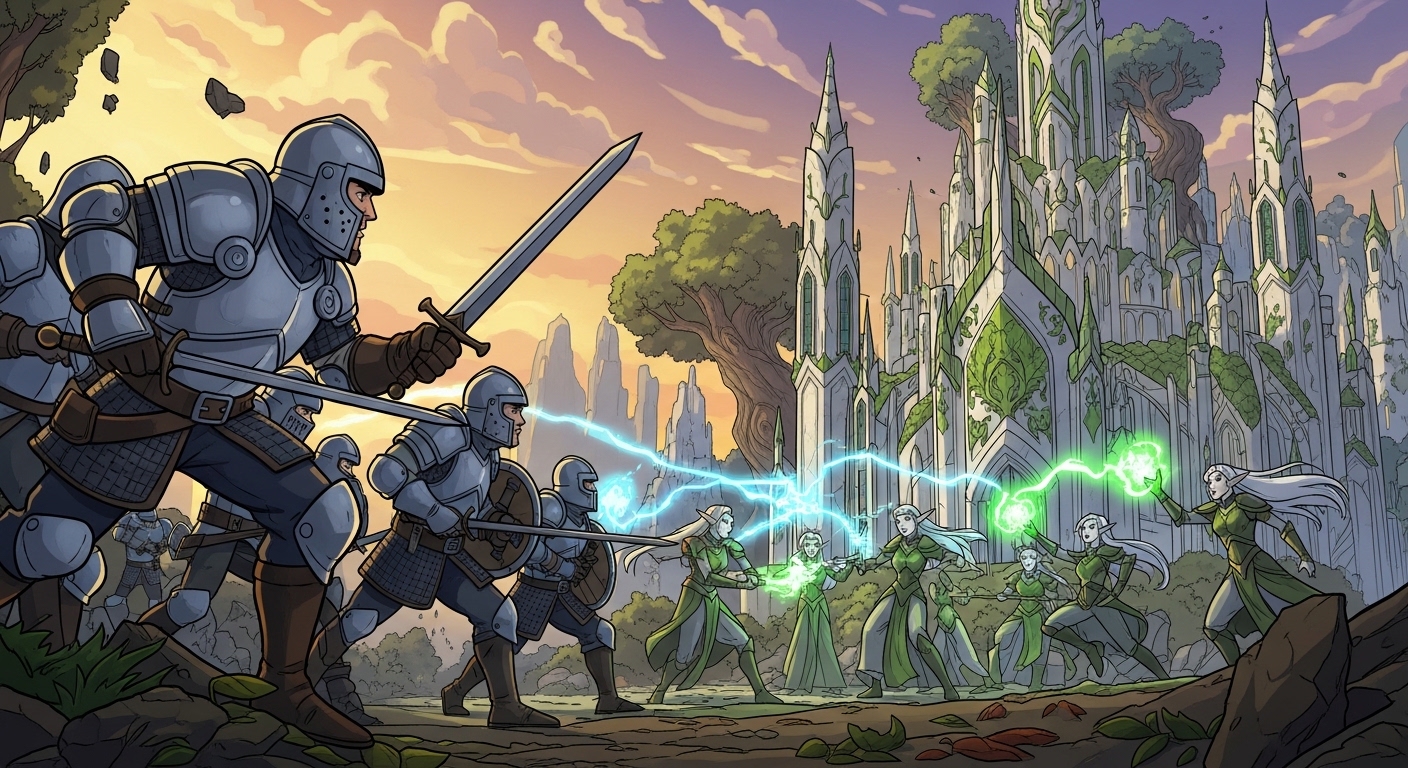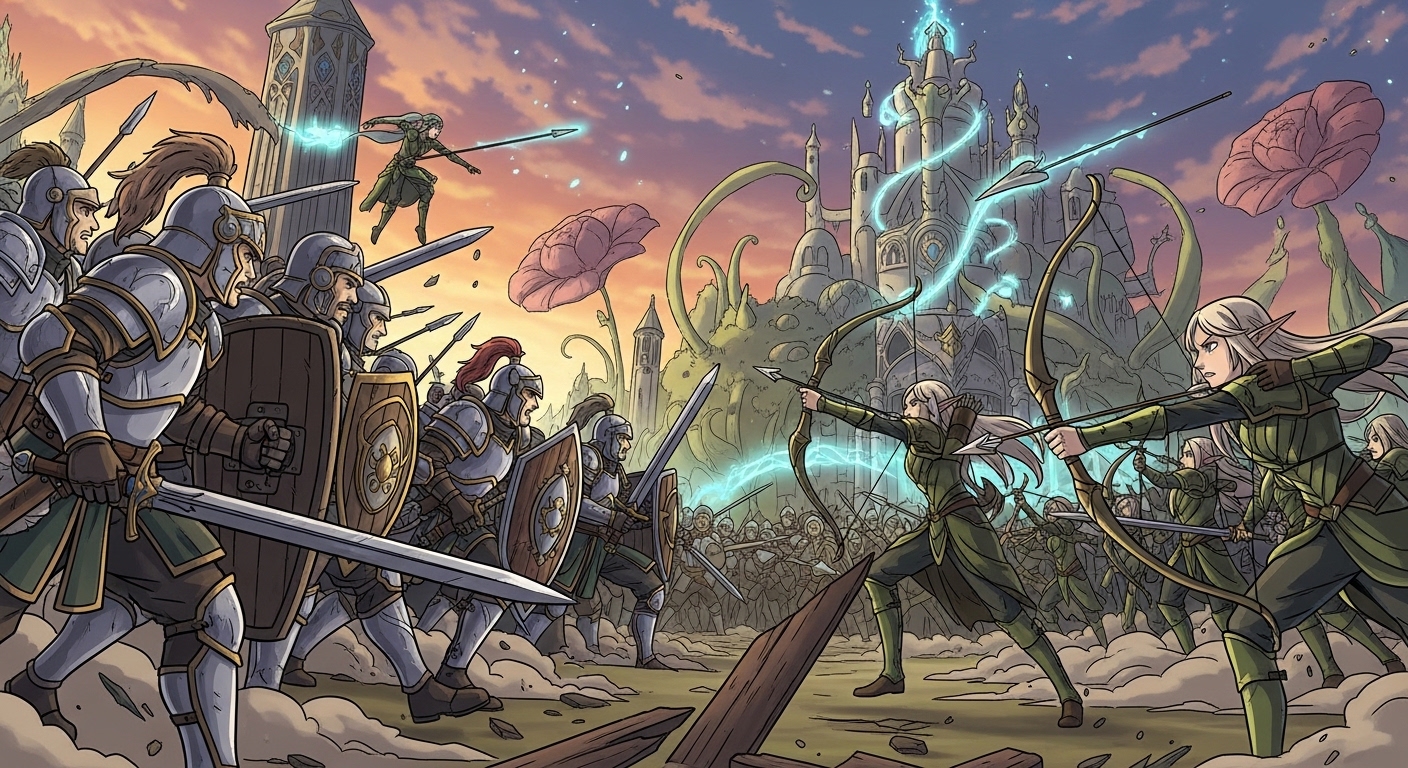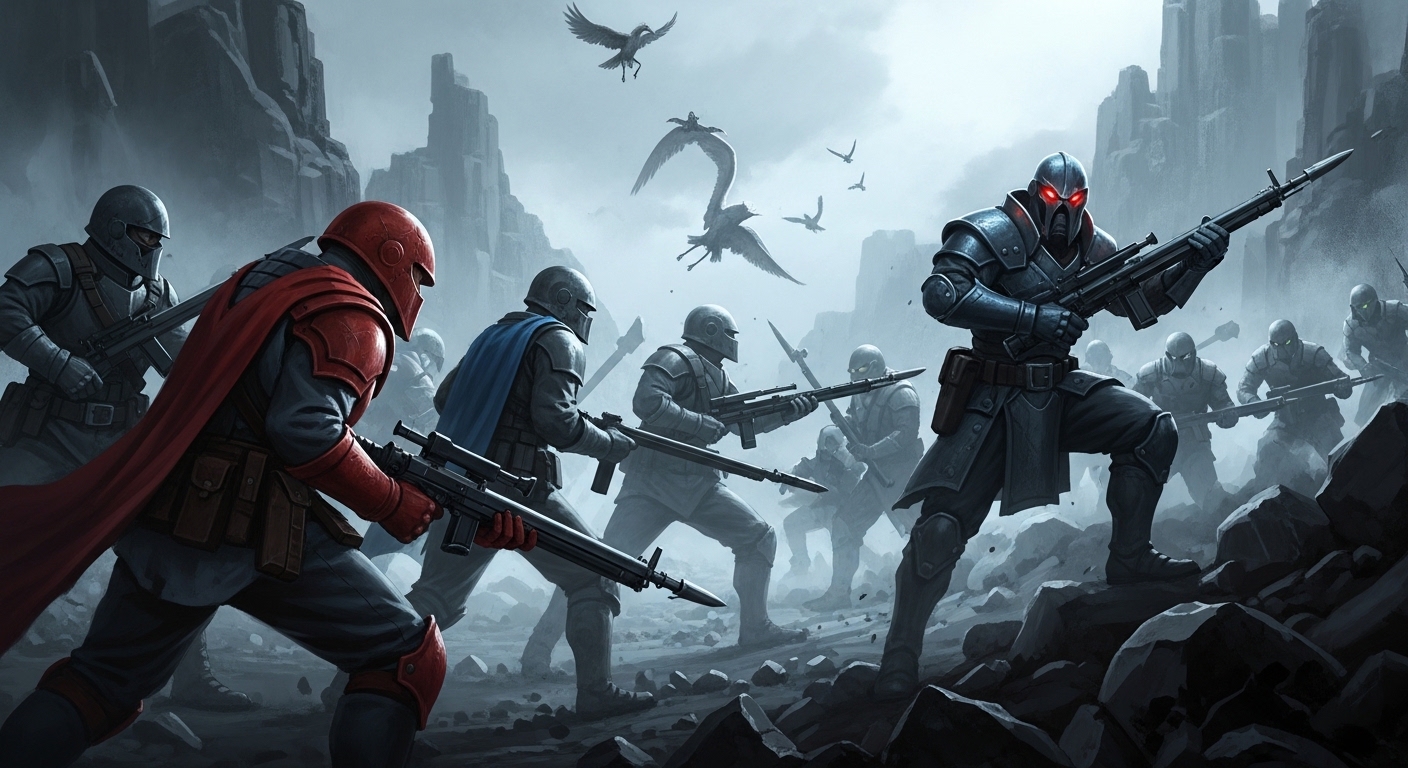
Tag: #playnow #joinnow #gamingfun #gamelovers

  • The Complete Elvenar Barracks Guide: Mastering Military Production and Troop Training

    The Complete Elvenar Barracks Guide: Mastering Military Production and Troop Training

    Military might in Elvenar flows from three distinct training facilities, each producing specialized units that dominate different battlefield scenarios. Understanding how to optimize your Barracks, Training Grounds, and Mercenary Camp transforms struggling armies into unstoppable forces capable of conquering tournaments, spires, and world map provinces. This comprehensive guide explores every aspect of military production to accelerate your city’s martial development.

    Understanding the Three Military Buildings

    Elvenar features a trio of training facilities that unlock progressively through research, each serving distinct strategic purposes

    .

    The Barracks represents your foundational military structure, available immediately after completing initial research. It produces “generalist” troops—the basic Light Melee, Light Ranged, Heavy Melee, and Mage units that form your army’s backbone

    . These units offer balanced performance across various situations without excelling in specific matchups.

    The Training Grounds unlocks in Chapter 2 alongside your first specialized unit, the Cerberus

    . This facility produces specialized troops including Cerberus, Dryad, Banshee, Orc Warrior, and Orc Strategist—units designed for specific tactical roles rather than general combat

    .

    The Mercenary Camp becomes available later, offering the game’s most powerful specialized units. For Elves, this means Rangers (superior Light Ranged), Blossom Mages (elite magical units), and Valorian Guards (enhanced Heavy Melee). Humans gain access to Frog Princes (devastating Heavy Ranged) and other premium troops

    .

    Each building operates independently with separate training queues, meaning you can simultaneously produce nine different unit types across three facilities. Neglecting any single building reduces your total army production by 33%, creating significant long-term disadvantages

    .

    Barracks Mechanics and Optimization

    Your Barracks serves as the primary training facility throughout early chapters, with upgrade paths extending through 42+ levels

    . Each upgrade reduces training time and potentially increases available training slots, allowing more simultaneous production queues.

    Training Slots represent your production capacity. The Barracks starts with limited slots and gains additional ones as you upgrade, eventually supporting up to 5 simultaneous training queues

    . These slots operate independently—when one finishes training, the next begins automatically, creating continuous production chains.

    Training Size determines how many units fit in each slot. The base training size of 6 means each slot accommodates units totaling weight 6—six Axe Barbarians (weight 1 each) or one Paladin (weight 6)

    . This weight system creates important production considerations: light units train in bulk while heavy units consume entire slots for single squads.

    Armories expand your training capacity beyond base limits. Each Armory increases the training size of slots across all military buildings, allowing more units per training cycle

    . Strategic Armory placement and upgrades dramatically accelerate army replenishment rates.

    From Chapter XXI – The Vallorian Legend onward, Barracks contribute to Prosperity generation—a special requirement for constructing certain chapter buildings

    . This adds economic value to military infrastructure, making Barracks upgrades valuable even for primarily peaceful players.

    Training Speed vs. Training Size: The Critical Balance

    Two distinct mechanics govern troop production efficiency, and understanding their interaction separates expert commanders from novices.

    Training Speed determines how quickly units complete training. Higher speed means faster replenishment and shorter queue times. The Needles of the Tempest Ancient Wonder specifically accelerates Barracks training by up to 40%, while Victory Springs (Training Grounds) and Flying Academy (Mercenary Camp) provide similar benefits for their respective facilities

    .

    Training Size determines how many units you receive per completed training slot. Larger training size means more troops per collection but longer individual training times. The Shrine of Shrewdy Shrooms and Dwarven Bulwark Ancient Wonders increase training size significantly

    .

    The optimal balance depends on your play schedule. Players checking frequently benefit from high speed and moderate size, enabling multiple daily collections. Players with limited access prefer massive training sizes that sustain overnight production without constant reloading

    .

    Expert players aim for 10-15 hour total queue times across all slots—long enough to sustain overnight production but short enough to prevent idle time during active play

    . Achieving this requires careful coordination between building upgrades, Ancient Wonder levels, and Armory counts.

    Unit Specialization and Strategic Deployment

    Each military building produces units optimized for specific tactical roles, and understanding these specializations enables battlefield dominance.

    Barracks Units serve as generalists. Human Priests (Mages) and Paladins (Heavy Melee) rank among the best barracks troops, with Priests considered the premier mage unit throughout the game

    . Elven Treants and Golems provide solid Heavy Melee options, though they generally underperform Human equivalents

    .

    Training Grounds Units fill tactical niches. Cerberus (Light Melee) excel against mages but suffer from low initiative. Orc Strategists (Heavy Ranged) outperform standard Mortars significantly, making them essential for Human players

    . Dryads and Banshees provide specialized magical support, though their fragility limits general utility

    .

    Mercenary Camp Units dominate competitive play. Rangers (Light Ranged) offer superior range, initiative, and counterattack capabilities compared to standard Archers

    . Blossom Mages (Elves) provide the best magical offense available, while Frog Princes (Humans) deliver devastating Heavy Ranged damage

    . Valorian Guards give Elves competitive Heavy Melee options despite general racial disadvantages in that category

    .

    The strategic implication is clear: Mercenary Camp units should comprise your primary fighting force whenever possible, with Barracks and Training Grounds troops filling gaps or providing specific counter-matchups

    .

    Race-Specific Considerations

    Human and Elven military structures produce different units with distinct tactical implications.

    Human Advantages: Human Barracks units generally outperform Elven equivalents, particularly Priests (superior mages) and Paladins (better Heavy Melee)

    . Human players can delay Mercenary Camp construction longer than Elves, as their Barracks troops remain competitive through mid-game

    .

    Elven Advantages: Elven Mercenary Camp access becomes critical earlier. Blossom Mages immediately outclass Sorceresses, and Rangers dominate Light Ranged combat

    . Elven players should prioritize Mercenary Camp construction as soon as available, even sacrificing Training Grounds temporarily if space-constrained

    .

    Both races benefit from maintaining all three military buildings eventually. The “build only Barracks” strategy severely limits tactical flexibility and total production capacity, hobbling tournament and spire performance

    .

    Ancient Wonders and Military Optimization

    Several Ancient Wonders dramatically impact military production and effectiveness:

    Needles of the Tempest: Essential for any fighting city, this wonder accelerates Barracks training while boosting Light Range unit damage

    . Prioritize early construction and steady upgrades.

    Flying Academy: The Mercenary Camp equivalent, reducing training time while enhancing Light Melee damage. Critical for Elven players relying on Blossom Mages and Rangers

    .

    Victory Springs: Training Grounds acceleration with Heavy Melee damage bonuses. Less universally essential but valuable for specific tournament types

    .

    Simia Sapiens: Considered the best overall military wonder, providing massive training speed increases across all facilities

    . Late-game acquisition but transformative impact.

    Shrine of Shrewdy Shrooms: Increases training size while producing Archer units. Synergizes with heavy Armory strategies

    .

    Dwarven Bulwark: Alternative training size booster using squad size rather than Armory levels. Often superior for players with limited Armory investments

    .

    Martial Monastery/Sanctuary: Increases troop health, reducing battlefield losses and effectively amplifying your total army size through better survival rates

    .

    Advanced Training Techniques

    Queue Management: Maintain continuous production by queuing multiple training slots before collection. When the first slot finishes, immediately add another to prevent idle time

    . Set phone timers for Barracks completion when running extended queues

    .

    Brown Bear Exploitation: The Brown Bear pet doubles troop collection when fed, effectively providing 5-10 bonus squads per activation

    . Coordinate feeding with time booster usage—activate the bear, collect massive troop reserves, then use time instants to replenish training queues before the buff expires

    .

    Time Booster Optimization: Save 5-hour and 2-hour time instants for intensive military pushes. Apply them to Mercenary Camp or Training Grounds specifically when you need specialized troops for upcoming tournaments

    .

    Temporary Armory Deployment: Place temporary Armories before heavy tournament weeks to boost Shrine of Shrewdy Shrooms effectiveness, then remove them afterward to reclaim space

    .

    Supply Management and Sustainability

    Training troops consumes enormous Supplies, creating economic constraints that limit military development. A city running three military buildings 24/7 requires 8+ fully upgraded Workshops or equivalent supply generation from Ancient Wonders and event buildings

    .

    Supply optimization strategies:

    • Prioritize Workshop upgrades alongside military buildings
    • Construct Endless Excavation and Tome of Secrets Ancient Wonders for passive supply generation
    • Utilize Prosperity Towers if available in your chapter
    • Balance troop production with economic capacity—running all three buildings continuously wastes resources if you cannot sustain the supply drain

    Common Military Mistakes

    Building Only Barracks: This cripples your tactical options and reduces total production by 66%. All three buildings are essential for competitive play

    .

    Ignoring Training Grounds: Modern updates made Training Grounds viable, especially for Orc Strategist and Cerberus production. Dismissing this building reflects outdated thinking

    .

    Neglecting Ancient Wonders: Military wonders provide multiplicative benefits that compound over time. Delaying Needles of the Tempest or Flying Academy construction creates permanent disadvantages.

    Over-Specializing: While Mercenary Camp troops are generally superior, situations exist where Barracks or Training Grounds units excel. Maintaining diverse reserves enables optimal tactical responses.

    Poor Queue Management: Allowing training slots to sit idle wastes potential production. Check military buildings at least twice daily to maintain continuous queues.

    Conclusion: The Path to Military Mastery

    Barracks mastery in Elvenar requires understanding that military power flows from three distinct sources, each requiring investment and optimization. Your Barracks provides foundational generalists, the Training Grounds offers tactical specialists, and the Mercenary Camp delivers elite units that dominate competitive content.

    Success demands balancing training speed and size through Ancient Wonder selection, maintaining continuous production queues, and managing the supply economy that sustains your war machine. Race-specific considerations guide build priorities—Humans enjoy superior Barracks troops while Elves depend earlier on Mercenary Camp access.

    Remember that military might serves broader city goals. Tournament participation generates Knowledge Points and relics. Spire conquest yields precious artifacts and resources. World map expansion unlocks new territories and rewards. Your Barracks and supporting military infrastructure enable these achievements, transforming your city from peaceful settlement to regional superpower.
  • The Complete Elvenar Workshop Guide: Mastering Supply Production and City Efficiency

    The Complete Elvenar Workshop Guide: Mastering Supply Production and City Efficiency

    Workshops form the industrial backbone of every successful Elvenar city, transforming raw population into the Supplies that fuel virtually every aspect of civilization. From training armies to constructing wonders, Supplies serve as the universal lubricant of progress. Mastering workshop placement, upgrade timing, and production optimization separates thriving metropolises from struggling villages.

    Understanding Workshop Fundamentals

    Workshops in Elvenar produce Supplies, a fundamental resource required for virtually every city activity

    . Unlike Coins that flow from Residences through taxation, Supplies must be actively manufactured through production cycles ranging from brief 5-minute bursts to extended 24-hour operations.

    Your workshops represent significant space investments that evolve dramatically throughout the game. Early workshops occupy modest footprints, but as you advance through chapters, they expand considerably—Elven workshops transition from 3×2 to 3×6 to 4×5 configurations, while Human workshops follow similar growth patterns

    . This dimensional evolution creates ongoing layout challenges that demand forward-thinking city planning.

    The production efficiency of workshops scales with your Culture Bonus, which can elevate base output to 150% or 170% of standard rates

    . However, unlike Manufactories that produce goods, workshops respond differently to cultural influence—while they benefit from happiness bonuses, the space required to achieve high culture percentages must be balanced against production gains.

    Optimal Workshop Count and Placement

    Determining your ideal workshop count requires balancing multiple factors: chapter requirements, play style, and available space. Veteran players generally recommend 6-8 workshops as the sweet spot for most city development stages

    .

    Why this range works:

    Six workshops provide sufficient supply generation for players who check in regularly and utilize short-cycle productions efficiently. Eight workshops offer buffer capacity for intensive building periods, heavy military training, or less frequent play schedules. Some aggressive builders maintain up to ten workshops temporarily during rapid expansion phases, reducing count once development stabilizes .

    Placement strategy demands careful attention to road efficiency. Workshops, like most production buildings, must connect to roads to function. Position workshops so their shorter sides touch road segments, maximizing the number of buildings served by each road tile

    . For example, orient 3×2 workshops with their length-2 side against roads rather than the length-3 side, reducing total road requirements by 33%.

    Cluster workshops together near cultural buildings that boost production, but avoid isolating them from residential areas—you’ll need the population they provide to operate your industrial sector.

    Production Cycle Optimization

    Workshops offer multiple production durations, each with distinct efficiency characteristics. Understanding these trade-offs enables dramatic supply generation improvements.

    Short cycles (5-15 minutes) deliver maximum hourly output but demand constant attention. The theoretical maximum—running 5-minute productions for 14 hours daily—generates extraordinary supplies but requires obsessive engagement

    . Realistically, most players achieve 6-8 collections daily, making intermediate cycles more practical.

    Medium cycles (3-9 hours) align with typical play patterns. The 3-hour cycle allows 6-8 daily collections for active players, while 9-hour cycles suit overnight or workday schedules

    . These cycles offer superior efficiency to very short productions while maintaining reasonable flexibility.

    Long cycles (24 hours) provide minimal hourly returns but ensure some production during extended absences. Reserve these for vacations or exceptionally busy periods rather than routine operation.

    Critical insight: Production efficiency increases with cycle length up to a point, but the relationship isn’t linear. The 3-hour cycle typically offers the best balance of efficiency and practicality for regular play, while 9-hour cycles optimize overnight production

    .

    The Magic Workshop Advantage

    As your city matures, Magic Workshops become available—superior versions offering enhanced production, reduced space requirements, and additional benefits. These precious buildings are acquired through Spire of Eternity participation, crafting, or special events

    .

    Magic Workshops provide substantially greater supply output than standard workshops while occupying comparable or reduced footprints. They also generate Prosperity from Chapter XXI onward, adding another resource stream to your economy

    . From Chapter XXII, upgraded Magic Workshops produce Canned Goods through 9-hour productions, replacing the standard “Toolbox” option

    .

    Acquisition strategy: Prioritize Spire of Eternity participation to maximum levels. The Laboratory (third boss) offers Magic Workshop blueprints as potential rewards, while crafting rotations occasionally feature these coveted items

    . Fellowships with active Spire participants create opportunities for blueprint exchanges and strategic advice.

    Upgrading Magic Workshops requires Blueprints—rare items obtained through tournaments, Spire chests, or crafting

    . Save these for critical upgrades rather than spending impulsively, as blueprint scarcity often limits Magic Workshop development more than other resources.

    Workshop Efficiency Calculations

    Space efficiency represents the ultimate workshop optimization metric. Consider not just the building’s footprint, but associated requirements: roads, culture, and population support

    .

    Total Space Cost = Building footprint + Road requirements + Culture space needed for target bonus + Population space (residences) to operate the workshop

    Advanced analysis reveals that achieving 170% culture bonus consistently outperforms 150% for supply production, unlike coin generation where 150% often suffices

    . The additional culture investment returns greater supply dividends, making the extra space commitment worthwhile.

    Comparative efficiency example: An Endless Excavation Ancient Wonder (5×4, 20 squares) at level 2 generates approximately 36,000 supplies daily without requiring population or culture support

    . A level 20 standard workshop (3×6, 18 squares plus roads and culture) produces roughly 19,000 supplies daily with six collections

    . The Ancient Wonder proves more space-efficient despite comparable footprints, as it eliminates supporting infrastructure requirements.

    This mathematics suggests that cities should eventually replace workshops with supply-generating Ancient Wonders where possible, freeing considerable space for other purposes.

    Chapter-Specific Workshop Strategies

    Early chapters (1-5) demand aggressive workshop expansion. Build 6-8 workshops quickly and upgrade them steadily to meet escalating supply requirements for research and building construction

    . Don’t hesitate to overbuild slightly—surplus supplies enable faster progression, while shortages create frustrating bottlenecks.

    Guest race chapters (Dwarves onward) introduce complexity. These chapters require massive goods production that indirectly demands supplies for manufactory operation. Maintain workshop counts at the higher end of your range (8+) during these periods, as supply demands spike dramatically

    . Consider temporarily teleporting workshops to inventory if space constraints force choices between guest race facilities and standard production—restore them once guest race chapters conclude

    .

    Modern chapters (XVII+) see workshop evolution into multi-resource buildings. From Chapter XXI, workshops contribute to Prosperity generation; from Chapter XXII, they produce Canned Goods

    . These additions transform workshops from simple supply generators into complex resource nodes requiring recalibrated placement and upgrade priorities.

    Workshop vs. Manufactory: Strategic Balance

    New players often conflate workshops with manufactories, but these serve fundamentally different purposes. Workshops produce Supplies; manufactories produce Goods (Marble, Steel, Planks, etc.)

    . Both require population and culture, but their strategic positioning differs.

    Manufactories should focus exclusively on your boosted good—the resource receiving production bonuses from collected relics

    . Workshops have no boost mechanic, making them universally consistent regardless of your city’s specific bonuses.

    Space allocation between these building types shifts throughout your Elvenar career. Early cities need relatively more workshops to establish supply reserves; mature cities with Ancient Wonder support can reduce workshop counts while maintaining or increasing manufactory space for tournament and trading dominance

    .

    Event buildings further complicate this balance. Many special buildings provide population and supplies simultaneously, potentially replacing both residences and workshops in efficient layouts

    . Prioritize these multi-function structures when available, as they dramatically improve space utilization.

    Advanced Workshop Techniques

    Quest cycling represents the most sophisticated supply generation strategy. By repeatedly completing and resetting certain quest types, players generate massive supply windfalls beyond standard production

    . This technique requires specific city configurations and active management but can eliminate supply constraints entirely for dedicated practitioners.

    Time booster optimization accelerates workshop production dramatically. Save 5-hour and 2-hour time instants for intensive building periods, applying them to workshops just before collection to compress production cycles

    . A single 5-hour instant applied to a 3-hour production cycle effectively doubles output for that slot.

    Workshop scheduling aligns production with your daily routine. Set 9-hour productions before sleep or work; collect and restart 3-hour productions during active play sessions; reserve 5-minute cycles for periods of intense engagement when you can monitor completion

    .

    Common Workshop Mistakes

    Over-building early: While workshops are essential, excessive early construction wastes space better allocated to cultural buildings or manufactories. Six well-managed workshops outperform ten poorly scheduled ones.

    Under-upgrading: Workshop upgrades provide substantial efficiency gains. Prioritize workshop upgrades alongside residence improvements, as outdated workshops drain population without commensurate production returns

    .

    Ignoring culture impact: Workshops respond significantly to culture bonuses. Cities running below 150% culture bonus waste substantial potential supply generation. Invest in cultural buildings before adding additional workshops

    .

    Neglecting road efficiency: Poorly placed workshops requiring excessive road tiles waste 10-20% of potential building space. Always orient workshops to minimize road contact while maintaining functionality.

    Static workshop counts: Your optimal workshop number changes throughout your Elvenar journey. Regularly reassess whether your current count matches your chapter requirements and play style, adjusting as necessary.

    Conclusion: The Workshop Mindset

    Workshops in Elvenar embody the game’s core philosophy: patient, strategic investment yields exponential returns. These humble buildings transform population and time into the supplies that build wonders, train armies, and advance civilizations. Mastering workshop management—through optimal counts, efficient placement, cycle timing, and eventual Magic Workshop acquisition—creates the resource foundation for every other city achievement.

  • The Ultimate Elvenar Beginner’s Strategy Guide: Building Your Fantasy Empire from the Ground Up

    The Ultimate Elvenar Beginner’s Strategy Guide: Building Your Fantasy Empire from the Ground Up

    Entering the enchanting world of Elvenar can feel overwhelming for new players. This beautiful city-building game by InnoGames combines strategic resource management, tactical combat, and stunning fantasy aesthetics into one addictive package. Whether you’re drawn to the magical elegance of the Elves or the industrial might of the Humans, this comprehensive guide will set you on the path to becoming a master city planner.

    Choosing Your Race: The Foundation of Your Journey

    Your first major decision shapes your entire gameplay experience. Elvenar offers two distinct races, each with unique aesthetics, building designs, and military advantages

    .

    Elves embrace nature and magic, featuring sleek, organic architecture adorned with flowers and plants. Their cities feel like enchanted forests with elegant, flowing designs.

    Humans favor medieval industrialism with sturdy, practical buildings made of brick and stone. Their aesthetic is more structured and fortress-like.

    From a strategic standpoint, experienced players note significant differences. Humans generally have superior military units throughout the game, particularly their Priest units which are considered the best mage class available

    . Their barracks units outclass Elven equivalents in most categories, making them ideal for combat-focused players. Humans also produce more goods per factory, though their buildings tend to be bulkier

    .

    Elves, however, offer slightly more space efficiency in most chapters and possess superior cultural buildings. Their guest race transitions (particularly Dwarves to Fairies) are considered more challenging, but their cities are undeniably prettier

    .

    Verdict: Choose Humans if you prioritize military strength and efficient goods production. Choose Elves if you value aesthetics, cultural bonuses, and don’t mind a slightly more challenging mid-game. The good news? You can always create cities of both races on different servers

    .

    The Critical First Steps: Story Quests and Early Buildings

    Once you’ve chosen your race, immediately focus on Storyline Quests. These serve as your tutorial, gradually introducing game mechanics while providing essential rewards including Coins, Supplies, and premium resources like Diamonds

    . These quests unlock new buildings, technologies, and game areas, ensuring steady progression without overwhelming you.

    Your initial city contains the Main Hall (your city’s heart determining storage capacity and population limits) and the Builder’s Hut (allowing simultaneous construction projects). Connect these with roads immediately, as nearly all functional buildings require street access to operate

    .

    Priority buildings for your first day:

    • Residences: Build at least eight to ensure steady population growth and coin income. These provide housing and generate Coins through taxation
    • Workshops: Produce Supplies necessary for construction, upgrades, and military training
    • Main Hall: Upgrade frequently to increase storage capacity for Coins and Supplies

    Remember that unconnected buildings still provide population but won’t generate resources. Always ensure your Residences and Workshops touch roads

    .

    Mastering Resource Management

    Elvenar operates on a delicate economic balance requiring careful attention to multiple resource types. Understanding this ecosystem separates thriving cities from struggling ones.

    Coins flow from Residences and are used for construction, upgrades, and research. Supplies come from Workshops and power production activities, building upgrades, and troop training

    . These fundamental resources have hard storage limits determined by your Main Hall level, so upgrade it regularly.

    Your boosted goods represent your economic superpower. Each player receives production bonuses for specific resources based on relics surrounding their city—either Marble, Steel, or Planks for early tiers

    . Check your Main Hall to identify your boosted good, then focus manufacturing primarily on that resource. Trade surplus production for other goods rather than building all three manufactories

    .

    Pro tip: Collect resources efficiently by clicking and dragging across multiple ready buildings rather than clicking individually

    . This saves enormous time as your city grows.

    The Wholesaler becomes invaluable when approaching storage caps. Convert surplus Coins or Supplies into needed goods to prevent waste, or purchase missing resources when production falls short

    .

    City Layout: The Art of Space Optimization

    Space management in Elvenar is a puzzle that rewards foresight and planning. As your city expands, inefficient layouts force expensive reorganizations.

    Golden Rules for Layout Optimization:

    1. Corner your Main Hall: Place it in a corner with minimal road connections. This bulky building grows awkwardly and dictates city design if centered
    2. Edge your Culture: Culture buildings and the Builder’s Hut don’t require road access—line them along borders to save space
    3. Maximize road efficiency: Each road segment should touch multiple buildings. Never place roads at map edges where they serve only one structure
    4. Orient buildings strategically: Position rectangular buildings so their shorter side touches roads, minimizing road blocks needed
    5. Upgrade roads completely: Build highest-tier roads directly over old ones (no need to delete first) for free culture bonuses
    6. Maintain square layouts: Avoid irregular shapes or protrusions that waste potential building space

    Buildings evolve through three upgrade stages (Basic, Advanced, Superior), often increasing in footprint. Plan ahead—Residences start at 2×2 but grow to 3×3 at Superior level

    . Leave buffer space for these expansions.

    The Power of Exploration and Community

    Your city exists within a broader world teeming with opportunities. Scouting neighboring provinces unlocks relics, knowledge points, trading partners, and city expansions

    .

    Each scouted province offers encounters rewarding Knowledge Points (essential for research) and relics matching specific goods. Collect six relics of your boosted good type to receive production percentage bonuses

    . Prioritize provinces matching your boosted goods for maximum economic impact.

    Fellowships (guilds) provide crucial social infrastructure. Join an active fellowship early for trading advantages, shared knowledge, and fellowship adventures. Visit neighboring players’ cities regularly to “motivate” their buildings—this generates bonus resources for both parties

    .

    The Trader enables goods exchange with other players. Understanding exchange rates and market demands accelerates your economic growth significantly

    .

    Military Strategy and Combat Fundamentals

    While Elvenar emphasizes city-building, military strength protects your interests and conquers valuable provinces. Understanding combat basics prevents costly defeats.

    Combat units function as stacks rather than individuals—thirty-two units deal identical damage to one unit of the same type until casualties reduce their numbers

    . Always eliminate enemy stacks completely, as even single remaining units deal full damage.

    Unit types follow a rock-paper-scissors dynamic:

    • Light Melee (Swordsmen/Axemen): Basic frontline units, generally underwhelming for both races
    • Light Ranged (Archers/Crossbowmen): Solid early-game damage dealers
    • Mages (Priests/Blossom Mages): Human Priests dominate this category throughout the game
    • Heavy Melee (Paladins/Treants): Human Paladins and Vallorian Guards outperform Elven equivalents due to superior range and AI reliability
    • Heavy Ranged (Orcs/???): The one category where Elves potentially edge out Humans

    Combat tactics:

    • Use terrain obstacles to limit enemy engagement angles
    • Prioritize eliminating ranged threats with fast units like Hellhounds
    • Scout battlefields before committing—entering and retreating costs nothing
    • Balance your army composition based on enemy forces

    Advanced Tips for Accelerated Growth

    Instants (time-reduction items) are precious and irreplaceable. Save them for critical moments rather than routine construction

    .

    Knowledge Points generate automatically (one per hour, max ten stored). Always spend your KP before logging off to prevent wasted generation

    .

    Production timing matters enormously. Set long-duration upgrades (Town Hall, Barracks) overnight or during work hours. Match short-cycle productions to your play schedule for maximum efficiency

    .

    Quest optimization provides steady resource streams. Balance your manufactory counts with available quests to complete cycles consistently for maximum rewards

    .

    Culture bonus affects Coin and Supply production but not manufactured goods. Maintain 140-170% happiness for optimal efficiency without wasting excessive space chasing 200%

    .

    The Long Game: Patience and Persistence

    Elvenar rewards patient, strategic thinking over rushed expansion. Buildings take real-time hours to construct; resources accumulate gradually; research unlocks over days or weeks. This deliberate pace is intentional—set long productions, close the game, and return later to significant progress

    .

    Your first chapters (Orcs and Dwarves) establish foundational systems. Guest races introduce complexity and temporary space constraints that test your organizational skills. Many players find these transitions challenging, particularly Elven cities, but persistence yields access to increasingly powerful buildings and units

    .

    Remember that Elvenar is fundamentally a marathon, not a sprint. Diamond purchases accelerate progress but aren’t required for success. Free players can build magnificent cities through careful planning, active trading, and consistent engagement

    .

    Conclusion: Your Empire Awaits

    Success in Elvenar flows from understanding interconnected systems: efficient space utilization, focused production on boosted goods, active exploration, and strategic military deployment. Whether commanding Elven magic or Human industry, these principles guide prosperous cities.

    Start with Story Quests, establish your economic foundation with Residences and Workshops, optimize your layout for future growth, and engage actively with the world beyond your borders. Join a fellowship, trade aggressively, and research constantly.

  • The Fastest Way to Level Up in Elvenar: A Comprehensive Speed Progression Guide

    The Fastest Way to Level Up in Elvenar: A Comprehensive Speed Progression Guide

    Introduction: The Need for Speed

    In Elvenar, “leveling up” means advancing through chapters (also called ages or eras) in the research tree. Each chapter unlocks new buildings, technologies, and gameplay features. While Elvenar is fundamentally a game of patience, strategic players can significantly accelerate their progression without spending real money. This guide reveals proven strategies to maximize your chapter advancement speed while maintaining a healthy, sustainable city

    .


    Understanding the Progression Bottlenecks

    Before accelerating, understand what limits your speed. According to expert analysis, Knowledge Points (KP) accumulation is the ultimate limiting factor for fast progression

    . No matter how efficiently you manage other resources, you can only research as fast as you acquire KPs. Therefore, the fastest progression strategy focuses on maximizing KP generation while eliminating all other bottlenecks

    .

    Key Insight: The “fastest progression” means your only limiting factor is KP accumulation. All other resources (goods, supplies, coins, settlement goods) should be abundant enough that you never wait for them—you’re only waiting for KPs to accumulate

    .


    Maximizing Knowledge Point Generation

    1. Never Waste Base KP Generation

    Your KP bar regenerates 1 KP per hour (maximum 10 stored). Never let it cap at 10—wasted regeneration is lost progress forever. Log in regularly to spend KPs on research, even if just for a few minutes

    .

    2. Scout Provinces for Instant KPs

    The most powerful KP acceleration technique: scout nearby provinces and solve encounters. Each completed encounter awards 1 KP instantly plus valuable relics, completely bypassing the hourly regeneration limit

    . This transforms the world map from passive scenery into an active KP farm.

    Strategy: Scout continuously as long as you have sufficient Coins and Supplies. Prioritize “Easy” and “Medium” difficulty provinces for quick completions. The more provinces you scout, the more instant KPs you can generate

    .

    3. Tournament Participation

    Tournaments are the most flexible and significant KP source beyond base generation. High-level tournament play can generate thousands of KPs weekly

    . To maximize tournament KP:

    • Build Timewarp Ancient Wonder to reduce cooldown between tournament rounds
    • Focus on sustainable tournament strategies rather than burning resources on single high-scoring rounds
    • Prioritize KP rewards in tournament chests

    4. Crafting and Special Buildings

    • Carting Libraries and Wishing Wells generate daily KPs
    • Magic Academy crafting can produce KP instants (though spell fragments become limiting)
    • Ancient Wonders like Tome of Secrets provide modest KP generation (1 KP per 5 levels—not huge, but cumulative)

    Eliminating Resource Bottlenecks

    The “No Tech Lock” Principle

    “Tech lock” occurs when you have KPs ready but can’t research because you’re missing goods, supplies, or settlement resources. Eliminate all tech locks by ensuring resource production always exceeds research demands

    .

    Settlement Optimization for Guest Races

    Guest Races (Dwarves, Fairies, Orcs, Woodelves, etc.) often become progression bottlenecks. Speed strategies vary by chapter:

    Dwarves Chapter (Chapter 6):

    • Build the Dwarven Portal immediately upon unlocking
    • Research Portal Tracks first before other technologies—earlier settlement placement means earlier resource generation
    • Upgrade portal to Level 2 ASAP to increase production 15%
    • Build 3+ Granite Mines and upgrade them; more mines beat fewer upgraded mines early on

    Orcs Chapter (Chapter 8):

    • One Rally Point is sufficient for portal upgrades—don’t overbuild like Fairies’ Day Farms
    • Focus on Spare Time Activities for Orc generation rather than overbuilding Rally Points
    • Use Portal Profit spells from the Spire to accelerate settlement construction

    Woodelves Chapter (Chapter 9):

    • Space dedicated to settlement directly correlates with completion speed :
      • 100-150 squares: 40-45 days (very slow)
      • 175-205 squares: 25-30 days (adequate)
      • 240-260 squares: 21-22 days (fast)
      • 290+ squares: Under 20 days (optimal)

    Key Formula: More settlement space = faster chapter completion. Teleport regular buildings using Spire-won Teleport Spells to free maximum space for guest race structures

    .

    Boosted Goods Specialization

    Never build non-boosted manufactories. Check your Main Hall for boosted goods and specialize exclusively in those. One boosted manufactory outproduces three unboosted alternatives

    . Trade for other goods through your Fellowship.

    Collect relics matching your boosted goods to increase production percentages. Each set of 6 matching relics provides significant boosts, reducing production time and increasing output

    .


    Optimal Building and Upgrade Strategies

    Upgrade Timing

    The sooner you fully upgrade production buildings, the earlier you gain maximum output

    . However, balance this with space constraints:

    • Residences: Upgrade to current chapter maximum for population density
    • Workshops: Upgrade to current maximum for supply generation
    • Manufactories: Prioritize boosted goods manufactories; upgrade others only when necessary

    Speed Tip: Players who upgrade bonus good manufactories earlier than Chapter VI are simply “better or faster in playing Elvenar”—early upgrades compound into faster progression throughout the game

    .

    The 3-Builder Strategy

    Use your initial Diamonds (earned through gameplay, not necessarily purchased) to buy a 3rd builder early. Three simultaneous construction queues dramatically accelerate building and upgrade speed compared to the default two builders

    .


    Quest and Event Optimization

    Mainline Quests

    Complete main storyline quests aggressively. These provide massive rewards (up to 200,000 Coins and 15,000 Supplies in early chapters) and unlock critical features

    . They also guide optimal building placement and resource management for new players.

    Repeatable Quests

    Unlike mainline quests, repeatable quests can be declined. Accept them when they align with your current activities (e.g., “Produce X Supplies” when your workshops are running), but don’t go out of your way to complete inefficient ones

    .

    Event Participation

    Events offer limited-time buildings with powerful permanent benefits. Prioritize:

    • Daily reward buildings (16+ squares) for disenchanting value
    • Evolving buildings that grow with your chapter
    • Artifacts to evolve event buildings to higher levels

    Critical Strategy: Save event buildings in inventory until you reach higher chapters. Placing a Fire Phoenix in Chapter 15 versus Chapter 5 means it starts at a much higher base level, requiring fewer Royal Restoration spells to upgrade

    .

    The “Hoarding” Approach

    Some advanced players hoard resources before advancing:

    • Save Spirit Orbs for Vestige upgrades until you have 150+, allowing rapid multiple-level upgrades when beneficial
    • Stockpile Portal Profits for instant guest race settlement completion
    • Accumulate Royal Restoration spells before placing evolving buildings

    Advanced Speed Techniques

    The Chapter 3 Rush

    Experienced players recommend rushing to Chapter 3 as fast as possible because:

    • Unlocks Spire of Eternity (weekly rewards including Teleport Spells, Royal Restorations, and premium goods)
    • Unlocks Mage units and Heavy Ranged units, making combat significantly easier
    • Chapter 3 Spire is the cheapest Spire—ideal for “camping” to build resources before advancing further

    Tournament and Spire Balance

    While tournaments provide KPs, Spire of Eternity provides unique resources:

    • Teleport Spells for city restructuring
    • Royal Restoration spells for evolving buildings
    • Time instants for speeding production

    Balance tournament participation (KPs) with Spire climbing (utility resources) based on your current chapter needs

    .

    Diamond Efficiency

    If spending money, prioritize:

    1. City expansions (permanent space increase)
    2. Magic Academy upgrades beyond level 2 (more crafting options)
    3. 3rd builder (construction speed)

    Avoid spending Diamonds on instant completions or troop revival—these provide poor long-term value

    .


    Common Speed Progression Mistakes

    1. Overscouting Provinces

    Scouting too many provinces before Advanced Scouts technology increases encounter costs permanently. Each province scouted before this research becomes more expensive to complete

    .

    Solution: Scout only the minimum provinces needed for chapter completion until you establish efficient resource generation, then scout aggressively once you can handle higher costs.

    2. The 220-Province Orc Barrier

    At 220 completed provinces, negotiations suddenly require Orcs—unavailable until Chapter 8. Players who overscout get stuck, unable to complete provinces for events or expansion

    .

    Solution: Stop completing provinces around 200-220 until unlocking Orc production. You can continue scouting to claim expansions, but leave encounters incomplete

    .

    3. Neglecting Fellowships

    Join an active Fellowship immediately. Fellowships enable:

    • Resource trading for goods you don’t produce
    • Neighborly help for bonus Coins and culture
    • Tournament coordination for better rewards
    • Spire cooperation for fellowship-level prizes

    Solo play dramatically slows progression compared to Fellowship membership.

    4. Building Non-Boosted Manufactories

    Every non-boosted manufactory is wasted space. Specialize in your boosted goods and trade for everything else—this is exponentially more efficient

    .


    The “Speed Run” Mindset

    Fast progression requires active management:

    • Log in frequently to spend KPs before capping
    • Check production timers to maintain continuous workshop/manufactory cycles
    • Participate in every tournament for maximum KPs
    • Complete events fully for powerful limited buildings
    • Restructure your city as buildings change sizes with upgrades

    Remember: Elvenar rewards consistency over intensity. A player who logs in 3 times daily for 10 minutes progresses faster than one who plays 3 hours once weekly

    .


    Conclusion: Your Fastest Path Forward

    The fastest way to level up in Elvenar combines maximized KP generation (through scouting, tournaments, and never capping your bar), eliminated resource bottlenecks (through boosted goods specialization and efficient settlement management), and strategic event participation (for powerful permanent buildings).

  • The Complete Elvenar Provinces Guide: Mastering World Map Exploration and Expansion

    The Complete Elvenar Provinces Guide: Mastering World Map Exploration and Expansion

    Introduction: The World Awaits

    The World Map in Elvenar is your gateway to expansion, resources, and adventure. Beyond your city’s borders lie hundreds of provinces filled with relics, treasures, and challenges. Understanding how to efficiently scout, conquer, and manage these territories is crucial for long-term success. This comprehensive guide covers everything from basic scouting mechanics to advanced strategies for optimizing your world map progression, ensuring you maximize rewards while minimizing costs

    .


    Understanding the World Map Interface

    When you first enter the World Map, you’ll see a vast unexplored landscape surrounding your city. The interface provides several essential tools

    :

    • Scouting Button: Sends scouts to bordering provinces
    • Provinces Overview: Shows all scoutable and incomplete provinces with difficulty ratings
    • Navigate to City: Returns you to your city position
    • Relic Overview: Displays collected relics and production boosts
    • Tournament Access: Weekly competitions in solved provinces

    Neighboring Cities become visible as you scout provinces, allowing trade, neighborly help, and community interaction. Each player’s city appearance changes based on their current chapter, reflecting their progression

    .


    Scouting Mechanics and Strategy

    The Scouting Process

    Scouting is the first step toward province conquest. Scouts demand Coins for their efforts, with costs increasing based on your progression. Hover over any bordering province to see scouting costs, click to view the Scout’s Note with difficulty information, then confirm to begin scouting

    .

    Scout times vary from minutes (early game) to days (late game). Once scouting completes, the province reveals detailed information including terrain type, enemy composition, and available relics. All neighboring cities in that province become “discovered,” enabling cheaper trades and neighborly help

    .

    The Overscouting Dilemma

    The most critical strategic decision in Elvenar is how many provinces to scout. This affects:

    • Encounter costs: Negotiation goods and troop requirements
    • Battle difficulty: Enemy squad sizes
    • Expansion availability: Province expansions for city growth

    The Advanced Scouts Technology in each chapter reduces scouting costs by 25% and lowers encounter difficulty—but only for unscouted provinces

    . Once a province is scouted, its costs remain fixed regardless of future research.


    Province Difficulty and Management

    Understanding Difficulty Ratings

    Provinces display difficulty ratings from Very Easy to Very Hard

    :

    • Easy Provinces: Minimal troop/good requirements, ideal for early expansion
    • Medium Provinces: Moderate costs, manageable with decent military
    • Hard/Very Hard Provinces: Significant resource investment required

    Critical Insight: Difficulty is determined at the moment of scouting, not completion. A province scouted early remains expensive even if you delay completing it for months

    .

    The 220-Province Orc Barrier

    The most dangerous overscouting trap occurs at 220 completed provinces. Beyond this point, negotiations require Orcs—a resource unavailable until Chapter 8

    . Players who overscout before reaching Orc production get stuck, unable to complete provinces for events or expansion

    .

    Strategic Solution: Stop completing provinces around 200-220 until you unlock Orc production. You can continue scouting to claim expansions, but leave encounters incomplete until Chapter 8

    .


    Two Competing Philosophies

    Approach 1: Minimal Scouting (Conservative)

    Strategy: Scout only the minimum provinces needed for each chapter’s Advanced Scouts technology

    .

    Advantages:

    • Lower encounter costs throughout the game
    • Easier battles and negotiations
    • Balanced resource allocation between provinces and tournaments

    Disadvantages:

    • Slower expansion (less space for city growth)
    • Fewer relics for production boosts
    • Delayed access to neighboring cities for trading

    Approach 2: Continuous Scouting (Aggressive)

    Strategy: Scout 24/7, completing provinces as resources allow

    .

    Advantages:

    • Maximum early expansions (critical space for production)
    • More neighbors for trading and neighborly help
    • Additional relics and Knowledge Points from encounters
    • Better preparation for guest race settlements requiring space

    Disadvantages:

    • Higher encounter costs
    • Risk of hitting the Orc barrier before Chapter 8
    • Requires efficient city layout to utilize extra space productively

    Expert Consensus: After Chapter 5-6, continuous scouting becomes viable. Before then, stay near chapter requirements to avoid overwhelming costs

    .


    Encounter Resolution: Combat vs. Negotiation

    Each province contains 8 encounters that can be resolved through combat or negotiation

    :

    Combat Approach

    Fight enemy squads using your trained army. Advantages include:

    • No goods expenditure
    • Troop experience and potential unit promotion
    • Faster completion for active players

    Tactical Tip: Use the “Retreat” option freely. If a battle goes poorly, retreating returns all troops unharmed, allowing strategy adjustment

    .

    Negotiation Approach

    Pay goods to peacefully resolve encounters. Advantages include:

    • No troop losses
    • Viable for players with strong economies but weak militaries
    • Consistent completion regardless of army strength

    Cost Warning: Negotiation costs scale with province difficulty and your progression. Overscouted provinces can demand thousands of goods per encounter

    .


    Province Expansions and City Growth

    Expansion Types

    Three sources provide city expansions

    :

    1. Research Expansions: 2 available per chapter (fixed)
    2. Province Expansions: Variable based on completed provinces
    3. Premium Expansions: Purchased with Diamonds (13,500 each)

    The Expansion Equation

    Each consecutive province expansion requires completing one more province than the last:

    • 1st expansion: 1 province
    • 2nd expansion: 2 provinces
    • 3rd expansion: 3 provinces
    • And so on…

    Critical Strategy: The hard cap occurs at approximately 457-460 provinces—no more expansions are available beyond this point, regardless of scouting

    . Plan your city layout knowing this ultimate limit.


    Advanced Strategies

    The 7/8 Completion Technique

    Complete only 7 encounters in each province initially, leaving the 8th unfinished. This prevents the game from counting the province as “completed” for certain quests while still granting most rewards

    . When you need completed provinces for chapter advancement or events, finish the remaining encounters.

    Spiral Scouting Pattern

    Scout in a circular or spiral pattern starting directly above or below your city

    . This systematic approach ensures you don’t miss easy provinces while gradually increasing difficulty in all directions equally.

    Event Preparation

    Always maintain 3-5 incomplete but scouted provinces for event quests requiring province completion

    . Events frequently include “Scout a Province” or “Complete X Encounters” tasks—having ready provinces prevents scout time delays during time-limited events.

    The Tournament Connection

    Completed provinces become eligible for Tournaments—weekly competitions offering Knowledge Points, relics, and rune shards. However, tournament costs depend on placed expansions, not completed provinces

    . You can complete hundreds of provinces without increasing tournament difficulty if you don’t place the resulting expansions.

    Key Insight: Store province expansions in inventory indefinitely until you need space. This maximizes city area while minimizing tournament and Spire costs

    .


    Relics and Production Boosts

    Each province type contains specific Relics that boost production of corresponding goods

    :Table

    Province TypeRelic TypeBoosted Goods
    MarbleMarbleMarble, Stone, Gems
    SteelSteelSteel, Scrolls, Magic Dust
    PlanksPlanksPlanks, Silk, Elixir
    CrystalCrystalCrystal, Scrolls, Magic Dust
    ScrollsScrollsScrolls, Crystal, Magic Dust

    Collecting 6 matching relics increases your production boost percentage for that good type, visible in your Main Hall . Prioritize provinces matching your boosted goods for maximum economic benefit.


    Common Mistakes to Avoid

    1. Overscouting before Orcs: Hitting the 220-province wall without Orc production stalls progress
    2. Ignoring Advanced Scouts: Researching this technology after scouting wastes its 25% cost reduction benefit
    3. Completing all encounters immediately: The 7/8 technique provides quest flexibility
    4. Placing all expansions immediately: Stored expansions don’t increase tournament/Spire costs
    5. Neglecting scouting entirely: Too few provinces limits expansion, relics, and neighbors

  • Elvenar City Building: The Complete Guide to Creating Your Fantasy Empire

    Elvenar City Building: The Complete Guide to Creating Your Fantasy Empire

    Introduction: The Art of City Building in Elvenar

    Elvenar stands as one of the most visually stunning and strategically deep city-building games available today. Developed by InnoGames, this browser-based fantasy strategy game challenges players to construct thriving cities while managing complex resource systems, engaging in tactical combat, and collaborating with fellow players. Unlike typical city builders that focus solely on aesthetics, Elvenar demands careful planning, long-term thinking, and efficient space management. Whether you’ve chosen the graceful Elves with their organic, nature-inspired architecture or the industrious Humans with their imposing medieval structures, your success depends entirely on how well you master the fundamentals of city building

    .

    The journey from a small settlement to a magnificent metropolis spans dozens of chapters and potentially years of gameplay. Every decision you make—from the placement of your very first residence to the selection of your endgame Ancient Wonders—ripples through your entire experience. This comprehensive guide will walk you through the essential strategies, common pitfalls, and advanced techniques that separate thriving cities from struggling ones.

    Early Game Foundation: Laying the Groundwork

    Your first hours in Elvenar set the trajectory for everything that follows. The game begins with a tutorial that introduces basic mechanics, but true mastery requires looking beyond these introductory lessons. The most critical early decision involves understanding your economy’s three pillars: Coins, Supplies, and Knowledge Points

    .

    Coins and Supplies: The Economic Engine

    Coins generate from Residences, while Workshops produce Supplies. These two resources fuel virtually every action in the game—building construction, unit training, research, and trading. New players often make the mistake of building too many cultural buildings or decorative elements before securing their economic foundation. Resist this temptation. Upgrade your Residences and Workshops to the maximum available level before expanding into other areas. A city with level 6 Residences and Workshops generates exponentially more resources than one with twice as many low-level buildings

    .

    Knowledge Points: The Progression Currency

    Knowledge Points represent your most valuable long-term resource. While they regenerate at one per hour (capping at ten stored points), passive generation alone severely limits your progress. Active players scout the World Map aggressively, completing encounters that reward additional Knowledge Points and relics. This “active scouting” strategy can double or triple your research speed compared to players who simply wait for hourly regeneration. Prioritize map expansion early; the provinces you unlock today provide resources for months to come

    .

    Space Management: Your Most Precious Resource

    Space in Elvenar is finite and non-renewable. Unlike resources that regenerate or buildings that upgrade, once you place something on your grid, that space is committed. This reality makes spatial efficiency the single most important skill in city building.

    The Main Hall Strategy

    Position your Main Hall in a corner of your available space. This building serves as your city’s heart, and placing it centrally creates inefficiency because it requires road connections while serving no production function. Corner placement minimizes the road tiles needed to connect it to your network, freeing space for actual productive buildings

    .

    Road Optimization

    Roads represent necessary evil in Elvenar—they connect buildings to your Main Hall but consume space without providing benefits. Minimize this waste through several techniques: First, upgrade roads to their highest available tier immediately, as higher-tier roads provide culture bonuses that partially offset their space cost. Second, design your city so single road segments serve multiple buildings; a road touching six buildings is six times more efficient than one touching a single structure. Third, place buildings that don’t require roads—primarily culture buildings and your Builder’s Hut—along the outer edges of your city where road access would be problematic anyway

    .

    Building Orientation and Grouping

    Rectangular buildings should touch roads with their shorter side, not their longer side. This simple geometric principle can save 20-30% of road space over time. Additionally, group similar buildings together—not just for aesthetic reasons, but for practical management. When your Residences cluster together, you can collect from them efficiently without hunting across your entire city. When Workshops align in rows, you can queue productions visually and maintain consistent supply chains

    .

    The Ancient Wonder Strategy: Long-Term Investments

    Ancient Wonders unlock in Chapter 4 and fundamentally alter your city’s capabilities. These monumental structures provide permanent bonuses but require massive investments in Knowledge Points and resources to construct and upgrade. The 2025-2026 meta has established clear priorities for optimal progression

    .

    Golden Abyss: The Universal First Choice

    Every experienced player recommends Golden Abyss as your first Ancient Wonder. This structure provides population and coins, functioning essentially as a super-residence. While it appears inefficient in early chapters (providing less population per square than standard residences until approximately Chapter 5), its long-term value is unmatched. At maximum level, Golden Abyss provides an 18% population discount across your entire city. This bonus effectively frees hundreds of thousands of population capacity, allowing you to build more production facilities, armories, or guest race settlements than would otherwise be possible

    .

    Mountain Halls: The Perfect Partner

    Mountain Halls serves as the ideal second wonder, pairing with Golden Abyss to create an economic powerhouse. This wonder provides an additional 18% population discount plus significant bonuses to your boosted goods production. Together, these two wonders create the foundation upon which all late-game strategies are built. Without them, you’ll struggle with population constraints that efficient players simply don’t face

    .

    Timewarp: The Tournament Game-Changer

    For players interested in competitive tournament play, Timewarp represents a revolutionary investment. Tournaments feature a 16-hour cooldown between rounds, normally forcing players to spread their participation across multiple days. Timewarp reduces this cooldown, and when combined with a fed Polar Bear pet, enables “instant tournament” completion—finishing all six rounds in a single session. This efficiency translates directly into higher weekly scores and better rewards

    .

    The Leveling Philosophy

    Perhaps the most common mistake in Ancient Wonder management involves spreading resources too thin. New players often construct four or five wonders simultaneously, keeping them all at low levels. Veteran players strongly recommend the opposite approach: focus all Knowledge Point investments on one wonder until it reaches maximum level (30), then move to the next. A single level 30 wonder provides exponentially more benefit than three level 10 wonders occupying the same space. This “power spike” approach creates noticeable jumps in your city’s capabilities rather than gradual, barely perceptible improvements

    .

    Guest Race Settlements: Managing Temporary Expansion

    Beginning in Chapter 6, Elvenar introduces guest races—temporary civilizations that occupy your city and provide resources necessary for chapter progression. Dwarves, Fairies, Orcs, Wood Elves, Sorcerers, Halflings, and others each bring unique mechanics, buildings, and space requirements

    .

    Preparation is Everything

    Before unlocking a guest race’s portal, clear substantial space in your city. These settlements consume enormous areas—often 20-30% of your total available grid—and arriving unprepared forces you to sell permanent buildings or halt production. Scout ahead, knowing which chapter unlocks which guest race, and prepare your layout accordingly

    .

    Portal Placement Strategy

    Each guest race centers around a portal building that enables settlement construction. Place this portal centrally within your cleared space. Central positioning minimizes the road tiles needed to connect settlement buildings to the portal, as these buildings must touch the portal directly or connect via roads. A poorly placed portal can waste dozens of squares in inefficient road networks

    .

    Production Timing

    Guest race buildings feature production timers similar to your main city workshops. Align these with your play schedule: set 9-hour productions before sleep, 3-hour productions during work or school, and 1-hour productions during active play sessions. This alignment prevents wasted time and maximizes resource generation

    .

    Tournament and Combat Integration

    While city building forms Elvenar’s core, tournaments provide the rewards that accelerate your progress. Weekly tournaments feature one of nine goods types and offer Knowledge Points, relics, and premium rewards for participation

    .

    The Efficiency Curve

    Tournament difficulty scales with your city advancement level, not your chapter progress. The first 6-10 provinces feature relatively easy encounters where your squad size significantly outnumbers the enemy. Beyond Province 10, difficulty spikes dramatically—by Province 20, you face 1.5x numerical disadvantages regardless of your army composition

    .

    Strategic Participation

    Rather than attempting all provinces at minimal stars, focus on completing fewer provinces to maximum stars. Six provinces completed to 6-star level yields more tournament points than fifty-four provinces at 1-star, while requiring significantly easier fights. This concentrated approach also conserves resources for future tournaments

    .

    Military Infrastructure

    Combat-focused cities require different building priorities than pure economic cities. However, avoid the common trap of building excessive Armories—these population-heavy structures drain your workforce. Instead, invest in Ancient Wonders like the Shrine of the Shrewdy Shrooms (or Dwarven Bulwark for Humans), which increase training queue capacity without the massive population cost of additional Armories. This wonder-based approach maintains military strength while preserving population for other buildings

    .

    Trading and Fellowship Dynamics

    Elvenar functions as a multiplayer experience through its trading and fellowship systems. No city can efficiently produce all goods, making specialization and trade essential

    .

    Boosted Goods Focus

    Check which goods have relic bonuses surrounding your city—these are your “boosted” goods, producing at 400% efficiency compared to non-boosted production. Focus your manufacturing on these goods exclusively, trading surplus for everything else you need. When placing trades in the trader, offer slight premiums (10-25% above 1:1 ratio)—these attract takers quickly, converting your surplus into needed resources faster than waiting for perfect trades

    .

    Fellowship Benefits

    Joining an active fellowship accelerates progress through multiple mechanisms. Knowledge Point threads allow members to mutually invest in each other’s Ancient Wonders, effectively generating free Knowledge Points daily. Fellow members trade goods without cross-tier penalties that apply to external trades. Tournament coordination helps fellowships push for 10+ chests weekly, unlocking premium rewards for all members. Finally, Neighborly Help—the ability to polish or motivate other players’ buildings—creates chains of mutual benefit

    .

    Choose your fellowship based on activity level. Casual players become frustrated in hardcore fellowships with strict participation requirements, while competitive players stagnate in relaxed groups that don’t push tournament performance. Find your match for optimal enjoyment.

    Event Participation and Evolving Buildings

    Regular events provide exclusive buildings that improve through artifact collection. These “evolving buildings” become permanent fixtures in your city, providing ongoing bonuses that scale with your investment

    .

    Strategic Selection

    Events typically offer multiple building options, but you can’t maximize them all. Choose buildings aligned with your playstyle: military players should prioritize barracks boosts and unit training accelerators; economic players want goods production and culture bonuses; hybrid players seek balanced benefits. Spreading artifacts across multiple buildings creates several mediocre structures; concentrating on one creates a powerhouse

    .

    Royal Restoration Management

    As you advance chapters, older evolving buildings become less efficient relative to new options. Royal Restorations allow chapter upgrades for these buildings, but use them sparingly. Only upgrade buildings that remain central to your strategy; sell or replace obsolete structures rather than sinking resources into maintaining them

    .

    Common Mistakes and How to Avoid Them

    Over-Expanding Early

    New players often unlock map expansions aggressively, spending resources and Knowledge Points on border provinces while their core city remains underdeveloped. This creates a “wide but shallow” city that struggles with production. Focus first on maximizing existing space before expanding

    .

    Neglecting Culture

    Culture buildings provide essential morale bonuses that increase Coin and Supply production. Players focused purely on “functional” buildings often find their economy stagnating because low culture reduces income multipliers. Maintain culture at “Enthusiastic” level (130% of required) for optimal production

    .

    Ignoring the Spire

    The Spire of Eternity intimidates new players with its difficulty, but even partial completion provides valuable rewards. Don’t assume you must complete the entire Spire—reaching the first or second gate still yields diamonds, time boosters, and useful items. As your city strengthens, gradually push deeper

    .

    Rigid Building Placement

    Buildings change size when upgraded, particularly at levels 5 and 6. Placing structures with no room for growth forces you to sell and rebuild when upgrades become available, wasting resources and time. Always leave expansion room around permanent buildings

    .

    Conclusion: The Long Game

    Elvenar rewards patience and planning more than quick reflexes or monetary investment. The cities that dominate tournaments and top the rankings weren’t built in weeks—they represent months or years of careful optimization, strategic decisions, and adaptive planning. Your city is a living project that evolves with each chapter, each event, and each update.

    Master the fundamentals: efficient space usage, economic prioritization, and Ancient Wonder investment. Adapt to new mechanics as guest races introduce them. Engage with the community through fellowships and trading. Most importantly, enjoy the process—Elvenar’s beauty lies not just in the destination of a maxed-out city, but in the journey of watching your settlement grow from humble beginnings into a fantasy empire that reflects your strategic vision.

  • Evolution Recipes in Elvenar: Crafting Your Path to Powerful Evolving Buildings

    Evolution Recipes in Elvenar: Crafting Your Path to Powerful Evolving Buildings

    In the ever-expanding crafting ecosystem of Elvenar, Evolution Recipes represent some of the most sought-after and strategically significant options available in the Magic Academy. These specialized recipes allow players to acquire Artifacts—the magical keys that transform ordinary buildings into extraordinary, evolving powerhouses. Understanding how to obtain, craft, and deploy these evolution materials separates casual city builders from strategic masterminds who dominate tournaments and Spire ascents

    .

    The Foundation: Evolving Buildings and Artifacts

    Evolving Buildings stand as Elvenar’s most dynamic structure type, capable of growing from humble Stage 1 foundations into magnificent Stage 10 marvels that provide escalating bonuses. Unlike standard buildings with fixed outputs, evolving structures increase their population, culture, and production values with each evolution stage. Some, like the Fire Phoenix, Storm Phoenix, and Aureate Phoenix, even function as pets that provide additional combat bonuses when fed

    .

    The evolution mechanism requires specific Artifacts—magical items unique to each building type. A Fire Phoenix demands Phoenix Artifacts, while a Mermaid’s Paradise requires Mermaid Artifacts. These artifacts serve as the fuel for progression, with each stage requiring an increasing number of artifacts to unlock

    .

    Historically, artifacts were event-exclusive rewards, obtainable only during specific seasonal events. Players who missed the Evolution of the Phoenix event, for example, had no path to acquire Fire Phoenix artifacts or evolve their buildings. This exclusivity created “fear of missing out” (FOMO) and frustrated players who joined after event conclusion or couldn’t complete event objectives

    .

    The Crafting Revolution: Artifacts in the Magic Academy

    The introduction of Evolution Recipes fundamentally transformed artifact accessibility. Now, players can craft artifacts directly through the Magic Academy, creating alternative progression paths independent of event timing. This change democratized evolving building advancement while introducing new strategic considerations

    .

    Evolution Recipes follow standardized costs: typically 3 Blueprints plus Combining Catalysts and Spell Fragments. The exact resource requirements scale with your chapter progress, ensuring costs remain relevant to your economic capacity. A Chapter 5 player faces modest fragment demands, while a Chapter 20 player invests substantially more for the same artifact

    .

    The recipe pool includes artifacts for multiple evolving building sets: Phoenix artifacts (Fire, Storm, and Aureate Phoenixes), Stonehenge artifacts, Mermaid artifacts, Bear artifacts, and numerous others introduced through seasonal events. Each recipe appears randomly in the Magic Academy’s rotation, competing for limited crafting slots against combat boosts, enchantments, and other valuable options

    .

    The Recipe Pool Challenge: Scarcity in Abundance

    While evolution recipes provide artifact access, their random rotation system creates significant frustration. The Magic Academy refreshes every six hours with randomly selected options from hundreds of potential recipes. With artifact recipes, combat boost buildings, pet food, enchantments, and countless other options competing for slots, desired evolution materials may not appear for weeks

    .

    Community reports document extreme variance—some players encounter multiple Phoenix artifact recipes weekly, while others wait seven weeks or longer for a single Fire Phoenix artifact offer. This randomness isn’t malfunction but intentional design, creating scarcity that encourages frequent engagement and, potentially, diamond expenditure for recipe refreshes

    .

    The recipe pool dilution worsens with each new evolving building introduction. When Bears debuted, their artifacts joined Phoenix, Stonehenge, and Mermaid recipes in the already-crowded pool. Unlike some craftable buildings that disappear from rotation once owned, artifact recipes persist indefinitely, meaning players with fully evolved Phoenixes still see Phoenix artifact recipes blocking more relevant options

    .

    Strategic Evolution Crafting

    Effective evolution recipe management requires balancing immediate needs against long-term collection:

    Prioritize Incomplete Sets: Focus crafting on evolving buildings you’ve started but haven’t completed. A Stage 7 Fire Phoenix deserves artifact investment more than starting a new Stonehenge at Stage 1. Partial evolution represents sunk costs that yield maximum returns when finished

    .

    Evaluate Building Utility: Not all evolving buildings merit equal investment. The Fire Phoenix provides universal combat damage bonuses applicable to all unit types, making it universally valuable. More specialized buildings like the Mermaid’s Paradise offer goods production that may overlap with your existing infrastructure. Assess your city’s specific needs before committing scarce catalysts

    .

    Maintain Catalyst Reserves: Evolution recipes require Combining Catalysts—the rarest crafting resource. Spire participation provides primary catalyst income, with weekly climbs generating 3-5 catalysts depending on progress depth. Hoarding catalysts for high-value evolution opportunities prevents wasteful expenditure on marginal recipes

    .

    Consider Event Timing: If the Autumn Zodiac event approaches with its powerful evolving building rewards, conserving catalysts for post-event artifact crafting may prove wiser than immediate Phoenix evolution. Event buildings typically provide 10-12 artifacts during the event itself, potentially completing lower-stage evolutions without crafting investment

    .

    The Tome of Evolution: Advanced Crafting Options

    Beyond individual artifact recipes, Elvenar introduced sophisticated evolution mechanics through Tome of Evolution recipes. These advanced options allow players to exchange sets of evolution tokens for selection chests, providing flexibility in artifact acquisition

    .

    The Tome system enables conversion between artifact types—trading surplus Phoenix artifacts for scarce Bear artifacts, for example. This exchange mechanism helps players with mature, fully-evolved buildings redirect resources toward newer acquisitions. However, conversion recipes carry premium costs and require careful evaluation of exchange ratios

    .

    Recent updates introduced Artifact Powers, allowing old artifacts (including those won in the Spire) to convert into sorceries with multiple artifact options. This system enables players to transform unwanted artifacts into selection opportunities, though with power costs that limit frequency

    .

    Spire Integration: Alternative Artifact Sources

    While crafting provides reliable artifact access, the Spire of Eternity offers direct artifact rewards that complement evolution recipes. Weekly Spire climbs can yield artifact chests containing 5-10 artifacts for specific evolving buildings, potentially bypassing crafting entirely for lucky climbers

    .

    The Spire’s random artifact distribution creates interesting strategic tension. You might receive 10 Stonehenge artifacts while desperately seeking Phoenix materials. This variance encourages maintaining diverse evolving building projects rather than hyper-focusing on single structures, as any artifact type may suddenly become available

    .

    High-level Spire participation (Gold or Silver finishes) dramatically increases artifact income, potentially providing 20-30 artifacts monthly across various building types. For dedicated players, Spire rewards may satisfy evolution needs without significant crafting investment, preserving catalysts for combat boosts and other priorities

    .

    Recipe Pool Manipulation Strategies

    Desperate players employ various techniques to improve evolution recipe appearance odds:

    Inventory Management: Crafting and retaining certain buildings removes them from future rotation. The craftable Chess Set, for example, stops appearing once crafted and stored in inventory. While the expanding recipe pool limits this strategy’s effectiveness, maintaining lean building inventories theoretically improves odds for desired options

    .

    Timing Adjustment: Using diamonds to immediately refresh recipes or temporarily disconnecting the Magic Academy from roads (pausing its function) shifts refresh cycles. These techniques help align recipe availability with your active hours rather than sleep periods, though they require resource investment or temporary production loss

    .

    Selective Crafting: Crafting marginal recipes simply to clear them from rotation represents expensive but effective pool management. Some players craft unwanted Festival Merchants or obsolete enchantments to eliminate these options, hoping to force evolution recipes into subsequent rotations. This strategy demands substantial catalyst reserves and carries no guarantee of success

    .

    Economic Considerations: Cost vs. Value

    Evolution crafting requires significant resource investment that must yield proportional returns:

    Direct Costs: A typical artifact recipe costs 3 Blueprints, 5 Combining Catalysts, and thousands of Spell Fragments. For players with fully upgraded Magic Academies (level 5), fragment costs remain manageable through regular disenchantment and Spire participation. Catalysts represent the true bottleneck, with each artifact potentially requiring a week of Spire climbing to replace

    .

    Opportunity Costs: Every catalyst spent on evolution recipes cannot fund combat boost buildings like Enlightened Light Range or Magnificent Mage Multiplier. During tournament weeks, these combat boosts may provide greater immediate value than gradual building evolution. Balancing long-term infrastructure against short-term performance defines elite crafting strategy

    .

    Evolution Stage Efficiency: Artifacts yield diminishing returns at higher stages. Evolving from Stage 1 to 2 requires minimal artifacts and provides substantial percentage improvements. Advancing from Stage 9 to 10 demands significantly more artifacts for marginal gains. Cost-conscious players often stop evolution at Stage 8-9, redirecting resources to new building starts rather than perfecting existing structures

    .

    Common Evolution Mistakes

    New and experienced players alike sabotage their evolution potential through preventable errors:

    Impulsive Crafting: Using catalysts on available artifacts simply because they appear, regardless of building utility or current stage. A Stage 9 Fire Phoenix deserves priority over starting a Stage 1 Mermaid’s Paradise, but random recipe appearance tempts poor prioritization

    .

    Neglecting Event Participation: Seasonal events provide the most efficient artifact acquisition. Players who skip events or fail to complete artifact milestones create unnecessary crafting burdens. Event participation should be the primary artifact source, with crafting serving as gap-filling rather than primary progression

    .

    Artifact Hoarding Without Evolution: Collecting artifacts without the corresponding building base wastes inventory space and crafting opportunities. Ensure you possess or can craft the evolving building foundation before committing catalysts to artifact acquisition

    .

    Ignoring Recipe Pool Pollution: Allowing inventory to fill with obsolete craftable buildings increases recipe pool clutter, theoretically reducing evolution recipe frequency. Regular inventory audits and strategic disenchantment maintain lean, efficient crafting environments

    .

    The Future of Evolution Crafting

    Elvenar’s evolution system continues expanding with each seasonal event introducing new buildings and artifacts. Community feedback consistently requests deterministic recipe selection—directly purchasing desired artifacts rather than hoping for random rotation. Developers maintain that randomness preserves engagement and economic balance, though quality-of-life improvements like dedicated evolution recipe slots remain popular suggestions

    .

    Recent implementations of artifact conversion and Tome of Evolution mechanics suggest gradual movement toward flexibility. Players can increasingly redirect unwanted artifacts toward desired alternatives, reducing the pain of unfavorable random distribution. These systems, while imperfect, represent evolutionary steps toward player-friendly artifact management

    .

    Conclusion

    Evolution Recipes in Elvenar’s Magic Academy transformed evolving buildings from event-exclusive luxuries into achievable long-term goals. Through strategic crafting, Spire participation, and resource management, players can construct magnificent Stage 10 structures regardless of event timing or historical participation.

    Success requires patience—accepting that artifact recipes appear unpredictably, that catalysts accumulate gradually, and that evolution progresses incrementally. The most effective players balance immediate needs against future possibilities, craft selectively rather than impulsively, and maintain diverse evolving building portfolios that capitalize on whatever artifacts random fortune provides.

    In Elvenar’s magical economy, evolution recipes represent the bridge between chance and choice, between missing out and catching up. Master this bridge, and your city will flourish with ever-growing, ever-powerful evolving wonders.

  • Weekly Challenges in Elvenar: The Complete Guide to Tournament Mastery and Cyclical Gameplay

    Weekly Challenges in Elvenar: The Complete Guide to Tournament Mastery and Cyclical Gameplay

    In the mystical world of Elvenar, the Crafting System stands as one of the most powerful yet frequently misunderstood mechanics available to city rulers. Centered within the Magic Academy, this system transforms accumulated resources into valuable buildings, powerful enchantments, and crucial combat boosts. Understanding crafting fundamentals separates efficient players from those who struggle with resource scarcity throughout their journey

    .

    The Magic Academy: Your Crafting Hub

    The Magic Academy serves as the cornerstone of Elvenar’s crafting ecosystem. This specialized building unlocks relatively early in your city’s development and provides three essential functions: researching ancient technologies, crafting valuable items, and disenchanting unwanted materials. The Academy operates on a cyclical schedule, refreshing its available crafting recipes every six hours, creating a rhythm that rewards consistent engagement

    .

    Upgrading your Magic Academy proves crucial for crafting efficiency. Each level increases the Spell Fragments gained from disenchanting items, with level 5 providing optimal returns regardless of your current chapter progress. A player in Chapter 3 with a level 5 Academy receives identical disenchantment values to someone in Chapter 21, making early Academy investment strategically sound

    .

    Crafting Resources: Spell Fragments and Combining Catalysts

    Two primary resources fuel the crafting engine: Spell Fragments (SF) and Combining Catalysts (CC). These materials work in tandem—virtually every crafting recipe requires specific quantities of both

    .

    Spell Fragments represent the more abundant resource, obtainable through multiple channels. The Spire of Eternity serves as the primary source, with weekly climbs generating thousands of fragments depending on your progress depth. Disenchanting unwanted buildings, instants, and enchantments from your inventory provides additional fragments, with values scaling based on item rarity and Magic Academy level. A single disenchantment can yield anywhere from hundreds to tens of thousands of fragments

    .

    Combining Catalysts prove more elusive. These rare materials primarily come from Spire rewards, crafting recipe outputs, and special building productions like the Moonstone Library set, which provides one catalyst daily once fully assembled. The scarcity of catalysts often becomes the bottleneck limiting crafting frequency, making their conservation and strategic deployment essential

    .

    The Crafting Recipe Ecosystem

    Elvenar’s crafting system features dozens of recipes across multiple categories, with availability rotating randomly every six hours. The recipe pool has expanded dramatically over time, now including hundreds of potential options that compete for limited crafting slots

    .

    Combat Boost Buildings rank among the most coveted recipes. These temporary structures provide percentage-based enhancements to specific unit types—Enlightened Light Range boosts Light Ranged units, Magnificent Mage Multiplier empowers Mages, and Unstoppable Orc Warriors strengthens Heavy Melee forces. These buildings typically last 5-7 days and can stack with other bonuses, creating devastating combat combinations when deployed strategically

    .

    Event Buildings and Artifacts allow players to acquire or upgrade special structures from past events. Crafting artifacts enables evolving building progression without waiting for event reruns, while complete buildings provide immediate utility. The Chess Set, Gingerbread House, and Mermaid Paradise represent examples of craftable building sets that provide ongoing resource generation

    .

    Enchantment Recipes create temporary city-wide buffs. Power of Provision accelerates supply production, Magical Manufacturing boosts goods output, and Ensorcelled Endowment enhances coin generation. These enchantments prove invaluable during heavy building phases or when preparing for demanding tournament pushes

    .

    Resource Conversion Recipes offer economic flexibility. Players can transform excess materials into scarce alternatives—converting surplus coins into supplies, basic goods into sentient goods, or spell fragments directly into combining catalysts. These recipes help balance asymmetric resource accumulation

    .

    Strategic Crafting Priorities

    Effective crafting requires establishing clear priorities based on your current city needs and future goals:

    Early Game (Chapters 1-6): Focus on Pet Food for evolving buildings and Portal Profits for guest race advancement. The Moonstone Library set should be your top crafting priority—despite requiring substantial initial investment (over 20,000 spell fragments), it generates 525 fragments and 1 combining catalyst daily once complete, paying for itself in approximately 40 days

    .

    Mid Game (Chapters 7-12): Transition toward Combat Boost Buildings as tournament participation becomes economically crucial. Enlightened Light Range and Unstoppable Orc Warriors particularly shine due to the “ranged dominance” meta in Elvenar combat. Maintain Moonstone Library production while stockpiling catalysts for high-value opportunities

    .

    Late Game (Chapters 13+): Prioritize Artifact Crafting for evolving building upgrades and Royal Restoration recipes for building rejuvenation. Combat boost buildings remain relevant, though their relative value decreases as permanent Ancient Wonder bonuses accumulate. Resource conversion recipes help manage the massive goods requirements of advanced chapters

    .

    The Recipe Rotation Challenge

    A persistent community concern involves recipe availability. With hundreds of recipes competing for limited slots, desired options may not appear for weeks. Players report waiting seven weeks or longer for specific combat boost recipes, creating frustration when tournament participation demands immediate enhancement

    .

    Several strategies mitigate this randomness:

    Frequent Checking: The six-hour rotation cycle means four potential opportunities daily. Consistent monitoring maximizes chances of catching desired recipes, though this demands significant time investment.

    Recipe Pool Manipulation: Crafting and retaining certain buildings (like the Chess Set) removes them from future rotation, theoretically increasing odds for preferred alternatives. However, with expanding recipe pools, this strategy’s effectiveness remains debatable

    .

    Diamond Acceleration: Spending premium currency to immediately refresh recipes provides direct access to desired options. This expensive approach suits wealthy players or critical tournament pushes but proves unsustainable for regular use.

    Timing Adjustment: Occasionally using diamonds to shift refresh timing ensures cycles occur during your active hours rather than sleep periods, preventing missed opportunities

    .

    Advanced Crafting Techniques

    Master crafters employ sophisticated strategies to optimize their Magic Academy usage:

    Disenchantment Optimization: Regular inventory audits identify disenchantment candidates. Portal Profits from evolving buildings like Fire Phoenix (5% every 48 hours = 210 fragments daily when disenchanted) and Trading Outpost provide steady fragment income. Event buildings that no longer serve your city layout convert into substantial resource injections—some players maintain over one million spell fragments through disciplined disenchantment

    .

    Recipe Profit Analysis: Certain recipes generate net positive returns. The Rainbow Flower Cage costs 300 spell fragments to craft but sells for one combining catalyst after placement—potentially profitable if catalyst value exceeds fragment cost. Similarly, the 6 Catalysts → 2,500 Fragments recipe enables resource conversion when catalysts accumulate excessively

    .

    Inventory Management: Maintaining diverse building stocks allows instant quest completion and strategic flexibility. Pocket combat boost buildings, resource instants, and miscellaneous structures prepare you for unexpected daily quest demands or sudden tournament pushes

    .

    Spire Integration: Weekly Spire participation provides the foundation for sustainable crafting. Gold Spire completion generates thousands of fragments and multiple catalysts, enabling consistent crafting without resource anxiety. Players struggling with fragment scarcity should prioritize Spire advancement over other weekly activities

    .

    Economic Considerations

    Crafting represents a significant economic sink requiring careful resource allocation. The Moonstone Library set exemplifies this—while ultimately profitable, its 20,000+ fragment construction cost demands months of saving for new players. This creates tension between immediate needs (combat boosts, enchantments) and long-term investments (passive generation buildings)

    .

    Opportunity Cost Awareness: Every fragment spent on combat boosts cannot fund Moonstone Library progress. Every catalyst used for minor enchantments delays artifact crafting. Successful players establish clear hierarchies—emergency combat boosts take precedence during tournament weeks, while passive generation dominates peaceful periods.

    Scaling Efficiency: As your city grows, fragment generation accelerates through multiple Spire clears, evolving building disenchantment, and Moonstone Library maturation. Early crafting scarcity transforms into late-game abundance, enabling frequent high-value crafting without resource anxiety. Patience during lean early periods yields exponential later returns

    .

    Common Crafting Mistakes

    New players frequently sabotage their crafting potential through preventable errors:

    Neglecting Magic Academy Upgrades: Failing to prioritize Academy level 5 dramatically reduces fragment generation from all sources. The upgrade cost pays for itself through improved disenchantment values within weeks.

    Impulsive Crafting: Using catalysts on marginal recipes (low-tier enchantments, temporary resource boosts) creates scarcity when high-value options finally appear. Disciplined catalyst conservation enables immediate response to exceptional opportunities.

    Ignoring Disenchantment: Hoarding obsolete buildings and unused instants wastes potential fragments. Regular inventory purges maintain liquidity for crafting demands.

    Recipe Pool Pollution: Crafting suboptimal buildings “just because they’re available” clutters inventory and potentially blocks better future options. Selective crafting maintains lean, purposeful stocks

    .

    The Future of Crafting

    Elvenar’s crafting system continues evolving. Recent updates introduced artifact crafting for evolving building advancement and expanded building sets with complex recipes. Community feedback suggests desire for deterministic recipe selection rather than random rotation, though developers maintain that randomness preserves game balance and engagement

    .

    The fundamental crafting loop—accumulate resources through Spire and disenchantment, convert through Magic Academy, enhance city capabilities—remains Elvenar’s most reliable progression path. Mastering this system ensures consistent advancement regardless of spending level, making the Magic Academy truly magical for dedicated players.