Blog

  • Workshop Tiers in Elvenar: Mastering Production Efficiency and Supply Management

    Workshop Tiers in Elvenar: Mastering Production Efficiency and Supply Management

    Introduction to Workshop Tiers

    Workshops serve as the industrial backbone of every Elvenar city, transforming raw potential into the supplies that fuel virtually every aspect of civilization development

    . Unlike manufactories that produce specific goods for trade and research, workshops generate supplies—the universal resource required for building construction, troop training, goods manufacturing, and countless other activities that drive city progression. Understanding the tier system that governs workshop advancement is essential for optimizing production efficiency, managing economic output, and ensuring that your city never faces the supply shortages that can stall growth and limit strategic flexibility.

    The workshop tier system in Elvenar creates a progression path where each upgrade level unlocks new production options, increases output efficiency, and enhances the supply generation that supports all other city operations

    . These tiers are not merely cosmetic improvements or marginal gains; they represent transformative leaps in production capability that can mean the difference between a thriving, rapidly advancing metropolis and a struggling settlement constantly constrained by resource bottlenecks. Mastering workshop tier progression and the production optimization it enables separates efficient players from those who waste time, resources, and potential.

    This comprehensive guide explores every aspect of workshop tiers in Elvenar, from the mechanical details of each upgrade level to strategic approaches for tier progression, production scheduling, and integration with broader city development. Whether you are managing your first workshop or optimizing a mature industrial zone in an advanced chapter, understanding workshop tiers provides the foundation for economic prosperity and city growth.

    Workshop Fundamentals and Tier Structure

    Basic Workshop Functions

    Workshops in Elvenar serve the critical function of supply production, converting coins and time into the supplies that enable virtually all other city activities

    . Unlike residences that generate coins passively, workshops require active management through production scheduling, with players selecting from multiple production duration options that offer different efficiency trade-offs.

    The supply production system operates on a simple economic model: players invest coins to initiate production cycles, wait for the selected duration to complete, and collect supplies that can then be spent on construction, training, manufacturing, or other needs

    . This active production model creates engagement through scheduling decisions while providing flexibility to adapt output to changing city requirements.

    Workshop size and appearance vary between the Elven and Human races, with Elven workshops featuring organic, nature-integrated designs and Human workshops displaying sturdy, industrial architecture

    . Despite aesthetic differences, both races produce identical supplies at equivalent rates, ensuring balanced gameplay regardless of civilization choice.

    The Tier Progression System

    Workshop advancement follows a clear tier structure where each upgrade level represents a significant improvement in production capability, efficiency, and strategic value

    .

    Tier 1 (Chapters 1-2): Initial workshops provide basic supply production with limited duration options and modest output. These early workshops establish supply generation foundations but quickly become inadequate as city development accelerates. Production options are typically restricted to short durations, requiring frequent player attention.

    Tier 2 (Chapters 3-5): Second-tier workshops introduce expanded production duration options and increased output per cycle. The addition of medium-duration productions reduces collection frequency while improving efficiency, allowing players to maintain supply generation with less active management.

    Tier 3 (Chapters 6-8): Third-tier workshops represent a major efficiency leap, unlocking longer production durations that maximize output per coin invested. These workshops enable overnight production cycles and extended scheduling that reduces daily interaction requirements while increasing total output.

    Tier 4 (Chapters 9-11): Fourth-tier workshops introduce advanced production options and substantial output increases that support the demanding supply requirements of mid-to-late game development. At this tier, workshops become genuine industrial powerhouses capable of generating the massive supply volumes needed for advanced construction and manufacturing.

    Tier 5 (Chapters 12-14): Fifth-tier workshops provide elite production capabilities with maximum efficiency options and output scaling that matches the exponential resource demands of advanced chapters. These workshops handle the supply-intensive requirements of guest race settlements, massive armies, and extensive goods production.

    Tier 6+ (Chapters 15+): Beyond chapter 14, workshops continue advancing through additional tiers that provide ever-increasing output and efficiency to match the scaling demands of endgame content. Each new tier maintains relevance by ensuring that supply production keeps pace with the escalating costs of advanced gameplay.

    Production Duration Options by Tier

    Each workshop tier unlocks specific production duration options that offer different efficiency and convenience trade-offs

    .

    Short Productions (15 minutes to 3 hours): Available from early tiers, short productions provide rapid supply generation for immediate needs but require frequent collection and reinvestment. These options suit active players who can check their cities regularly and need responsive supply generation.

    Medium Productions (3 hours to 9 hours): Mid-tier workshops unlock medium durations that balance efficiency with accessibility, providing substantial output for players who check their cities several times daily. These options represent the workhorse productions for regular gameplay.

    Long Productions (9 hours to 24 hours): Advanced tiers unlock long-duration productions that maximize efficiency per coin invested while minimizing collection frequency. These options enable overnight production, workday scheduling, and reduced maintenance for players with limited availability.

    Special Productions: Some tiers introduce special production options that may offer unique efficiency profiles, bonus outputs, or integration with event mechanics. These special options provide flexibility for specific situations or optimization opportunities.

    Tier Advancement Benefits and Requirements

    Output Scaling by Tier

    Each workshop tier provides substantial output increases that transform supply generation capability

    .

    Base Output Multiplication: Upgrading workshops multiplies base production per cycle, with higher tiers generating dramatically more supplies than lower tiers for equivalent time investments. A Tier 5 workshop might produce 10,000+ supplies in a cycle where a Tier 2 workshop generates only 1,000.

    Efficiency Improvements: Beyond raw output, higher tiers improve production efficiency—the supplies generated per coin invested. Longer duration options available at advanced tiers typically offer superior efficiency, generating more supplies per coin than short-duration alternatives.

    Coin-to-Supply Conversion Rates: Each tier improves the underlying economics of supply production, converting coins into supplies at increasingly favorable ratios. This economic improvement compounds with other coin generation bonuses to create accelerating supply availability.

    Upgrade Requirements and Costs

    Advancing workshop tiers requires meeting specific prerequisites and investing substantial resources that scale with progression

    .

    Main Hall Level Requirements: Workshop upgrades require minimum Main Hall levels that ensure administrative capacity supports industrial advancement

    . These requirements create coordinated development where workshop tiers cannot exceed overall city advancement.

    Technology Prerequisites: Research in the technology tree unlocks workshop upgrade capabilities, with specific technologies required for each tier advancement. These research requirements integrate workshop development with broader technological progression.

    Construction Resources: Workshop upgrades demand coins, supplies, and increasingly goods as tiers advance. Early upgrades might cost thousands of resources, while advanced tier upgrades require millions of coins and supplies plus manufactured goods

    .

    Construction Time: Each upgrade requires construction time during which the workshop cannot produce supplies. This downtime creates opportunity costs that must be factored into upgrade timing decisions.

    Population and Space Considerations

    Workshop tiers affect city planning through changing space requirements and population demands

    .

    Size Scaling: Higher-tier workshops typically occupy more grid spaces than lower-tier versions, requiring city reorganization to accommodate upgraded facilities. This size increase must be balanced against output gains when planning city layouts.

    Population Requirements: Advanced workshops require more population to operate, creating demands that must be met through residence construction and culture building placement. Population constraints can limit workshop tier advancement if residential infrastructure lags.

    Road Connection Needs: Like all buildings, workshops require road connections to function, with higher-tier workshops potentially requiring more sophisticated road networks that provide adequate culture bonuses and accessibility.

    Production Optimization Strategies

    Duration Selection by Playstyle

    Optimal workshop production varies based on individual player schedules, activity levels, and city development priorities

    .

    High-Activity Optimization: Players who check their cities frequently maximize output by running short-duration productions that offer rapid cycle completion. While efficiency per coin may be lower, total production volume can exceed longer options through frequent reinvestment.

    Moderate-Activity Balance: Players with regular but limited availability benefit from medium-duration productions that complete between check-ins. These options balance efficiency with practicality, generating substantial supplies without requiring constant attention.

    Low-Activity Efficiency: Players with limited daily availability maximize efficiency through long-duration productions that run overnight or during work hours. While total daily output may be lower than frequent short productions, efficiency per coin invested is maximized.

    Hybrid Approaches: Advanced players often employ hybrid strategies, running short productions during active periods and switching to long durations before extended absences. This flexible approach optimizes both total output and efficiency across varying availability.

    Tier Progression Timing

    Strategic timing of workshop tier upgrades maximizes their impact on city development

    .

    Pre-Need Preparation: Upgrading workshops before hitting supply constraints ensures capacity for upcoming demands. Proactive upgrading prevents production bottlenecks that stall construction, training, or manufacturing.

    Event Coordination: Timing workshop upgrades to complete before resource-intensive events ensures supply availability for event quest completion. Conversely, initiating upgrades during low-activity periods minimizes opportunity costs of production downtime.

    Chapter Alignment: Workshop tier advancement often aligns naturally with chapter transitions, where new technologies and building levels become available. Coordinating workshop upgrades with chapter starts ensures industrial capacity matches new development options.

    Resource Availability: Initiating upgrades when resource stockpiles are high minimizes the time spent accumulating upgrade costs and reduces vulnerability to supply shortages during construction periods.

    Quantity vs. Quality Decisions

    Players face ongoing decisions about workshop quantity (number of workshops) versus quality (tier levels)

    .

    Multiple Lower-Tier Workshops: Maintaining numerous lower-tier workshops provides production flexibility and redundancy but may sacrifice efficiency and require more space and population than fewer high-tier alternatives.

    Fewer High-Tier Workshops: Concentrating investment in fewer high-tier workshops maximizes efficiency per building and reduces space and population requirements, but creates vulnerability if production is disrupted and reduces scheduling flexibility.

    Optimal Balance Points: The ideal workshop strategy typically involves maintaining sufficient workshops to meet supply demands while keeping all workshops at maximum affordable tier. This balance varies by chapter, city size, and individual production needs.

    Integration with City Development

    Economic System Coordination

    Workshops function within broader economic systems that require coordinated development

    .

    Coin Generation Support: Since workshops require coin investment to produce supplies, workshop output scales with coin generation capability. Developing residences and coin-boosting infrastructure ensures that workshop production never faces funding constraints.

    Goods Production Integration: Manufactories require supplies for goods production, creating demand that workshop output must satisfy. Balancing workshop supply generation with manufactory consumption prevents goods production bottlenecks.

    Construction and Training Demand: Building upgrades and troop training consume supplies in large quantities. Workshop tier advancement should pace with these demands, ensuring that supply generation matches consumption needs.

    Military and Diplomatic Support

    Workshop tiers directly enable both military and diplomatic city strategies through supply provision

    .

    Military Training Support: Troop training requires substantial supplies, with advanced military units demanding particularly large quantities. Military-focused cities need high-tier workshops to maintain army size and replacement capability.

    Catering Preparation: Negotiation-based province resolution requires manufacturing goods, which requires supplies. Cities pursuing diplomatic strategies need robust workshop infrastructure to generate the supply volumes that enable extensive goods production for catering

    .

    Flexibility Preservation: Advanced workshop tiers preserve strategic flexibility by ensuring supply availability for rapid shifts between military and diplomatic approaches as situations demand.

    Fellowship and Trade Implications

    Workshop development affects fellowship dynamics through supply availability and goods production capability

    .

    Goods Trade Support: Robust workshop infrastructure enables consistent goods production that supports fellowship trade networks. Players with supply constraints struggle to maintain manufacturing that generates tradeable surplus.

    Fellowship Goods Donations: Adequate supply generation enables goods donations that support fellowship members, strengthening social bonds and creating reciprocal obligations that benefit all participants.

    Tournament and Event Participation: Workshop tiers affect tournament and event participation by determining supply availability for military training, goods manufacturing, and quest completion requirements.

    Advanced Workshop Optimization

    Production Scheduling Mathematics

    Sophisticated players apply mathematical analysis to optimize workshop production

    .

    Efficiency Calculations: Comparing supplies generated per coin invested across different duration options identifies optimal choices for specific situations. Longer durations typically offer superior efficiency, but total output considerations may favor shorter options.

    Cycle Time Optimization: Calculating optimal collection and reinvestment timing minimizes idle production time and maximizes daily output. This analysis considers real-life schedules and availability constraints.

    Compound Production Effects: Understanding how workshop output feeds into other systems—goods production, construction, training—allows holistic optimization that maximizes city-wide development speed rather than isolated workshop efficiency.

    Ancient Wonder Synergies

    Several Ancient Wonders interact with workshop functions, creating synergies that enhance production efficiency

    .

    Production Enhancement Wonders: Wonders that boost workshop output or reduce production costs directly increase supply generation efficiency. Cities with these wonders may adjust workshop strategies to leverage enhanced capabilities.

    Coin Generation Synergies: Wonders that boost coin generation indirectly support workshop production by ensuring adequate funding for continuous operation. The interaction between coin and supply generation creates optimization opportunities.

    Population and Culture Wonders: Wonders that increase population capacity or culture bonuses enable more or higher-tier workshops by relaxing space and population constraints.

    Event Building Integration

    Special event buildings often provide production benefits that complement workshop tiers

    .

    Supply Generation Buildings: Some events offer buildings that generate supplies independently of workshops, effectively extending supply generation capacity beyond workshop limits. These buildings provide buffers during intensive periods or substitutes for workshop expansion.

    Efficiency Enhancements: Event buildings that boost production efficiency or reduce costs enhance workshop output without requiring tier upgrades. Integrating these benefits with workshop strategies optimizes total supply generation.

    Temporary Production Boosts: Events may provide temporary boosts to workshop output or efficiency. Timing intensive production periods to coincide with these boosts maximizes their value.

    Common Workshop Tier Mistakes

    Upgrade Neglect and Under-Development

    The most common workshop mistake involves insufficient tier advancement that constrains city development

    .

    Supply Bottlenecks: Under-tiered workshops create supply shortages that stall construction, prevent training, and limit goods production. These bottlenecks cascade into broader development delays that compound over time.

    Efficiency Losses: Running lower-tier workshops when upgrades are available wastes potential output and efficiency. The resources “saved” by delaying upgrades are typically exceeded by production losses from continued lower-tier operation.

    Competitive Disadvantage: In tournament and event participation, players with inferior workshop tiers struggle to generate the supply volumes needed for competitive performance, missing rewards and progression opportunities.

    Poor Production Scheduling

    Even well-tiered workshops underperform with suboptimal production scheduling

    .

    Inefficient Duration Selection: Running short-duration productions when unavailable to collect creates idle time and wasted efficiency. Conversely, running long productions during active periods misses opportunities for higher total output.

    Collection Failures: Failing to collect completed productions promptly wastes potential production time and reduces daily output. Regular collection discipline maximizes workshop utilization.

    Coin Depletion: Allowing coin reserves to deplete below workshop operation requirements creates production halts that waste time and reduce output. Maintaining adequate coin buffers ensures continuous operation.

    Imbalanced Development

    Workshop development must balance with other city systems for optimal performance

    .

    Over-Investment: Excessive workshop focus at the expense of residences, manufactories, or military infrastructure creates supply abundance without corresponding capabilities to utilize supplies effectively.

    Under-Investment: Insufficient workshop development relative to other systems creates supply constraints that limit the utilization of otherwise advanced infrastructure.

    Population Constraints: Advancing workshop tiers without corresponding residential development creates population shortages that prevent optimal workshop operation or other building utilization.

    Conclusion

    Workshop tiers in Elvenar represent the industrial foundation upon which all city development depends, transforming coin investment into the supplies that enable construction, manufacturing, training, and virtually every other aspect of civilization growth

    . The tier progression system—from basic early workshops through advanced industrial facilities—provides clear advancement paths that reward investment with dramatically increased production capability and efficiency.

    Mastering workshop tiers requires understanding not merely the mechanical details of each upgrade level, but the strategic integration of workshop development with broader city planning, economic coordination, and personal playstyle optimization . The decisions about when to upgrade, which production durations to run, and how to balance workshop quantity against quality shape city performance as fundamentally as any other development choice.
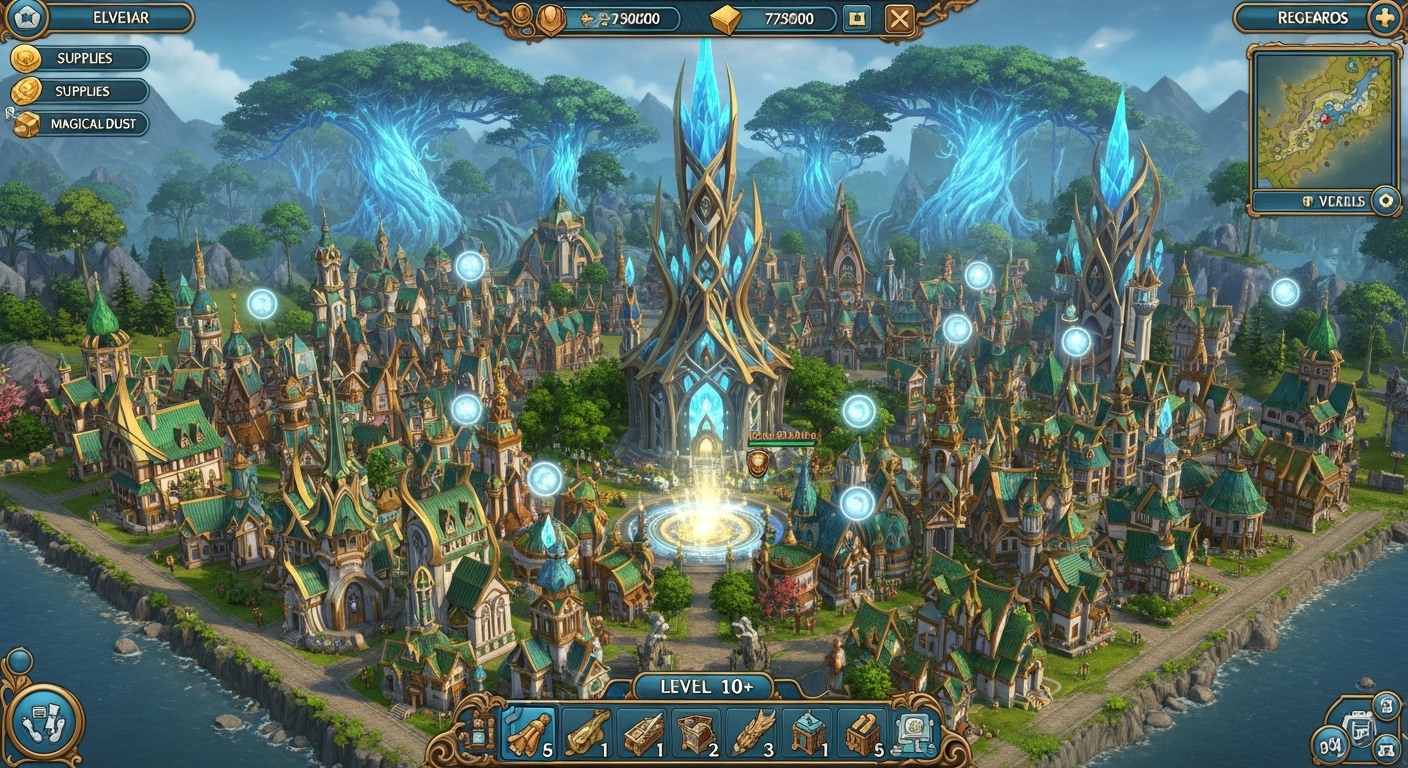
  • Manufactory Tiers in Elvenar: The Complete Production Guide

    Manufactory Tiers in Elvenar: The Complete Production Guide

    In the intricate economy of Elvenar, Manufactories serve as the industrial backbone of every thriving kingdom. These specialized buildings transform raw resources into the nine distinct goods types that fuel technological advancement, negotiation, and trade. Understanding the three-tier manufactory system—Basic, Refined, and Precious goods—along with the advanced Sentient and Ascended tiers that unlock in later chapters, is essential for efficient city development and sustainable resource management

    .

    The Three Basic Tiers: Foundation of Your Economy

    Elvenar’s goods system is organized into three fundamental tiers, each containing three distinct resource types that follow specific production and trading relationships:

    Tier 1 (Basic Goods) consists of Marble, Steel, and Planks. These foundational resources unlock earliest in your technological journey and remain relevant throughout your entire gameplay experience. Basic goods manufactories are the smallest, most space-efficient production facilities, making them ideal for early city layouts when expansion options remain limited

    .

    Tier 2 (Refined Goods) introduces Crystal, Scrolls, and Silk in the middle chapters of your progression. These goods require more complex production chains and larger manufactories, consuming more space and population while delivering higher-value outputs. The jump from Tier 1 to Tier 2 represents your city’s first significant industrial expansion

    .

    Tier 3 (Precious Goods) unlocks Elixir, Magic Dust, and Gems in later chapters. These premium resources demand the largest manufactories with substantial population requirements, but they become crucial for advanced technologies, high-level negotiations, and trading with other players. Precious goods manufactories represent significant city investments that must be carefully planned

    .

    The Boost System: Maximizing Production Efficiency

    The cornerstone of manufactory strategy revolves around boosted goods. When you establish your city, the game randomly assigns one boosted good from each tier—one Basic, one Refined, and one Precious. These boosted goods receive production bonuses based on collected relics, potentially reaching 700% increased output at maximum relic collection

    .

    This boost system fundamentally shapes your manufactory strategy. A player with boosted Planks, Crystal, and Magic Dust should focus exclusively on those three manufactories, using trading to acquire non-boosted goods. Building non-boosted manufactories wastes precious city space and population while delivering fractions of the production efficiency

    .

    The mathematics are stark: a boosted Steel manufactory might produce 3,000 units in three hours, while the same-level unboosted Planks manufactory produces merely 300 units

    . This 10:1 efficiency ratio makes specialization mandatory for competitive play.

    Manufactory Upgrades and Chapter Progression

    As you advance through Elvenar’s 22 chapters, manufactories unlock progressively higher upgrade levels. Each chapter typically introduces new upgrade technologies that improve production efficiency, though the relationship between chapter progression and manufactory efficiency is surprisingly complex

    .

    Early Chapter Efficiency (Chapters 1-5): Manufactories demonstrate consistent efficiency gains with each upgrade. A Level 6 manufactory in Chapter 2 significantly outperforms its Level 1 equivalent, justifying immediate upgrades upon technology unlock. During these formative chapters, building new manufactories and upgrading existing ones both represent sound investments

    .

    The Efficiency Plateau (Chapters 6-15): Community research reveals that manufactories experience efficiency fluctuations during middle chapters. While absolute production increases with each upgrade, the space, population, and culture requirements sometimes grow faster than output gains. Analysis suggests that manufactories occasionally reach “sweet spots” where delaying one chapter’s upgrade until supporting infrastructure (residences, culture buildings) improves can optimize overall city efficiency

    .

    Late Chapter Transformation (Chapters 16+): Advanced chapters introduce fundamental manufactory evolution. Chapter XII unlocks Sentient Goods—advanced versions of basic goods produced by manufactories upgraded to level 24 or higher. These Moonstone, Platinum, and Elven Tree Gum variants feature unique decay mechanics (10% daily conversion back to basic goods) and become essential for late-game technologies

    .

    Chapter XVIII introduces Ascended Manufactories, representing the pinnacle of goods production. These facilities produce Ascended Goods through entirely new mechanics, requiring dedicated research and substantial investment

    .

    Sentient Goods: The Tier 4 Evolution

    Starting from Chapter XII – The Elementals, your manufactories undergo their most significant transformation. Once upgraded to level 24 and beyond, manufactories gain the ability to produce Sentient Goods through modified production options

    .

    The production shift works as follows: 1-day and 2-day production options for regular goods are replaced with Sentient Goods production, while 3-hour and 9-hour options for standard goods remain available. This creates strategic flexibility—players can maintain standard goods production for trading and quests while dedicending longer cycles to Sentient accumulation

    .

    Sentient Goods follow a fixed transformation pattern based on your original boosted good:

    • MarbleMoonstone (boosted if your Basic boost is Planks)
    • SteelPlatinum (boosted if your Basic boost is Marble)
    • PlanksElven Tree Gum (boosted if your Basic boost is Steel)

    The decay mechanic adds management complexity: stored Sentient Goods lose 10% daily, converting 1:1 into their basic counterparts. This means 1,000 Moonstone becomes 900 Moonstone plus 100 Marble overnight. Unlike Mana or Seeds, Sentient Goods don’t vanish entirely, but efficient players develop consumption rhythms that minimize decay losses

    .

    Production Optimization Strategies

    Efficient manufactory management requires balancing multiple variables:

    Time Optimization: Manufactories offer four production durations—3 hours, 9 hours, 1 day, and 2 days (standard goods) or Sentient equivalents. The 3-hour option provides maximum efficiency for active players who can collect and restart frequently. Overnight or extended absences suit longer durations, though at reduced efficiency

    .

    Batch Production: The circle selection tool enables synchronized production across identical manufactories. However, manufactories only batch with others at the same upgrade level and star rating. This creates upgrade synchronization pressure—if you have six Planks manufactories at levels 4, 5, and 6, you must issue production commands separately for each pair, increasing micromanagement

    .

    Spell Enhancement: Magical Manufacturing spells boost manufactory output for 13 hours. Strategic timing maximizes returns—casting before collecting ready production applies the bonus retroactively, while casting before initiating new cycles ensures enhanced yields. Active players can achieve four 3-hour boosted cycles within a single spell duration

    .

    Space and Efficiency Mathematics

    Veteran players debate manufactory efficiency using sophisticated calculations that account for total city impact. A manufactory’s true “cost” includes not just its footprint, but supporting roads, required population (from residences), and necessary culture buildings

    .

    Analysis reveals that higher-level manufactories generally improve efficiency when supported by modern infrastructure. A Level 31 manufactory requires fewer total tiles (including supporting buildings) than multiple lower-level equivalents producing the same output. However, this efficiency assumes access to high-efficiency population sources (Magic Residences) and culture buildings (event structures)

    .

    The breakpoint varies by chapter and available support buildings. Players relying on standard residences and basic culture structures may find that manufactories from 1-2 chapters prior deliver optimal efficiency, while those with premium buildings benefit from immediate maximum upgrades

    .

    Trading and Economic Integration

    Manufactories don’t exist in isolation—they feed into Elvenar’s vibrant trading economy. The Trader building enables goods exchange with other players and the wholesaler, with upgrade levels unlocking new capabilities. Level 3 Trader unlocks Sentient Goods trading, essential for Chapter XII+ progression

    .

    Effective trading strategies leverage your boosted goods production to acquire non-boosted needs. A boosted Planks producer might trade surplus production for Marble and Steel, eliminating the need for inefficient unboosted manufactories. This specialization principle extends through all tiers—focus production on your three boosted goods, trade for everything else

    .

    Cross-tier trading follows established ratios (historically 1:4:16 for Tier 1:2:3), though these evolve with game updates. Understanding these ratios prevents unfavorable trades and maximizes the value of your boosted production

    .

    Common Manufactory Mistakes

    New players frequently undermine their economic potential through preventable errors:

    Building All Nine Manufactories: The impulse to produce every good type domestically wastes massive city space. With three boosted goods and active trading, six manufactories become unnecessary luxuries rather than necessities

    .

    Ignoring Upgrade Efficiency: Failing to research manufactory upgrades stalls production potential. Each chapter’s upgrade technology typically pays for itself through increased output, particularly when combined with improved supporting infrastructure.

    Neglecting Sentient Transition: Reaching Chapter XII without preparing level 24+ manufactories creates production bottlenecks. The shift to Sentient Goods production requires proactive upgrading well before the chapter unlock

    .

    Overlooking Decay Management: Sentient Goods’ 10% daily decay punishes hoarding. Efficient players maintain lean inventories, consuming Sentient Goods in technologies or trading them before decay accumulates

    .

    Conclusion

    Elvenar’s manufactory tier system provides a sophisticated economic progression that rewards strategic planning and specialization. From the humble Basic goods of early chapters through the transformative Sentient Goods of Elementals and the ultimate Ascended Goods of late-game chapters, your production infrastructure must evolve with your kingdom’s needs.

    The boost system creates clear optimization paths—identify your three boosted goods, maximize their production, and trade for everything else. Upgrade timing requires balancing absolute production gains against supporting infrastructure costs, with efficiency calculations guiding optimal decisions.

    Mastering manufactory tiers transforms resource scarcity into abundance, enabling rapid technological advancement, generous fellowship contributions, and tournament dominance. In Elvenar’s magical economy, efficient production isn’t just about having resources—it’s about having the right resources, at the right time, in the right quantities.

  • Elvenar Town Hall (Main Hall): The Beating Heart of Your Kingdom

    Elvenar Town Hall (Main Hall): The Beating Heart of Your Kingdom

    In the magical realm of Elvenar, where Elven forests shimmer with ancient magic and Human citadels rise with industrial might, every great city revolves around a single central structure: the Town Hall (officially called the Main Hall). This imposing building serves not merely as administrative headquarters but as the literal and figurative center of your entire civilization—storing your wealth, enabling your economy, connecting your infrastructure, and determining your capacity for growth. Understanding the Main Hall’s multifaceted functions proves essential for any aspiring ruler seeking to transform humble settlements into magnificent kingdoms

    .

    Foundational Functions: More Than Storage

    The Main Hall arrives with your city’s founding, requiring no research or construction costs. Unlike other buildings, it cannot be sold, demolished, or rebuilt—it remains your permanent companion throughout your Elvenar journey, evolving through 46 distinct upgrade levels that transform its appearance from modest wooden structures to grand architectural marvels befitting advanced civilizations

    .

    While most players initially perceive the Main Hall primarily as storage infrastructure, its role extends far beyond simple warehousing. The building serves as the connection hub for your entire city—virtually all structures require road connections to the Main Hall to function. This radial dependency creates the distinctive city layouts characteristic of Elvenar, with roads spiderwebbing from the central hall to reach every workshop, residence, and manufactory

    .

    The Main Hall provides the exclusive storage mechanism for three critical resources: Coins, Supplies, and Goods. However, these storage systems operate under fundamentally different rules. Goods storage—encompassing Standard Goods (Marble, Steel, Planks, Crystal, Scrolls, Silk, Elixir, Magic Dust, Gems), Sentient Goods, and Ascended Goods—faces no capacity limitations. Players can accumulate unlimited quantities of manufactured goods, creating stockpiles that sustain extended tournament runs, Spire climbs, and trading operations

    .

    Conversely, Coins and Supplies face strict storage caps determined entirely by Main Hall level. Early-game players with Level 1 Main Halls might store merely thousands of these resources, while endgame veterans with fully upgraded halls manage tens of millions—some reporting capacities exceeding 46 million Coins and 4.6 million Supplies

    . This capacity constraint creates one of Elvenar’s most persistent strategic challenges: managing production to avoid wasting resources when storage limits are reached.

    The Upgrade Progression: Costs and Benefits

    Main Hall upgrades follow a chapter-locked progression system, with specific upgrade ranges tied to technological research. Early chapters provide modest level increases, while later chapters unlock substantial leaps in capacity and functionality. For example, Chapter 3 (Humans) or Chapter 4 (Elves) provides the “Superior Main Hall” research enabling upgrades to levels 8-15, while Chapter 5’s Dwarven technology unlocks levels 16-19

    .

    Each upgrade delivers four distinct benefits:

    First, and most obviously, storage capacity for Coins and Supplies increases substantially. A Level 6 Main Hall stores approximately 13,000 Coins and 6,500 Supplies, while Level 15 capacities reach hundreds of thousands, and endgame levels accommodate millions

    .

    Second, the Coins received from Neighborly Help scale directly with Main Hall level. When visitors click your Main Hall during Neighborly Help, they generate Coins for your collection upon next login—higher-level halls produce substantially greater quantities. This passive income stream proves particularly valuable for casual players who may not actively generate Coins through residence collection

    .

    Third, the rewards you receive when helping others similarly escalate. Each Neighborly Help action you perform yields Coins and Supplies based on your Main Hall level, creating virtuous cycles where upgraded halls accelerate resource acquisition that funds further upgrades

    .

    Fourth, Main Halls contribute Ranking Points—the metric determining player standings on world leaderboards. While less tangible than resource benefits, these points establish social prestige and competitive standing

    .

    Upgrade costs escalate dramatically with level. A typical mid-game upgrade (Level 16, first Dwarven tier) requires 154 available population, 310 available culture, and 1.87 million Coins

    . These requirements force players to balance Main Hall advancement against other development priorities, particularly since upgrades consume builders for extended periods and demand substantial population that might otherwise staff manufactories or military buildings.

    Strategic Storage Management

    The Main Hall’s storage limitations create persistent optimization challenges. Players regularly encounter situations where production exceeds capacity—overnight workshop operations might generate half the total supply storage in a single production cycle, while residence collections overflow coin bins

    . Several strategies address these constraints:

    Active Collection Schedules: Dedicated players collect resources before capacity is reached, timing visits to maximize production without waste. This approach demands consistent engagement but preserves every resource generated.

    Strategic Spending: Excess Coins can fund World Map exploration, expansion purchases, or trading; surplus Supplies support building upgrades, research, or tournament catering. Proactive spending prevents capacity waste while advancing other objectives

    .

    Wonder Investment: The Golden Abyss Ancient Wonder directly links to Main Hall level, generating Coins based on hall capacity. This synergy makes Main Hall upgrades more valuable for Golden Abyss owners, as each hall level indirectly increases Wonder production

    .

    Event Optimization: During Fellowship Adventures, players collect “coin bags” by performing Neighborly Help. Higher Main Hall levels reduce the number of help visits required per bag, making event participation more efficient

    .

    The Neighborly Help Nexus

    The Main Hall functions as the primary target for Neighborly Help, Elvenar’s social mechanic where players visit each other’s cities to provide assistance. Three help options exist, but the Main Hall remains the most universally available—unlike Culture Buildings (which require eligible structures) or Builder’s Huts (which have boost limits), Main Halls can always receive help unless actively upgrading

    .

    When visitors click your Main Hall, they generate immediate rewards for themselves (Coins and Supplies based on their Main Hall level) and deferred rewards for you (Coins collectible upon your next login). This exchange creates mutual benefit: visitors gain instant resources, while hosts accumulate passive income. The “golden handshake” button—appearing when you return help to recent visitors—provides enhanced rewards including both Coins and Supplies, making reciprocal relationships particularly valuable

    .

    The Main Hall’s role in Neighborly Help extends to city naming conventions. Players often append codes like “CBM” (Culture-Builder’s Hut-Main Hall) or “MCB” (Main Hall-Culture-Builder’s Hut) to their city names, indicating preferred help priorities. While Culture Buildings provide the most impactful bonuses (doubling culture output for 8+ hours), Main Hall clicks remain reliable fallback options when culture buildings are unavailable or already assisted

    .

    Visual Evolution and Cultural Identity

    The Main Hall’s appearance transforms dramatically through upgrade levels, reflecting your civilization’s advancement. Early levels feature modest wooden structures appropriate to fledgling settlements. Mid-game upgrades introduce stone fortifications and architectural sophistication. Endgame halls become magnificent palaces—Elven versions incorporating living wood, crystalline spires, and magical luminescence; Human variants displaying industrial grandeur, smokestacks, and mechanical marvels

    .

    This visual progression provides tangible feedback on development, with each upgrade celebration marking milestones in your city’s evolution. The Main Hall’s central placement and distinctive appearance make it the natural focal point of city design, with roads radiating outward and other structures positioned to maximize both functionality and aesthetic harmony.

    Advanced Considerations: Timing and Optimization

    Experienced players debate optimal Main Hall upgrade timing. Some advocate aggressive early upgrading to maximize storage and Neighborly Help benefits, accepting temporary population constraints that limit other construction. Others recommend patient, need-based upgrading, advancing halls only when storage limits actually impede progress—such as when research requires millions of Coins beyond current capacity

    .

    The “Coin Wall” phenomenon illustrates this strategic tension. Certain research technologies and expansion purchases require Coin quantities that challenge storage limits. Players with under-leveled Main Halls may find themselves unable to afford critical advancements despite having production capacity to generate required resources over time. Conversely, premature upgrades consume resources and builder time that might accelerate other development

    .

    Fellowship Perks indirectly influence Main Hall strategy. The “Advanced Help” Perk extends the duration of received help, meaning players can collect Neighborly Help rewards less frequently while maintaining equivalent benefits. This reduces pressure on Main Hall coin storage frequency, potentially enabling slower upgrade schedules without sacrificing income

    .

    Conclusion: The Center That Holds

    The Main Hall represents Elvenar’s design philosophy in architectural form: interconnected systems where individual elements support collective prosperity. Its storage constraints teach resource management; its Neighborly Help integration rewards community participation; its upgrade progression provides long-term development goals; its visual evolution offers satisfying progression feedback.

    For new players, the Main Hall simply holds resources. For veterans, it becomes a strategic optimization target—its level determining economic capacity, social utility, and competitive standing. Whether you prioritize rapid upgrades to maximize Golden Abyss production or maintain lean halls to focus resources elsewhere, the Main Hall remains the immovable center around which your entire Elvenar experience revolves.

    In a game of magical forests and industrial fortresses, of tournament glory and fellowship cooperation, the humble Main Hall stands as the foundation upon which all else is built. Understanding its nuances separates adequate city management from masterful kingdom stewardship

    .

  • The Elvenar Crafting System: Mastering the Magic Academy

    The Elvenar Crafting System: Mastering the Magic Academy

    In the mystical world of Elvenar, the Crafting System stands as one of the most powerful yet frequently misunderstood mechanics available to city rulers. Centered within the Magic Academy, this system transforms accumulated resources into valuable buildings, powerful enchantments, and crucial combat boosts. Understanding crafting fundamentals separates efficient players from those who struggle with resource scarcity throughout their journey

    .

    The Magic Academy: Your Crafting Hub

    The Magic Academy serves as the cornerstone of Elvenar’s crafting ecosystem. This specialized building unlocks relatively early in your city’s development and provides three essential functions: researching ancient technologies, crafting valuable items, and disenchanting unwanted materials. The Academy operates on a cyclical schedule, refreshing its available crafting recipes every six hours, creating a rhythm that rewards consistent engagement

    .

    Upgrading your Magic Academy proves crucial for crafting efficiency. Each level increases the Spell Fragments gained from disenchanting items, with level 5 providing optimal returns regardless of your current chapter progress. A player in Chapter 3 with a level 5 Academy receives identical disenchantment values to someone in Chapter 21, making early Academy investment strategically sound

    .

    Crafting Resources: Spell Fragments and Combining Catalysts

    Two primary resources fuel the crafting engine: Spell Fragments (SF) and Combining Catalysts (CC). These materials work in tandem—virtually every crafting recipe requires specific quantities of both

    .

    Spell Fragments represent the more abundant resource, obtainable through multiple channels. The Spire of Eternity serves as the primary source, with weekly climbs generating thousands of fragments depending on your progress depth. Disenchanting unwanted buildings, instants, and enchantments from your inventory provides additional fragments, with values scaling based on item rarity and Magic Academy level. A single disenchantment can yield anywhere from hundreds to tens of thousands of fragments

    .

    Combining Catalysts prove more elusive. These rare materials primarily come from Spire rewards, crafting recipe outputs, and special building productions like the Moonstone Library set, which provides one catalyst daily once fully assembled. The scarcity of catalysts often becomes the bottleneck limiting crafting frequency, making their conservation and strategic deployment essential

    .

    The Crafting Recipe Ecosystem

    Elvenar’s crafting system features dozens of recipes across multiple categories, with availability rotating randomly every six hours. The recipe pool has expanded dramatically over time, now including hundreds of potential options that compete for limited crafting slots

    .

    Combat Boost Buildings rank among the most coveted recipes. These temporary structures provide percentage-based enhancements to specific unit types—Enlightened Light Range boosts Light Ranged units, Magnificent Mage Multiplier empowers Mages, and Unstoppable Orc Warriors strengthens Heavy Melee forces. These buildings typically last 5-7 days and can stack with other bonuses, creating devastating combat combinations when deployed strategically

    .

    Event Buildings and Artifacts allow players to acquire or upgrade special structures from past events. Crafting artifacts enables evolving building progression without waiting for event reruns, while complete buildings provide immediate utility. The Chess Set, Gingerbread House, and Mermaid Paradise represent examples of craftable building sets that provide ongoing resource generation

    .

    Enchantment Recipes create temporary city-wide buffs. Power of Provision accelerates supply production, Magical Manufacturing boosts goods output, and Ensorcelled Endowment enhances coin generation. These enchantments prove invaluable during heavy building phases or when preparing for demanding tournament pushes

    .

    Resource Conversion Recipes offer economic flexibility. Players can transform excess materials into scarce alternatives—converting surplus coins into supplies, basic goods into sentient goods, or spell fragments directly into combining catalysts. These recipes help balance asymmetric resource accumulation

    .

    Strategic Crafting Priorities

    Effective crafting requires establishing clear priorities based on your current city needs and future goals:

    Early Game (Chapters 1-6): Focus on Pet Food for evolving buildings and Portal Profits for guest race advancement. The Moonstone Library set should be your top crafting priority—despite requiring substantial initial investment (over 20,000 spell fragments), it generates 525 fragments and 1 combining catalyst daily once complete, paying for itself in approximately 40 days

    .

    Mid Game (Chapters 7-12): Transition toward Combat Boost Buildings as tournament participation becomes economically crucial. Enlightened Light Range and Unstoppable Orc Warriors particularly shine due to the “ranged dominance” meta in Elvenar combat. Maintain Moonstone Library production while stockpiling catalysts for high-value opportunities

    .

    Late Game (Chapters 13+): Prioritize Artifact Crafting for evolving building upgrades and Royal Restoration recipes for building rejuvenation. Combat boost buildings remain relevant, though their relative value decreases as permanent Ancient Wonder bonuses accumulate. Resource conversion recipes help manage the massive goods requirements of advanced chapters

    .

    The Recipe Rotation Challenge

    A persistent community concern involves recipe availability. With hundreds of recipes competing for limited slots, desired options may not appear for weeks. Players report waiting seven weeks or longer for specific combat boost recipes, creating frustration when tournament participation demands immediate enhancement

    .

    Several strategies mitigate this randomness:

    Frequent Checking: The six-hour rotation cycle means four potential opportunities daily. Consistent monitoring maximizes chances of catching desired recipes, though this demands significant time investment.

    Recipe Pool Manipulation: Crafting and retaining certain buildings (like the Chess Set) removes them from future rotation, theoretically increasing odds for preferred alternatives. However, with expanding recipe pools, this strategy’s effectiveness remains debatable

    .

    Diamond Acceleration: Spending premium currency to immediately refresh recipes provides direct access to desired options. This expensive approach suits wealthy players or critical tournament pushes but proves unsustainable for regular use.

    Timing Adjustment: Occasionally using diamonds to shift refresh timing ensures cycles occur during your active hours rather than sleep periods, preventing missed opportunities

    .

    Advanced Crafting Techniques

    Master crafters employ sophisticated strategies to optimize their Magic Academy usage:

    Disenchantment Optimization: Regular inventory audits identify disenchantment candidates. Portal Profits from evolving buildings like Fire Phoenix (5% every 48 hours = 210 fragments daily when disenchanted) and Trading Outpost provide steady fragment income. Event buildings that no longer serve your city layout convert into substantial resource injections—some players maintain over one million spell fragments through disciplined disenchantment

    .

    Recipe Profit Analysis: Certain recipes generate net positive returns. The Rainbow Flower Cage costs 300 spell fragments to craft but sells for one combining catalyst after placement—potentially profitable if catalyst value exceeds fragment cost. Similarly, the 6 Catalysts → 2,500 Fragments recipe enables resource conversion when catalysts accumulate excessively

    .

    Inventory Management: Maintaining diverse building stocks allows instant quest completion and strategic flexibility. Pocket combat boost buildings, resource instants, and miscellaneous structures prepare you for unexpected daily quest demands or sudden tournament pushes

    .

    Spire Integration: Weekly Spire participation provides the foundation for sustainable crafting. Gold Spire completion generates thousands of fragments and multiple catalysts, enabling consistent crafting without resource anxiety. Players struggling with fragment scarcity should prioritize Spire advancement over other weekly activities

    .

    Economic Considerations

    Crafting represents a significant economic sink requiring careful resource allocation. The Moonstone Library set exemplifies this—while ultimately profitable, its 20,000+ fragment construction cost demands months of saving for new players. This creates tension between immediate needs (combat boosts, enchantments) and long-term investments (passive generation buildings)

    .

    Opportunity Cost Awareness: Every fragment spent on combat boosts cannot fund Moonstone Library progress. Every catalyst used for minor enchantments delays artifact crafting. Successful players establish clear hierarchies—emergency combat boosts take precedence during tournament weeks, while passive generation dominates peaceful periods.

    Scaling Efficiency: As your city grows, fragment generation accelerates through multiple Spire clears, evolving building disenchantment, and Moonstone Library maturation. Early crafting scarcity transforms into late-game abundance, enabling frequent high-value crafting without resource anxiety. Patience during lean early periods yields exponential later returns

    .

    Common Crafting Mistakes

    New players frequently sabotage their crafting potential through preventable errors:

    Neglecting Magic Academy Upgrades: Failing to prioritize Academy level 5 dramatically reduces fragment generation from all sources. The upgrade cost pays for itself through improved disenchantment values within weeks.

    Impulsive Crafting: Using catalysts on marginal recipes (low-tier enchantments, temporary resource boosts) creates scarcity when high-value options finally appear. Disciplined catalyst conservation enables immediate response to exceptional opportunities.

    Ignoring Disenchantment: Hoarding obsolete buildings and unused instants wastes potential fragments. Regular inventory purges maintain liquidity for crafting demands.

    Recipe Pool Pollution: Crafting suboptimal buildings “just because they’re available” clutters inventory and potentially blocks better future options. Selective crafting maintains lean, purposeful stocks

    .

    The Future of Crafting

    Elvenar’s crafting system continues evolving. Recent updates introduced artifact crafting for evolving building advancement and expanded building sets with complex recipes. Community feedback suggests desire for deterministic recipe selection rather than random rotation, though developers maintain that randomness preserves game balance and engagement

    .

    The fundamental crafting loop—accumulate resources through Spire and disenchantment, convert through Magic Academy, enhance city capabilities—remains Elvenar’s most reliable progression path. Mastering this system ensures consistent advancement regardless of spending level, making the Magic Academy truly magical for dedicated players.

  • Main Hall Upgrades in Elvenar: The Foundation of City Prosperity

    Main Hall Upgrades in Elvenar: The Foundation of City Prosperity

    Introduction to the Main Hall

    The Main Hall stands as the absolute centerpiece of every city in Elvenar, serving not merely as an administrative building but as the fundamental infrastructure that determines a civilization’s capacity for growth, storage, and economic prosperity

    . This iconic structure represents the heart of your city, both functionally and symbolically, with its upgrade level directly influencing nearly every aspect of gameplay from resource management to military capability and diplomatic flexibility. Understanding the strategic importance of Main Hall upgrades and optimizing their timing and implementation separates thriving metropolises from stagnant settlements that struggle to advance through the chapters.

    Unlike specialized buildings that serve single purposes—barracks for military training, manufactories for goods production, or residences for population and coins—the Main Hall provides universal benefits that enhance all city operations

    . Its upgrades increase coin and supply storage capacity, boost coin generation from residences, and unlock higher-level buildings and technologies that require the administrative foundation only an advanced Main Hall can provide. This centrality makes Main Hall development a priority that should never be neglected, even when other buildings seem more immediately appealing.

    The decision of when to upgrade the Main Hall, how to resource those upgrades, and how to integrate Main Hall development with broader city strategy represents one of the most important ongoing choices in Elvenar gameplay. This comprehensive guide explores every aspect of Main Hall upgrades, from their mechanical benefits and resource requirements to strategic timing and optimization approaches that maximize their impact on your civilization’s trajectory.

    Core Functions and Benefits of Main Hall Upgrades

    Storage Capacity Expansion

    The most immediately visible benefit of Main Hall upgrades is the dramatic increase in maximum storage capacity for both coins and supplies

    . This storage function serves as the foundation upon which all other economic activities depend, creating hard limits that constrain city development when insufficient and enable expansion when adequate.

    Coin Storage Significance: Coin storage limits directly impact multiple critical game systems. Scouting new provinces requires increasingly massive coin investments that can reach millions in advanced chapters

    . Without adequate Main Hall levels, players hit storage caps that prevent initiating scouts regardless of their income generation. Similarly, technology research, building construction, and goods production all require coin expenditures that can exceed limited storage capacities.

    Supply Storage Importance: Supply storage constraints affect manufacturing operations, building upgrades, and troop training. Running production cycles in workshops and manufactories requires supply investments, and insufficient storage prevents optimal production scheduling

    . Advanced building upgrades and military training similarly demand supply volumes that require substantial storage capacity.

    Production Efficiency Implications: Storage limits create production inefficiencies when players cannot accumulate resources fast enough to fund major expenditures. A city generating 100,000 coins hourly with only 500,000 storage capacity wastes potential production whenever major costs exceed this limit, forcing players to spend suboptimally or lose income to the cap.

    Scaling Storage Growth: Main Hall upgrades provide non-linear storage growth, with each upgrade level offering substantially increased capacity. Early upgrades might add thousands to storage limits, while advanced upgrades add millions, reflecting the exponential resource scales of chapter progression

    .

    Coin Generation Enhancement

    Beyond storage, Main Hall upgrades directly boost coin generation from all residences in your city

    . This percentage-based bonus compounds with other coin multipliers—culture bonuses, Ancient Wonder effects, and event building benefits—to create significant income differences between cities with advanced Main Halls and those with neglected central administration.

    Residence Production Multiplication: Since residences represent the primary coin source for most cities, Main Hall coin bonuses apply to substantial base production. A 10% Main Hall bonus on residences generating 100,000 coins daily provides 10,000 additional coins—scaling to massive differences over time.

    Compound Growth Effects: Coin generation feeds back into city development through funding construction, research, and expansion. Higher coin income from Main Hall upgrades accelerates all development activities, creating compound growth where early Main Hall investment yields disproportionate long-term benefits.

    Scouting and Expansion Support: The coin generation bonus directly supports province scouting, which requires massive coin investments that scale with distance from your city

    . Advanced Main Hall levels make distant scouting financially feasible, enabling world map expansion that would be economically impossible with lower-level administration.

    Unlocking Advanced Development

    Main Hall levels serve as prerequisites for numerous advanced game features, buildings, and technologies, making upgrades essential gates to progression rather than merely beneficial improvements

    .

    Building Level Requirements: Many buildings cannot be upgraded beyond certain levels without corresponding Main Hall advancement. Residence upgrades, workshop improvements, and manufactory enhancements all hit Main Hall-dependent caps that stall development if central administration lags.

    Technology Prerequisites: Research in the technology tree frequently requires minimum Main Hall levels, particularly for advanced chapters where administrative sophistication represents narrative and mechanical progression. These requirements ensure that players develop foundational infrastructure before accessing advanced capabilities.

    New Feature Access: Guest race settlements, advanced military units, and sophisticated production chains often unlock only at specific Main Hall thresholds. Delaying Main Hall upgrades thus delays access to entire gameplay systems, creating opportunity costs that compound over time.

    Resource Requirements and Upgrade Timing

    Upgrade Cost Structure

    Main Hall upgrades demand substantial resource investments that increase dramatically with each level, creating strategic decisions about timing and prioritization

    .

    Coin and Supply Demands: Primary upgrade costs consist of coins and supplies in quantities that scale with Main Hall level and player chapter. Early upgrades might require thousands of these resources, while advanced upgrades demand millions, representing significant portions of city wealth.

    Goods Requirements: Higher-level Main Hall upgrades incorporate manufactured goods into their cost structures, requiring Marble, Steel, Planks, and eventually advanced goods like Crystal, Scrolls, and magical materials

    . These goods requirements integrate Main Hall development with broader economic infrastructure, ensuring that administrative advancement reflects overall industrial capability.

    Knowledge Point Investments: Some Main Hall upgrades require Knowledge Points, the scarce resource used for technology research

    . These KP costs create direct trade-offs between Main Hall advancement and research progress, forcing strategic prioritization decisions.

    Construction Time: Main Hall upgrades require substantial construction time during which the building provides no benefits. This downtime creates vulnerability periods where storage limits constrain operations, requiring planning to minimize disruption.

    Optimal Upgrade Timing

    Determining when to initiate Main Hall upgrades involves balancing multiple factors including resource availability, construction timing, and strategic priorities.

    Pre-Cap Preparation: Ideally, Main Hall upgrades should occur before hitting storage caps that constrain operations. Proactive upgrading prevents production waste and ensures capacity for major expenditures like province scouting or technology research.

    Resource Accumulation Cycles: Timing upgrades to coincide with resource accumulation peaks—after tournament rewards, event completions, or intensive production periods—minimizes the time required to gather upgrade costs and reduces opportunity costs of capital tied up in preparation.

    Construction Downtime Management: Scheduling Main Hall construction during periods of reduced activity—when no major scouting or research is planned—minimizes the impact of temporary storage limitations. Some players coordinate Main Hall upgrades with real-life schedules where reduced playtime coincides with construction periods.

    Chapter Transition Timing: Main Hall upgrades often align naturally with chapter transitions, where new technologies and building levels become available. Upgrading the Main Hall at chapter starts ensures capacity for new development options and integrates administrative advancement with overall progression.

    Economic Trade-Off Analysis

    Main Hall upgrades require evaluating opportunity costs against long-term benefits to determine optimal investment timing.

    Immediate Cost vs. Long-Term Benefit: The substantial upfront costs of Main Hall upgrades must be weighed against permanent capacity increases and coin generation bonuses that provide value indefinitely. Economic analysis generally favors early upgrades due to compound growth effects, though resource constraints may delay optimal timing.

    Alternative Investment Comparison: Resources spent on Main Hall upgrades could fund residence construction, technology research, military expansion, or goods production. Comparing expected returns across these alternatives guides prioritization, with Main Hall upgrades typically offering superior universal benefits compared to specialized investments.

    Risk and Uncertainty Considerations: Main Hall upgrades provide guaranteed, permanent benefits with no random elements, making them low-risk investments compared to uncertain alternatives like combat outcomes or random reward systems. This reliability increases their value for risk-averse players.

    Strategic Integration with City Development

    Main Hall and Expansion Strategy

    Main Hall development directly interacts with world map expansion decisions, creating strategic interdependencies that require coordinated planning

    .

    Scouting Cost Management: Province scouting costs escalate exponentially with distance from your city, requiring storage capacity that only advanced Main Hall levels can provide

    . Players pursuing aggressive expansion need corresponding Main Hall investment to fund distant scouts that would exceed lower-level storage limits.

    Expansion Pacing Coordination: Main Hall upgrades should pace with expansion ambitions. Rapid province conquest without storage capacity creates situations where scouts cannot be initiated despite available world map opportunities, stalling progress and wasting potential.

    Tournament Implications: Tournament difficulty scales with total conquered provinces, creating strategic tension between expansion and competitive performance

    . Main Hall capacity enables expansion that increases tournament difficulty, requiring coordinated development of military and economic capability alongside administrative infrastructure.

    Economic Infrastructure Synchronization

    Main Hall upgrades should synchronize with broader economic infrastructure development for maximum efficiency.

    Residence Development Alignment: Since Main Hall upgrades boost residence coin generation, timing these upgrades to coincide with residence construction or upgrades maximizes compound benefits. A city with numerous high-level residences gains more from Main Hall coin bonuses than one with minimal residential infrastructure.

    Production Chain Optimization: Goods requirements for Main Hall upgrades necessitate corresponding manufactory development. Synchronizing manufactory upgrades with Main Hall planning ensures goods availability when needed and prevents production bottlenecks.

    Workshop Efficiency: Supply requirements for Main Hall upgrades demand efficient workshop production. Maintaining upgraded workshops with optimal production scheduling ensures supply availability without disrupting normal manufacturing operations.

    Military and Diplomatic Considerations

    Main Hall development supports both military and diplomatic city strategies through resource provision and capacity enabling.

    Military Funding: Troop training, barracks upgrades, and combat operations require substantial coin and supply investments that demand adequate storage. Military-focused cities particularly benefit from Main Hall capacity that enables rapid army expansion and replacement.

    Catering Support: Negotiation-based province resolution requires massive goods stockpiles that exceed limited storage capacities

    . Diplomatic cities need advanced Main Hall levels to accumulate the diverse goods reserves necessary for extensive catering strategies.

    Flexibility Preservation: Maintaining Main Hall advancement ahead of immediate needs preserves strategic flexibility, allowing rapid shifts between military and diplomatic approaches as situations demand without storage constraints forcing suboptimal choices.

    Advanced Main Hall Optimization

    Ancient Wonder Synergies

    Several Ancient Wonders interact with Main Hall functions, creating synergies that enhance administrative efficiency

    .

    Prosperity Towers: This wonder increases Main Hall coin generation bonuses, compounding the already substantial residence income boosts. Cities with both advanced Main Halls and Prosperity Towers achieve coin generation levels that fund rapid development and extensive scouting.

    Storage Enhancement Wonders: Certain wonders provide additional storage capacity beyond Main Hall limits, effectively extending administrative capability. These wonders create buffer capacity that provides insurance against unexpected costs or enables strategies that would otherwise exceed storage limits.

    Economic Multipliers: Wonders that boost production or reduce costs indirectly support Main Hall development by accelerating resource accumulation for upgrades and enhancing the benefits of increased storage capacity.

    Event Building Integration

    Special event buildings often provide storage, coin generation, or other benefits that complement Main Hall functions

    .

    Event Storage Buildings: Some events offer buildings that increase resource storage beyond Main Hall capacity. These temporary or permanent additions extend administrative capability and can compensate for delayed Main Hall upgrades or provide overflow capacity during intensive periods.

    Coin Generation Enhancements: Event buildings that boost coin generation stack with Main Hall residence bonuses, creating multiplicative effects that dramatically increase income. Optimizing event building placement and selection around Main Hall synergy maximizes economic output.

    Temporary Capacity Solutions: During events or special periods, temporary storage or income boosts can substitute for Main Hall upgrades, allowing delayed construction while maintaining operational capacity. However, reliance on temporary solutions creates vulnerability when events end.

    Fellowship and Trade Implications

    Main Hall development affects fellowship dynamics and trade relationships through resource availability and capacity constraints

    .

    Trade Capacity: Adequate storage enables bulk trading that supports fellowship members and generates trade profits. Limited storage constrains trade volume, reducing both fellowship contribution and personal economic opportunities.

    Goods Availability: Main Hall capacity determines goods stockpiling capability that enables consistent trade offers. Players with limited storage struggle to maintain diverse goods reserves for trading, reducing their fellowship economic integration.

    Fellowship Support: Advanced Main Hall capacity allows players to support fellowship members through resource donations, goods gifts, or emergency assistance that would be impossible with constrained storage.

    Common Main Hall Upgrade Mistakes

    Upgrade Neglect and Delay

    The most common Main Hall mistake involves insufficient prioritization that delays upgrades beyond optimal timing

    .

    Storage Cap Production Waste: Players who delay Main Hall upgrades frequently hit storage caps that waste production potential. Coins and supplies generated beyond storage limits are lost, creating permanent economic damage that compounds over time.

    Scouting Bottlenecks: Inadequate Main Hall levels prevent initiating province scouts due to insufficient coin storage, stalling world map expansion and relic acquisition that would boost goods production and economic development

    .

    Building Upgrade Limits: Neglecting Main Hall upgrades eventually prevents upgrading other buildings, creating development paralysis where residence, workshop, and manufactory improvements are blocked by administrative limitations.

    Poor Timing and Resource Management

    Even when Main Hall upgrades occur, suboptimal timing reduces their effectiveness.

    Mid-Crisis Upgrades: Initiating Main Hall upgrades during periods of intensive activity—tournament participation, event quests, or rapid expansion—creates storage constraints that disrupt operations precisely when capacity is most needed.

    Resource Depletion: Spending all resources on Main Hall upgrades without maintaining operational reserves creates vulnerability where emergency needs cannot be met. Maintaining buffers beyond upgrade costs ensures functional flexibility.

    Construction Queue Confusion: Failing to account for Main Hall construction time in planning creates situations where other critical upgrades or constructions are delayed, cascading into broader development slowdowns.

    Over-Upgrade Imbalance

    Conversely, excessive Main Hall focus at the expense of other development creates different problems.

    Opportunity Cost Excess: Over-investing in Main Hall upgrades diverts resources from residences, manufactories, and military infrastructure that would provide immediate production benefits. The optimal Main Hall level balances administrative capacity with productive infrastructure.

    Empty Capacity Syndrome: Extremely advanced Main Hall levels with underdeveloped production create empty capacity that provides no benefit. Storage limits only create value when production fills them; excessive administrative infrastructure without corresponding economic development wastes resources.

    Conclusion

    Main Hall upgrades represent the foundational investment upon which all other Elvenar development depends, providing the storage capacity, coin generation, and progression prerequisites that enable every other aspect of city growth

    . Their universal benefits make them priority investments that should rarely be delayed, with their compound growth effects rewarding early and consistent attention throughout a player’s Elvenar journey.

    The strategic integration of Main Hall development with expansion planning, economic infrastructure, and military or diplomatic strategies creates a coordination challenge that distinguishes sophisticated players from casual participants. Understanding when to upgrade, how to resource those upgrades, and how to synchronize Main Hall advancement with broader city objectives optimizes the return on these substantial investments.

  • Weekly Challenges in Elvenar: The Complete Guide to Tournament Mastery and Cyclical Gameplay

    Weekly Challenges in Elvenar: The Complete Guide to Tournament Mastery and Cyclical Gameplay

    In the mystical world of Elvenar, the Crafting System stands as one of the most powerful yet frequently misunderstood mechanics available to city rulers. Centered within the Magic Academy, this system transforms accumulated resources into valuable buildings, powerful enchantments, and crucial combat boosts. Understanding crafting fundamentals separates efficient players from those who struggle with resource scarcity throughout their journey

    .

    The Magic Academy: Your Crafting Hub

    The Magic Academy serves as the cornerstone of Elvenar’s crafting ecosystem. This specialized building unlocks relatively early in your city’s development and provides three essential functions: researching ancient technologies, crafting valuable items, and disenchanting unwanted materials. The Academy operates on a cyclical schedule, refreshing its available crafting recipes every six hours, creating a rhythm that rewards consistent engagement

    .

    Upgrading your Magic Academy proves crucial for crafting efficiency. Each level increases the Spell Fragments gained from disenchanting items, with level 5 providing optimal returns regardless of your current chapter progress. A player in Chapter 3 with a level 5 Academy receives identical disenchantment values to someone in Chapter 21, making early Academy investment strategically sound

    .

    Crafting Resources: Spell Fragments and Combining Catalysts

    Two primary resources fuel the crafting engine: Spell Fragments (SF) and Combining Catalysts (CC). These materials work in tandem—virtually every crafting recipe requires specific quantities of both

    .

    Spell Fragments represent the more abundant resource, obtainable through multiple channels. The Spire of Eternity serves as the primary source, with weekly climbs generating thousands of fragments depending on your progress depth. Disenchanting unwanted buildings, instants, and enchantments from your inventory provides additional fragments, with values scaling based on item rarity and Magic Academy level. A single disenchantment can yield anywhere from hundreds to tens of thousands of fragments

    .

    Combining Catalysts prove more elusive. These rare materials primarily come from Spire rewards, crafting recipe outputs, and special building productions like the Moonstone Library set, which provides one catalyst daily once fully assembled. The scarcity of catalysts often becomes the bottleneck limiting crafting frequency, making their conservation and strategic deployment essential

    .

    The Crafting Recipe Ecosystem

    Elvenar’s crafting system features dozens of recipes across multiple categories, with availability rotating randomly every six hours. The recipe pool has expanded dramatically over time, now including hundreds of potential options that compete for limited crafting slots

    .

    Combat Boost Buildings rank among the most coveted recipes. These temporary structures provide percentage-based enhancements to specific unit types—Enlightened Light Range boosts Light Ranged units, Magnificent Mage Multiplier empowers Mages, and Unstoppable Orc Warriors strengthens Heavy Melee forces. These buildings typically last 5-7 days and can stack with other bonuses, creating devastating combat combinations when deployed strategically

    .

    Event Buildings and Artifacts allow players to acquire or upgrade special structures from past events. Crafting artifacts enables evolving building progression without waiting for event reruns, while complete buildings provide immediate utility. The Chess Set, Gingerbread House, and Mermaid Paradise represent examples of craftable building sets that provide ongoing resource generation

    .

    Enchantment Recipes create temporary city-wide buffs. Power of Provision accelerates supply production, Magical Manufacturing boosts goods output, and Ensorcelled Endowment enhances coin generation. These enchantments prove invaluable during heavy building phases or when preparing for demanding tournament pushes

    .

    Resource Conversion Recipes offer economic flexibility. Players can transform excess materials into scarce alternatives—converting surplus coins into supplies, basic goods into sentient goods, or spell fragments directly into combining catalysts. These recipes help balance asymmetric resource accumulation

    .

    Strategic Crafting Priorities

    Effective crafting requires establishing clear priorities based on your current city needs and future goals:

    Early Game (Chapters 1-6): Focus on Pet Food for evolving buildings and Portal Profits for guest race advancement. The Moonstone Library set should be your top crafting priority—despite requiring substantial initial investment (over 20,000 spell fragments), it generates 525 fragments and 1 combining catalyst daily once complete, paying for itself in approximately 40 days

    .

    Mid Game (Chapters 7-12): Transition toward Combat Boost Buildings as tournament participation becomes economically crucial. Enlightened Light Range and Unstoppable Orc Warriors particularly shine due to the “ranged dominance” meta in Elvenar combat. Maintain Moonstone Library production while stockpiling catalysts for high-value opportunities

    .

    Late Game (Chapters 13+): Prioritize Artifact Crafting for evolving building upgrades and Royal Restoration recipes for building rejuvenation. Combat boost buildings remain relevant, though their relative value decreases as permanent Ancient Wonder bonuses accumulate. Resource conversion recipes help manage the massive goods requirements of advanced chapters

    .

    The Recipe Rotation Challenge

    A persistent community concern involves recipe availability. With hundreds of recipes competing for limited slots, desired options may not appear for weeks. Players report waiting seven weeks or longer for specific combat boost recipes, creating frustration when tournament participation demands immediate enhancement

    .

    Several strategies mitigate this randomness:

    Frequent Checking: The six-hour rotation cycle means four potential opportunities daily. Consistent monitoring maximizes chances of catching desired recipes, though this demands significant time investment.

    Recipe Pool Manipulation: Crafting and retaining certain buildings (like the Chess Set) removes them from future rotation, theoretically increasing odds for preferred alternatives. However, with expanding recipe pools, this strategy’s effectiveness remains debatable

    .

    Diamond Acceleration: Spending premium currency to immediately refresh recipes provides direct access to desired options. This expensive approach suits wealthy players or critical tournament pushes but proves unsustainable for regular use.

    Timing Adjustment: Occasionally using diamonds to shift refresh timing ensures cycles occur during your active hours rather than sleep periods, preventing missed opportunities

    .

    Advanced Crafting Techniques

    Master crafters employ sophisticated strategies to optimize their Magic Academy usage:

    Disenchantment Optimization: Regular inventory audits identify disenchantment candidates. Portal Profits from evolving buildings like Fire Phoenix (5% every 48 hours = 210 fragments daily when disenchanted) and Trading Outpost provide steady fragment income. Event buildings that no longer serve your city layout convert into substantial resource injections—some players maintain over one million spell fragments through disciplined disenchantment

    .

    Recipe Profit Analysis: Certain recipes generate net positive returns. The Rainbow Flower Cage costs 300 spell fragments to craft but sells for one combining catalyst after placement—potentially profitable if catalyst value exceeds fragment cost. Similarly, the 6 Catalysts → 2,500 Fragments recipe enables resource conversion when catalysts accumulate excessively

    .

    Inventory Management: Maintaining diverse building stocks allows instant quest completion and strategic flexibility. Pocket combat boost buildings, resource instants, and miscellaneous structures prepare you for unexpected daily quest demands or sudden tournament pushes

    .

    Spire Integration: Weekly Spire participation provides the foundation for sustainable crafting. Gold Spire completion generates thousands of fragments and multiple catalysts, enabling consistent crafting without resource anxiety. Players struggling with fragment scarcity should prioritize Spire advancement over other weekly activities

    .

    Economic Considerations

    Crafting represents a significant economic sink requiring careful resource allocation. The Moonstone Library set exemplifies this—while ultimately profitable, its 20,000+ fragment construction cost demands months of saving for new players. This creates tension between immediate needs (combat boosts, enchantments) and long-term investments (passive generation buildings)

    .

    Opportunity Cost Awareness: Every fragment spent on combat boosts cannot fund Moonstone Library progress. Every catalyst used for minor enchantments delays artifact crafting. Successful players establish clear hierarchies—emergency combat boosts take precedence during tournament weeks, while passive generation dominates peaceful periods.

    Scaling Efficiency: As your city grows, fragment generation accelerates through multiple Spire clears, evolving building disenchantment, and Moonstone Library maturation. Early crafting scarcity transforms into late-game abundance, enabling frequent high-value crafting without resource anxiety. Patience during lean early periods yields exponential later returns

    .

    Common Crafting Mistakes

    New players frequently sabotage their crafting potential through preventable errors:

    Neglecting Magic Academy Upgrades: Failing to prioritize Academy level 5 dramatically reduces fragment generation from all sources. The upgrade cost pays for itself through improved disenchantment values within weeks.

    Impulsive Crafting: Using catalysts on marginal recipes (low-tier enchantments, temporary resource boosts) creates scarcity when high-value options finally appear. Disciplined catalyst conservation enables immediate response to exceptional opportunities.

    Ignoring Disenchantment: Hoarding obsolete buildings and unused instants wastes potential fragments. Regular inventory purges maintain liquidity for crafting demands.

    Recipe Pool Pollution: Crafting suboptimal buildings “just because they’re available” clutters inventory and potentially blocks better future options. Selective crafting maintains lean, purposeful stocks

    .

    The Future of Crafting

    Elvenar’s crafting system continues evolving. Recent updates introduced artifact crafting for evolving building advancement and expanded building sets with complex recipes. Community feedback suggests desire for deterministic recipe selection rather than random rotation, though developers maintain that randomness preserves game balance and engagement

    .

    The fundamental crafting loop—accumulate resources through Spire and disenchantment, convert through Magic Academy, enhance city capabilities—remains Elvenar’s most reliable progression path. Mastering this system ensures consistent advancement regardless of spending level, making the Magic Academy truly magical for dedicated players.

  • Weekly Challenges in Elvenar: The Complete Guide to Tournament Mastery and Cyclical Gameplay

    Weekly Challenges in Elvenar: The Complete Guide to Tournament Mastery and Cyclical Gameplay

    Introduction to Weekly Challenges

    Weekly challenges form the rhythmic heartbeat of Elvenar’s endgame experience, providing structured competitive opportunities that transform the city-building journey from a solitary progression into an ongoing cycle of achievement, strategy, and reward

    . These recurring challenges—primarily embodied in the Tournament system but extending to various cyclical events and activities—create regular milestones that give experienced players purpose long after they have mastered the core city-building mechanics

    . For dedicated Elvenar players, understanding and optimizing weekly challenge participation represents the difference between casual enjoyment and competitive excellence.

    The Tournament system stands as the primary weekly challenge in Elvenar, offering fellowship-based competition where players test their military and economic capabilities against progressively difficult encounters for valuable rewards

    . Beyond tournaments, weekly challenges encompass various rotating activities including special event quests, seasonal competitions, and time-limited objectives that keep the gameplay experience fresh and engaging. Together, these systems create a metagame layer that sustains long-term player investment and provides continuous goals even for players who have completed the main storyline content.

    This comprehensive guide explores every aspect of weekly challenges in Elvenar, from tournament mechanics and preparation strategies to optimization techniques that maximize rewards and fellowship performance. Whether you are a new player discovering these systems for the first time or a veteran seeking to refine your weekly routine, this analysis provides the knowledge necessary to excel in Elvenar’s cyclical competitive landscape.

    The Tournament System: Core Weekly Challenge

    Tournament Structure and Mechanics

    The Tournament system represents Elvenar’s flagship weekly challenge, running continuously with weekly cycles that reset every Tuesday

    . Understanding its structure is essential for effective participation.

    Weekly Rotation: Each tournament week features a specific manufactured good type as its theme—Marble, Steel, Planks, Crystal, Scrolls, Silk, or the magical goods (Elixir, Magic Dust, Gems, and others)

    . This rotation follows a predictable pattern, allowing players to anticipate upcoming tournament types and prepare accordingly. The themed good determines which province types are featured and influences reward structures.

    Province Encounters: Tournament participation involves solving encounters in tournament-specific provinces that appear on the world map alongside regular provinces

    . These tournament provinces contain multiple encounter points that can be resolved through combat or negotiation, similar to standard world map expansion but with modified difficulty scaling and reward structures.

    Progressive Difficulty: Tournament encounter difficulty scales based on the player’s total number of conquered provinces, creating a direct relationship between expansion history and tournament challenge level

    . This scaling means that players who have conquered many provinces face significantly harder tournament encounters than those with more modest expansion. The scaling applies equally to combat and negotiation, affecting both resolution methods.

    Star and Points System: Tournament performance is measured through a star system where completing encounters earns stars that contribute to fellowship totals

    . Individual players accumulate personal stars, while fellowships combine member contributions for collective rankings. Higher star thresholds unlock progressively better rewards, creating incentive for sustained participation throughout the week.

    Tournament Rewards and Incentives

    Tournament participation yields substantial rewards that justify the effort and resource investment required for competitive performance

    .

    Knowledge Points: The primary tournament reward, Knowledge Points (KP) accelerate research progress through the extensive technology tree. Tournament KP rewards scale with star achievement, with maximum rewards requiring significant participation. For advanced players where other KP sources diminish, tournaments become essential for continued technological advancement.

    Relics: Tournament success grants relics corresponding to the tournament’s themed good. These relics boost production of that good type, creating compounding benefits where tournament success enhances economic capability for future participation

    . Relic accumulation also contributes to overall city development and Ancient Wonder construction.

    Special Resources: Various tournaments award special resources including enchantments, instant items, or currencies used in other game systems. These resources provide utility beyond standard production and construction, offering flexibility and acceleration options.

    Ranking Rewards: Fellowships compete for server-wide rankings based on collective star totals. Top-ranking fellowships receive additional rewards and recognition that enhance prestige and demonstrate collective capability

    . Individual rankings within fellowships can also influence internal status and reward distribution in some fellowship structures.

    Fellowship Benefits: Beyond individual rewards, tournament performance contributes to fellowship collective goods and benefits. Strong tournament performance enhances the entire fellowship’s resource base and advancement speed, creating shared incentives for participation.

    Tournament Preparation Strategies

    Effective tournament participation requires preparation that begins long before the weekly reset

    .

    Goods Stockpiling: Since tournaments often require negotiation for difficult encounters, maintaining substantial stockpiles of all manufactured goods ensures readiness for any tournament type

    . Players should monitor the rotation schedule and emphasize stockpiling the upcoming tournament good while maintaining reserves of others.

    Military Readiness: Combat-capable players must maintain trained armies and healthy troop stocks. Tournament combat can deplete forces rapidly, so preparation includes pre-tournament training cycles, barracks efficiency optimization, and potentially the Needles of the Tempest Ancient Wonder for accelerated recovery

    .

    Scouting and Province Management: Tournament difficulty scales with total conquered provinces, creating strategic tension between expansion and tournament performance

    . Some players deliberately limit province conquest to maintain manageable tournament difficulty, while others accept harder tournaments in exchange for expansion benefits. This trade-off requires careful consideration of personal priorities.

    Fellowship Coordination: Fellowships should communicate about tournament participation plans, ensuring that members understand which tournament types are priorities and how collective effort will be organized. Some fellowships implement participation minimums or coordinated push days for ranking competitiveness.

    Weekly Challenge Optimization

    Personal Performance Maximization

    Individual players can optimize their weekly challenge performance through systematic approaches that maximize rewards per effort invested.

    Efficient Encounter Resolution: Each tournament encounter should be evaluated for optimal resolution method. Easy combat matchups are fought to preserve goods; difficult encounters or unfavorable terrain might be negotiated despite cost; some encounters might be skipped entirely if reward value doesn’t justify resource expenditure

    .

    Daily Participation Patterns: Tournament stars accumulate across the week, and consistent daily participation typically outperforms sporadic intensive sessions. Spreading effort across multiple days allows resource regeneration, army recovery, and sustained progress without depletion.

    Resource Allocation Balance: Tournament participation must be balanced against other resource demands including research, construction, and normal goods production. Over-investing in tournaments can stall city development, while under-investing leaves valuable rewards unclaimed. Finding personal balance points depends on chapter progression, city development priorities, and competitive goals.

    Ancient Wonder Synergies: Certain Ancient Wonders enhance tournament performance significantly. The Martial Monastery increases troop health for combat-heavy approaches; the Needles of the Tempest accelerates army recovery; economic wonders support goods-intensive negotiation strategies

    . Wonder selection and prioritization should consider tournament implications.

    Fellowship Coordination and Team Strategy

    Weekly challenges reach their full potential through fellowship coordination that amplifies individual efforts into collective achievement

    .

    Participation Target Setting: Fellowships should establish clear participation targets based on competitive goals and member capacity. These might range from casual “complete what you can” approaches to competitive “minimum star requirements” for ranking pushes. Clear expectations prevent misunderstandings and ensure aligned effort.

    Resource Sharing Systems: Active fellowships implement trade and donation systems that support tournament participation. Members with goods surpluses can support those with shortages; combat-focused players might receive goods from negotiation-focused members in exchange for tournament combat support; collective resource pools can be directed toward high-priority tournament types.

    Strategic Tournament Prioritization: Not all tournament types equally suit every fellowship’s composition. Fellowships heavy in certain goods productions might prioritize corresponding tournaments; combat-strong fellowships might emphasize tournaments where fighting is efficient. Recognizing and leveraging these patterns improves collective performance.

    Communication and Intelligence Sharing: Fellowships should share information about tournament encounter compositions, efficient resolution methods, and resource requirements. This collective intelligence allows members to prepare appropriately and avoid wasting resources on inefficient approaches that others have already tested.

    Time Management and Sustainable Participation

    Sustainable weekly challenge participation requires time management that prevents burnout while maintaining competitive effectiveness

    .

    Session Planning: Rather than attempting all tournament encounters in single marathon sessions, players should plan multiple shorter sessions throughout the week. This approach maintains engagement quality, allows resource and army recovery between sessions, and fits better with real-life scheduling constraints.

    Effort Pacing: Tournament weeks vary in difficulty and personal availability. Recognizing when to push hard for maximum stars versus when to accept moderate participation preserves long-term engagement. Not every tournament requires maximum effort; strategic intensity variation maintains sustainability.

    Automation and Efficiency: Players should leverage game systems that reduce tournament time requirements. Auto-fight options for easy encounters, pre-positioned armies, and efficient goods production setups minimize the active time required for solid tournament performance.

    Real-Life Balance: Weekly challenges should enhance rather than dominate the Elvenar experience. Players must maintain perspective about the game’s entertainment purpose and avoid letting tournament pressure create stress or conflict with other life priorities.

    Beyond Tournaments: Other Weekly Challenges

    Event Quest Cycles

    Beyond the core Tournament system, Elvenar features various cyclical challenges that provide weekly or periodic objectives

    .

    Seasonal Events: Elvenar runs seasonal events throughout the year—Winter Magic, Spring Blossoms, Summer Solstice, Autumn Zodiac, and others—that introduce weekly quest sequences with unique rewards. These events typically last several weeks, with new quests unlocking on schedules that create weekly participation rhythms.

    Event Quest Structures: Weekly event quests often follow patterns of increasing difficulty and reward value. Early week quests are easily completable through normal gameplay; later week quests might require specific actions, resource investments, or time commitments that demand planning and preparation.

    Event Currency Accumulation: Many events feature unique currencies earned through quest completion that can be exchanged for valuable prizes. Weekly participation optimization focuses on maximizing currency earnings within available playtime, prioritizing quests with favorable reward-to-effort ratios.

    Fellowship Event Coordination: Similar to tournaments, fellowship coordination enhances event performance. Sharing quest requirements, pooling resources for difficult objectives, and coordinating timing for collective benefits amplifies individual participation effectiveness.

    Daily Quest Systems

    Daily quests provide micro-challenges that accumulate into weekly significance through consistent participation

    .

    Quest Completion Chains: Daily quests often chain together or contribute to weekly completion bonuses that reward sustained engagement. Missing days breaks chains and reduces overall rewards, creating incentive for consistent daily participation.

    Resource Optimization: Daily quests frequently reward resources or items that support other weekly challenges including tournaments. Efficient players recognize these synergies and prioritize daily quests that enhance their broader weekly challenge capability.

    Time Investment Efficiency: Daily quests vary in time requirements and reward values. Experienced players quickly identify which quests offer favorable returns and which can be skipped or delayed based on current priorities and availability.

    Cyclical Competition Formats

    Elvenar occasionally introduces special weekly competition formats that supplement the standard tournament structure

    .

    Leaderboard Events: Time-limited leaderboard competitions pit players or fellowships against each other for ranking-based rewards. These events create intensive weekly participation windows where competitive players push for maximum performance.

    Challenge Weeks: Special challenge weeks might modify standard rules, introduce unique restrictions, or offer enhanced rewards for specific activities. These variations refresh the weekly routine and test player adaptability.

    Anniversary and Celebration Events: Major game milestones feature enhanced weekly challenges with superior rewards and special mechanics. These celebration periods represent optimal times for intensive participation and resource investment.

    Advanced Weekly Challenge Strategies

    Tournament Meta-Game Analysis

    Competitive players analyze tournament systems at meta-game levels to identify optimization opportunities

    .

    Difficulty Scaling Mathematics: Understanding exactly how tournament difficulty scales with province count allows informed decisions about expansion versus tournament performance trade-offs

    . Mathematical analysis can identify optimal province counts for specific tournament goals and playstyles.

    Reward Efficiency Calculations: Analyzing reward structures reveals which star thresholds offer optimal value per effort invested. Some thresholds might provide disproportionate rewards that justify extra push; others might offer poor returns that suggest stopping points.

    Encounter Type Pattern Recognition: Tournament encounters follow patterns based on tournament type and player progression. Recognizing these patterns allows predictive preparation—anticipating which unit types will be needed, which goods will be in demand, and which resolution methods will be most efficient.

    Fellowship Composition Optimization: Advanced fellowships might optimize member composition for tournament performance, recruiting players with complementary strengths or specific goods specializations that enhance collective capability.

    Multi-Account and Cross-Fellowship Strategies

    Sophisticated players extend weekly challenge strategies across multiple characters and fellowships

    .

    Account Synergy: Players maintaining multiple cities can coordinate their tournament participation, using one city’s strengths to support another’s weaknesses. A combat-focused city might handle fighting-intensive tournaments while a goods-rich city supports negotiation-heavy weeks.

    Cross-Fellowship Intelligence: Information sharing across fellowships—encounter compositions, efficient strategies, reward valuations—raises server-wide performance and creates collaborative communities despite competitive structures.

    Resource Network Expansion: Multiple accounts in different fellowships expand trade and resource network access, providing goods and support that enhance primary account tournament performance.

    Long-Term Weekly Planning

    Elvenar veterans implement long-term planning that extends weekly challenge optimization across months and years

    .

    Tournament Rotation Calendar: Creating personal calendars that track tournament rotations, event schedules, and personal availability allows advance preparation and strategic resource allocation. Knowing that a preferred tournament type approaches allows stockpiling; anticipating busy real-life weeks allows lighter participation planning.

    Annual Progression Cycles: Planning city development around weekly challenge implications—prioritizing military research before tournament-intensive periods, building goods stockpiles before challenging tournament sequences, or timing Ancient Wonder construction for tournament benefit—creates compounding advantages over time.

    Fellowship Development Roadmaps: Fellowship leaders implement long-term development plans that enhance collective weekly challenge performance through member recruitment, training programs, and infrastructure investment that pays dividends across multiple tournament cycles.

    Common Weekly Challenge Pitfalls

    Over-Commitment and Burnout

    The most common weekly challenge failure mode involves excessive commitment that creates burnout and diminished enjoyment

    .

    Compulsive Completionism: Feeling obligated to complete every possible tournament encounter or quest regardless of cost or enjoyment creates unsustainable pressure. Players must recognize that missing some content preserves long-term engagement better than perfect completion that leads to quitting.

    Resource Depletion Spirals: Pushing too hard in single tournaments can deplete resources needed for subsequent weeks or normal city development. Sustainable participation maintains reserves that support consistent performance across multiple cycles.

    Social Pressure Damage: Fellowship pressure for tournament participation can damage social relationships and game enjoyment when expectations exceed member capacity. Healthy fellowships balance competitive goals with member wellbeing.

    Under-Preparation and Missed Opportunities

    Conversely, inadequate preparation causes missed opportunities and suboptimal performance

    .

    Last-Minute Rushing: Procrastinating tournament participation until weekly deadlines creates rushed, inefficient play and missed stars due to time constraints. Consistent daily engagement outperforms last-minute cramming.

    Resource Scarcity: Failing to maintain goods stockpiles or trained armies forces reliance on suboptimal resolution methods or prevents encounter completion entirely. Preparation gaps directly reduce reward acquisition.

    Information Isolation: Playing without fellowship communication or external information sources leads to redundant effort, inefficient strategies, and missed optimization opportunities that coordinated players capture.

    Strategic Misalignment

    Poor strategic choices undermine weekly challenge effectiveness even with adequate preparation and commitment

    .

    Expansion-Tournament Mismatch: Excessive province conquest that creates disproportionate tournament difficulty without corresponding capability development produces frustrating experiences where effort yields poor results.

    Method Inflexibility: Rigid commitment to either combat or negotiation regardless of encounter specifics wastes resources and reduces star accumulation. Strategic flexibility optimizes performance.

    Reward Misvaluation: Pursuing stars or rankings without considering actual reward value leads to effort expenditure that doesn’t justify returns. Clear reward valuation ensures effort aligns with meaningful benefits.

    Conclusion

    Weekly challenges in Elvenar—primarily embodied in the Tournament system but extending through various cyclical events and activities—provide the structured competitive framework that sustains long-term player engagement and transforms individual city-building into dynamic, goal-oriented gameplay

    . These systems create regular milestones that give purpose to ongoing development, fellowship coordination that builds social connections, and competitive outlets that test player skill and strategy against progressively difficult challenges.

    Success in weekly challenges requires understanding tournament mechanics and rotation patterns, preparation that includes goods stockpiling and military readiness, optimization of personal performance through efficient encounter resolution, and fellowship coordination that amplifies individual efforts into collective achievement

    . Sustainable participation demands time management that prevents burnout while maintaining competitive effectiveness, and strategic thinking that aligns expansion decisions with tournament implications.

    For dedicated Elvenar players, weekly challenges represent the endgame content that provides continuous goals long after completing the main storyline. The cyclical nature of tournaments and events creates a living game that remains fresh and engaging through years of play, with each week offering new opportunities for improvement, competition, and fellowship camaraderie. Whether pursuing ranking glory, maximizing resource acquisition, or simply enjoying structured challenges alongside fellowship friends, weekly challenges deliver the ongoing purpose that makes Elvenar a enduring and rewarding gaming experience.

  • Mastering Daily Quests in Elvenar: Your Path to Consistent Progress

    Mastering Daily Quests in Elvenar: Your Path to Consistent Progress

    In the magical realm of Elvenar, daily quests serve as the backbone of player progression, offering a steady stream of rewards that fuel city development, military expansion, and technological advancement. Unlike the dramatic story quests that guide new rulers through their initial kingdom-building, daily quests provide an endless rhythm of challenges that scale with your growing empire. Understanding how to efficiently manage these quests transforms routine gameplay into strategic optimization .

    The Quest System Foundation

    Elvenar’s quest architecture operates on a dynamic, infinite scaling system. Unlike games with fixed quest lists, Elvenar generates quests randomly based on your current progress through the technology tree and completed story milestones. This means a player in Chapter 3 receives fundamentally different challenges than one in Chapter 15, with requirements and rewards adjusting proportionally

    .

    The game maintains at least one active quest at all times, with capacity for up to three simultaneous objectives during special events and festivals. This quest persistence ensures players always have direction, whether focusing on resource accumulation, military training, or exploration. The infinite nature of daily quests means you’ll never “complete” Elvenar in the traditional sense—instead, you’ll establish sustainable rhythms of achievement

    .

    Core Daily Quest Categories

    Daily quests in Elvenar fall into predictable categories, each requiring distinct preparation strategies:

    Resource Stockpiling Quests demand accumulation of coins, supplies, or specific goods. These scale dramatically with your progress—early game quests might request 500 supplies while late-game versions require millions. The most efficient approach involves maintaining robust production infrastructure: 4-5 Workshops for supplies, boosted Manufactories for goods, and Residences upgraded to maximize coin generation

    .

    Production Quests require manufacturing specific items or quantities. Supply production offers flexibility through multiple time options (5 minutes to 24 hours), while goods production locks you into 3-hour minimum cycles. Smart players align these quests with their daily schedules—using short productions during active play sessions and overnight options before extended absences

    .

    Construction and Upgrade Quests task you with building or improving structures. These quests are often retroactive, meaning proactive development instantly completes future objectives. If you upgrade your Barracks immediately upon unlocking the technology, subsequent “Upgrade Barracks” quests autocomplete upon activation. This retroactivity rewards forward-thinking city planning

    .

    Military Training Quests request specific unit types or quantities. These depend heavily on your Armory infrastructure—more and higher-level Armories increase troops produced per training slot. Experienced players maintain diverse training queues and pocket event-rewarded units as “quest completion insurance” for sudden military requests

    .

    Encounter Resolution Quests challenge you to conquer provinces through combat or negotiation. These represent high-stakes decisions where fighting risks troop losses while negotiating consumes precious goods. The scaling difficulty ensures that early-game encounters feel manageable while late-game versions demand substantial resource investment

    .

    Strategic Quest Management

    Effective daily quest completion requires balancing efficiency, resource conservation, and long-term planning:

    Never Cancel Diamond or Spell Quests. While the game allows quest cancellation with automatic replacement, certain rewards warrant mandatory completion. Quests offering diamonds (premium currency), spell fragments, or enchantments provide exceptional value—these resources typically require days of alternative acquisition methods. Canceling such quests represents genuine resource loss

    .

    Maintain Strategic Reserves. Stockpiling coins, supplies, and all nine goods types enables instant quest completion when favorable objectives appear. The “abundance strategy” means maintaining production capacity exceeding immediate needs, creating buffer zones for sudden quest demands. Players with robust reserves breeze through quests that stall resource-poor competitors for days

    .

    Embrace Retroactive Preparation. Since many quests autocomplete based on prior actions, proactive development accelerates progress dramatically. Research technologies immediately upon unlocking, build structures before they’re requested, and upgrade facilities preemptively. This approach transforms quest completion from reactive scrambling to reward collection

    .

    Time Your Production Cycles. Aligning Workshop and Manufactory schedules with your daily routine maximizes efficiency. If you check Elvenar morning and evening, dual 9-hour productions beat single 24-hour cycles. For players checking once daily, the 24-hour option prevents production stagnation. Understanding your personal play pattern determines optimal scheduling

    .

    Event Quests: Special Daily Challenges

    Beyond standard daily quests, seasonal events introduce unique daily objectives with exceptional rewards. These limited-time quests operate differently from standard dailies—they’re time-gated, meaning new quests unlock each event day regardless of previous completion status

    .

    Event quests follow structured sequences: an initial story section followed by episodic daily releases. Players can complete story quests immediately but must wait for daily unlocks to progress further. This pacing ensures sustained engagement throughout multi-week events like the Autumn Zodiac, Winter Magic, or Elvarian Games

    .

    Event quest rewards typically include event currency (Golden Keys, Postal Keys, Chef Hats), which open reward spheres or chests containing buildings, instants, and resources. Additionally, completing event quests progresses Milestone tracks and League standings, offering tiered rewards based on participation depth. The daily rhythm of event quests creates urgency—missed days mean permanently lost progress toward top-tier rewards

    .

    Strategic event participation requires preparation and planning. Community resources like iDavis’s website and Beta Fellowship documents provide quest lists with variable requirements for different chapter levels. Smart players review upcoming quests to pre-produce required goods, position appropriate buildings, and clear training queues. This preparation allows instant completion when daily quests unlock

    .

    The Scaling Challenge

    Elvenar’s quest scaling creates both motivation and frustration. As you advance through chapters, quest requirements grow exponentially—what once took minutes now requires hours of production. This scaling ensures continued challenge but can create progression plateaus where quests feel insurmountable

    .

    Managing scaling requires infrastructure investment. Each new chapter demands upgraded Workshops, additional Manufactories, expanded military facilities, and enhanced storage capacity. Players who neglect infrastructure find themselves unable to complete scaled quests efficiently, creating vicious cycles of stagnation. Conversely, those who over-invest in production capacity breeze through scaled requirements while competitors struggle

    .

    The psychological aspect of scaling matters equally. Understanding that “stuck” periods are normal—that certain quests intentionally require days of preparation—prevents burnout. Elvenar is fundamentally a patience game, and daily quests exemplify this philosophy. Rushing through diamonds or poor trades to accelerate quest completion typically wastes more resources than waiting naturally

    .

    Optimization Techniques

    Veteran players employ advanced techniques to maximize daily quest efficiency:

    Batch Processing. Using the circle selection tool to set identical production across all Workshops or matching Manufactories streamlines quest completion. This “sweep” collection method, combined with zoomed-out city views, reduces quest completion from tedious clicking to efficient swiping

    .

    Hotkey Utilization. Number keys (1-6) select production options after clicking a building, dramatically accelerating queue resets. Memorizing these shortcuts—1 for 5-minute supplies, 4 for 3-hour goods—transforms production management from minutes to seconds

    .

    Fellowship Coordination. Daily visits to fellowship members and neighbors generate visitor blessings that boost production. These blessings, combined with spells like Power of Provision or Magical Manufacturing, create multiplicative effects that trivialize otherwise demanding quests. Active fellowship participation thus indirectly accelerates daily quest completion

    .

    Space Management Through Teleportation. When construction quests demand space you lack, Teleport Building spells store existing structures without destroying them. This temporary removal preserves building investments while freeing grid space for quest requirements. For players without teleport spells, selling duplicate structures—particularly Manufactories of non-boosted goods types—provides emergency space with minimal long-term loss

    .

    Balancing Quests with City Development

    The ultimate daily quest strategy integrates seamlessly with broader city goals rather than treating quests as isolated objectives. This means:

    Aligning Quest Completion with Technology Research. Since quests scale with chapter progress, rushing through technologies without corresponding infrastructure upgrades creates painful difficulty spikes. Balanced progression—upgrading production facilities before advancing chapters—maintains comfortable quest difficulty

    .

    Prioritizing Boosted Goods. Focusing Manufactories on your three boosted goods types (determined by map location) maximizes production efficiency. Trading boosted goods for non-boosted needs through the Trader completes goods quests economically. Building non-boosted Manufactories wastes space and population that could serve more productive purposes

    .

    Maintaining Military Flexibility. Since training quests request diverse unit types, keeping Barracks, Training Grounds, and Mercenary Camps operational prevents quest stagnation. Even if you prefer negotiation, military infrastructure enables quest completion when fighting proves necessary or efficient

    .

    The Patience Paradox

    Elvenar’s daily quest system embodies the game’s core philosophy: strategic patience outperforms rushed spending. The infinite quest stream means there’s no “falling behind”—only establishing sustainable rhythms. Players who accept that some quests require days of preparation, who resist the temptation to diamond-rush through challenges, who build methodically rather than reactively, ultimately progress faster and more enjoyably

    .

    Daily quests thus serve as both gameplay mechanic and philosophical teacher. They reward preparation over reaction, consistency over intensity, and community participation over isolation. Whether collecting coins from Residences, sweeping supplies from Workshops, or conquering provinces for expansion, the daily quest rhythm becomes meditative—a steady heartbeat of progress in your growing magical kingdom.

  • Elvenar Tournament Competitions: The Weekly Test of Strategy and Endurance

    Elvenar Tournament Competitions: The Weekly Test of Strategy and Endurance

    Every week from Tuesday through Saturday, thousands of Elvenar players across the world engage in the game’s most demanding competitive challenge: the Tournament. This recurring event transforms the peaceful city-building experience into a strategic battlefield where individual skill, resource management, and fellowship coordination determine success. With its sophisticated scoring system, escalating difficulty curves, and substantial rewards, the Tournament represents both the greatest challenge and the most lucrative opportunity for dedicated Elvenar commanders

    .

    Tournament Fundamentals: Structure and Timing

    The Tournament operates on a strict weekly cycle, opening every Tuesday and closing Saturday evening. Each week features one of nine distinct tournament types, each corresponding to a specific relic type: Marble, Steel, Planks, Crystal, Scrolls, Silk, Elixir, Magic Dust, and Gems. This rotation ensures variety while allowing players to prepare appropriate strategies for upcoming challenges

    .

    Participation requires scouted and fully cleared World Map provinces of the corresponding type. If a player has discovered 20 Marble provinces on the world map, they can access 20 tournament provinces during Marble week. This mechanic directly links exploration progress to competitive capacity, incentivizing aggressive world map expansion

    .

    Each tournament province contains up to six sequential rounds (also called encounters or stars), with completion of earlier rounds unlocking subsequent challenges. The first round offers manageable opposition, but difficulty escalates dramatically with each successive round. By round six, even experienced players with advanced cities face opponents with superior numbers, enhanced statistics, and challenging terrain configurations

    .

    The Scoring System: Mathematics of Optimization

    Tournament scoring follows a precise mathematical formula that rewards depth over breadth. Base points per encounter increase with each round: Round 1 provides 30 points, Round 2 yields 36, Round 3 offers 42, Round 4 gives 48, Round 5 awards 54, and Round 6 delivers 60 points. A fully completed six-star province thus generates 270 total points (30+36+42+48+54+60)

    .

    This progressive structure creates crucial strategic implications. Consider a player seeking 1,600 weekly points—the approximate “fair share” for a 25-member fellowship aiming for 10 chest rewards. They could achieve this through 54 provinces at 1 star (54 × 30 = 1,620) or 6 provinces at 6 stars (6 × 270 = 1,620). However, these equivalent point totals mask dramatically different resource costs

    .

    The first 5-9 provinces remain consistently easy regardless of city advancement, with players always outnumbering opponents. Province 8 marks the first significant difficulty spike, with Province 10 introducing severe numerical disadvantages where enemies outnumber your forces. By Province 20, the ratio reaches 1.5:1 against the player, with costs escalating non-linearly thereafter

    .

    Strategic conclusion: Completing fewer provinces to higher star levels proves substantially more resource-efficient than clearing many provinces at low rounds. Six provinces to 6 stars requires 36 encounters, while 54 provinces to 1 star demands 54 encounters—yet both yield similar points. The former concentrates effort in the “green zone” of easy provinces; the latter wastes resources on increasingly difficult encounters providing diminishing returns

    .

    The Cooldown Mechanic: Time as Resource

    Between completing one round and accessing the next, players face a 16-hour mandatory cooldown period. This timer represents a fundamental constraint that separates casual participants from competitive contenders. Without intervention, completing all six rounds in a single province requires nearly four days—problematic for a five-day event

    .

    Several mechanisms reduce this delay:

    Polar Bear Ancient Wonder: Each level reduces cooldown time by percentages. A level 10 Polar Bear provides substantial reduction, while higher levels approach theoretical minimums. One beta player reported achieving 1 hour 17 minute cooldowns using a level 19 TimeWarp combined with level 10 Polar Bear

    .

    TimeWarp Ancient Wonder: This structure reduces waiting time at all locations simultaneously, unlike single-use time boosters. Level 26+ TimeWarp combined with level 10 Polar Bear enables near-continuous tournament participation, allowing completion of two full tournaments and two Spire runs using a single set of five-day combat boosts

    .

    Time Boosters: Consumable items can accelerate individual province timers, though these prove less efficient than Wonder-based solutions for dedicated tournament players.

    The cooldown system thus creates a strategic hierarchy: Casual players accept natural timers and limited participation; committed players invest in Polar Bear and TimeWarp construction; elite competitors optimize both Wonders to maximum levels, achieving participation rates impossible through standard gameplay

    .

    Combat vs. Catering: Dual Paths to Victory

    Tournament encounters offer two resolution methods: fighting using trained military units or catering (negotiating) using manufactured goods. Each approach carries distinct advantages and resource implications.

    Fighting demands substantial troop production infrastructure and combat expertise. Successful fighters analyze enemy compositions, exploit class advantages (Heavy Ranged defeating Light Melee and Light Ranged; Mages dominating Heavy units), and leverage terrain positioning. The Fire Phoenix pet provides +50% combat bonus when fed, while Twilight Phoenix offers unit resurrection capabilities. Combat boost buildings (Unleashed Unit Upgrade, Enlightened Light Range, Magnificent Mage Multiplier) provide additional advantages when strategically deployed

    .

    Catering requires robust goods production and trading networks. Negotiation costs escalate with province progression and round completion, eventually demanding substantial quantities of all nine goods types. While catering avoids troop losses, it can deplete economic reserves rapidly during deep tournament runs.

    Hybrid approaches prove most sustainable for extended participation. Many elite players fight early rounds (where numerical advantages ensure victory) while catering difficult late-province encounters where troop losses would prove prohibitive. The TinLung pet rewards catering-focused players with Combining Catalysts—valuable crafting materials—making pure catering viable for players prioritizing specific resources

    .

    Fellowship Tournament System: Collective Achievement

    While individual tournament performance generates personal rewards, Fellowship coordination unlocks superior benefits. Fellowship tournament scores aggregate member contributions, with collective achievements determining weekly rewards

    .

    The chest system structures fellowship rewards. Each unlocked chest requires specific point thresholds and provides guaranteed rewards including Knowledge Points, Relics, and valuable items. Reaching 10 chests guarantees a Blueprint—essential for constructing and upgrading premium buildings. Advanced fellowships regularly achieve 12, 14, or even 19+ chests, with each additional chest providing escalating rewards

    .

    Fellowship Perks enhance tournament performance through the Progression system:

    • Tournament Archive: Stores unspent points from failed chest attempts, applying them to future weeks. This safety net prevents wasted effort when falling slightly short of thresholds
    • Advanced Help: Extends received help duration, indirectly supporting tournament preparation through improved city efficiency
    • Knowledge Points Sharing: Accelerates Ancient Wonder development, indirectly improving tournament capabilities through stronger military or economic infrastructure

    Each unlocked tournament chest generates 4,000 Fellowship Experience Points, accelerating Perk advancement and creating virtuous cycles of improving performance

    .

    Elite Competition: Records and Optimization

    The tournament’s competitive depth attracts dedicated players pursuing extraordinary achievements. Individual records exceed 37,000 points in single weeks, requiring completion of 100+ provinces across all six rounds. One player documented scoring 27,000 points using Azure Phoenix optimization, demonstrating how specific pet combinations enable exceptional performance

    .

    Fellowship competition reaches similar extremes. A veteran fellowship reported achieving 370,000+ weekly points during Steel tournaments—world records requiring coordinated participation from 25 members averaging 15,000 points each. Such achievements demand not merely individual skill but fellowship culture emphasizing tournament participation, resource sharing, and strategic coordination

    .

    Strategic Recommendations by Development Stage

    Early Game (Chapters 1-5): Focus on unlocking Training Grounds and establishing basic troop production. Prioritize completing 6-10 provinces to 6 stars rather than spreading efforts thinly. Build Polar Bear early to reduce cooldown frustration

    .

    Mid Game (Chapters 6-12): Construct TimeWarp to enable serious tournament participation. Develop hybrid fight/cater capabilities. Join active fellowships with 10+ chest weekly targets. Optimize city layout for military production

    .

    Late Game (Chapter 13+): Maximize Polar Bear and TimeWarp levels. Maintain all three military buildings (Barracks, Training Grounds, Mercenary Camp) running 24/7. Develop specialized strategies for each tournament type based on enemy compositions. Pursue fellowship leadership roles to coordinate collective achievement

    .

    Conclusion: The Tournament as Elvenar’s Competitive Heart

    The weekly Tournament transforms Elvenar from solitary city-building into dynamic competitive strategy. Its sophisticated scoring mathematics reward optimization; its cooldown mechanics separate dedication levels; its dual combat/catering systems accommodate diverse playstyles. Most significantly, its fellowship integration creates community bonds through shared achievement, where collective success exceeds individual capability.

    For new players, the Tournament provides progression milestones and resource acquisition. For veterans, it offers endless optimization challenges and competitive recognition. Whether pursuing modest weekly participation or world-record achievements, the Tournament remains Elvenar’s most engaging recurring challenge—a weekly testament to strategic planning, resource management, and community cooperation in this magical realm .

  • Fellowship Adventures in Elvenar: The Ultimate Guide to Cooperative Gameplay

    Fellowship Adventures in Elvenar: The Ultimate Guide to Cooperative Gameplay

    Introduction to Fellowship Adventures

    Fellowship Adventures stands as one of the most engaging and socially dynamic features in Elvenar, transforming the solitary city-building experience into a collaborative journey where fellowship members work together toward common goals

    . Introduced by InnoGames as a recurring event format, these adventures represent the pinnacle of cooperative gameplay in this fantasy city-building MMO, requiring coordination, communication, and collective effort that distinguishes Elvenar from many other browser-based strategy games

    .

    Unlike standard gameplay where individual players progress at their own pace, Fellowship Adventures create structured challenges that demand fellowship-wide participation. These events typically run for several days, during which fellowship members contribute resources, complete specific tasks, and navigate adventure maps to earn rewards that benefit all participants

    . The format emphasizes that Elvenar is not merely a collection of isolated cities but a shared world where cooperation yields superior results compared to solo effort.

    The significance of Fellowship Adventures extends beyond immediate rewards. They serve as fellowship bonding experiences, revealing which fellowships function as cohesive teams and which are merely collections of individuals. Successful adventure completion requires active leadership, engaged membership, and efficient coordination systems that transform the event from a chaotic scramble into a well-orchestrated campaign

    . For competitive players, Fellowship Adventures also offer ranking opportunities where fellowships compete against others server-wide for prestige and enhanced prizes.

    This comprehensive guide explores every aspect of Fellowship Adventures in Elvenar, from basic mechanics and preparation strategies to advanced coordination techniques and optimization approaches that separate successful fellowships from struggling ones.

    Understanding Fellowship Adventure Mechanics

    Event Structure and Format

    Fellowship Adventures follow a consistent structural pattern that repeats across different adventure themes, though specific details vary by event iteration

    . Understanding this structure allows fellowships to develop repeatable strategies and member expectations.

    Adventure Maps: Each Fellowship Adventure features a map composed of interconnected waypoints or locations that the fellowship must progress through collectively. These maps often follow thematic narratives—exploring ancient ruins, traversing mystical landscapes, or embarking on maritime voyages—that provide flavor to the mechanical challenges

    .

    Waypoint Requirements: Individual waypoints require specific contributions to unlock progress. These requirements typically include combinations of resources (coins, supplies, goods), manufactured items, or completion of specific in-game actions like solving encounters or training troops. Each waypoint displays its requirements clearly, allowing fellowship members to see exactly what contributions are needed

    .

    Progression Gates: Waypoints often connect in branching or linear patterns, with certain locations serving as gates that must be completed before subsequent areas become accessible. This structure creates strategic decisions about which paths to prioritize and how to allocate collective resources efficiently.

    Time Constraints: Fellowship Adventures operate within defined time limits, typically ranging from several days to a week or more. This time pressure creates urgency and prevents indefinite hoarding of resources, forcing active participation and real-time decision making

    .

    Contribution Systems and Individual Roles

    The contribution system in Fellowship Adventures allows every fellowship member to participate regardless of city size, chapter progression, or playtime availability, though effectiveness naturally varies with capability

    .

    Resource Contributions: Members donate coins, supplies, and goods to meet waypoint requirements. The game typically scales contribution limits per member based on their chapter or city development, ensuring that advanced players contribute more but preventing low-level players from being entirely irrelevant

    .

    Task Completion: Some waypoints require completing specific game actions rather than direct resource donation. These might include solving world map encounters, winning tournament points, training military units, or producing specific manufactured goods. These task-based contributions allow players to advance adventure progress through normal gameplay activities.

    Badge Collection: Many Fellowship Adventures employ badge systems where individual actions earn badges that are then contributed to waypoints. This system creates intermediate collection mechanics where players accumulate personal badges through various activities before donating them collectively

    .

    Contribution Limits: To prevent single players from dominating adventures through massive resource dumps, the system typically imposes contribution caps per member per waypoint or time period. These limits ensure broad participation and prevent fellowships from being carried entirely by one or two whales while others remain passive.

    Reward Structures and Incentive Design

    Fellowship Adventure rewards are distributed to all fellowship members based on collective progress, creating shared incentives for participation

    .

    Individual Rewards: Each member receives rewards based on the fellowship’s overall adventure completion, regardless of their personal contribution level. These rewards typically include valuable resources like Knowledge Points, relics, special buildings, or premium currencies that accelerate normal progression

    .

    Progressive Milestones: Adventures feature multiple reward tiers or milestones that unlock as the fellowship advances further on the adventure map. Early waypoints yield modest rewards, while completing distant or difficult locations provides substantially superior prizes. This structure rewards fellowships that push for complete map clearance rather than stopping at minimum participation.

    Ranking and Competitive Rewards: Fellowships compete against others on their server or globally for adventure completion speed, total points, or efficiency metrics. Top-ranking fellowships receive additional recognition and enhanced rewards that create competitive motivation beyond merely finishing the adventure

    .

    Participation Minimums: Some reward structures include minimum participation thresholds—requiring members to contribute at least some amount before receiving rewards. These thresholds prevent free-riding where inactive members benefit from others’ efforts without contributing themselves.

    Preparing for Fellowship Adventures

    Fellowship Readiness Assessment

    Successful Fellowship Adventures begin long before the event launches, with fellowship leaders and members preparing infrastructure, resources, and coordination systems

    .

    Member Activity Evaluation: Fellowship leaders should assess member activity levels and identify who typically participates in events versus who remains inactive. This assessment helps set realistic expectations about potential contribution levels and identifies where recruitment or replacement might strengthen adventure capability.

    Resource Stockpiling: Experienced fellowships encourage members to stockpile resources in anticipation of adventures. Since adventures often require massive goods contributions, maintaining large stockpiles of all manufactured goods ensures readiness for whatever specific requirements emerge

    . This preparation might involve running extended production cycles, temporarily reducing trade activity to build reserves, or coordinating fellowship-wide production focus.

    Communication System Setup: Adventures require real-time coordination that exceeds normal fellowship chat capabilities. Successful fellowships establish external communication channels—Discord servers, dedicated chat groups, or forum threads—that enable rapid information sharing, strategy discussion, and contribution coordination

    .

    Leadership Structure Clarification: Complex adventures benefit from designated coordinators who track progress, identify bottlenecks, and direct member efforts efficiently. Clarifying these roles before adventures begin prevents confusion and ensures decisive leadership when time pressure mounts.

    Individual Player Preparation

    Beyond fellowship-level preparation, individual members can maximize their adventure effectiveness through personal readiness

    .

    Goods Production Focus: Players should prioritize balanced goods production in the weeks leading up to anticipated adventures. Since adventure requirements are unknown until launch, maintaining substantial stockpiles of all goods types prevents being unable to contribute when specific needs arise

    .

    Coins and Supplies Reserves: Adventures consume coins and supplies in massive quantities for waypoint contributions and task completion. Building these reserves beyond normal operating levels ensures sustained contribution capacity throughout multi-day events.

    Military Readiness: Adventures featuring combat-related tasks require trained troops and healthy armies. Players should avoid depleting their forces in world map expansion or tournament participation immediately before adventures, maintaining military readiness for event-specific requirements.

    Time Availability Planning: Adventures reward consistent participation over their duration. Players should assess their real-life schedules and communicate availability limitations to fellowship leadership, allowing coordination that accounts for when specific members can contribute most effectively.

    Strategic Planning and Information Gathering

    Advanced fellowships engage in strategic planning that extends beyond basic preparation into sophisticated approaches that maximize efficiency

    .

    Historical Pattern Analysis: Experienced players study previous Fellowship Adventures to identify recurring requirement patterns. While specific details vary, adventure structures often follow templates where certain waypoints consistently demand particular resource types or task completions. This historical knowledge allows anticipatory preparation.

    Server Coordination: Some fellowships coordinate with others on their server to share information about adventure mechanics, efficient paths, or optimal strategies. While direct cooperation is limited by competitive ranking systems, information sharing benefits the broader community and raises overall server performance.

    Beta and Test Server Intelligence: Players with access to beta or test servers can preview upcoming adventure mechanics before they reach live servers. This advance intelligence allows fellowships to develop specific strategies and resource allocations before the adventure officially launches.

    Coordination Strategies During Adventures

    Real-Time Communication and Decision Making

    Active adventure phases demand communication systems that support rapid coordination and collective decision making

    .

    Progress Tracking: Designated fellowship members should track overall adventure progress, identifying which waypoints are complete, which are partially contributed, and which remain untouched. This tracking prevents duplicated efforts and ensures resources flow to highest-priority locations.

    Bottleneck Identification: Effective coordinators identify bottlenecks where progress stalls due to specific resource shortages or task completion requirements. Rapid communication about these bottlenecks allows members to redirect efforts efficiently—perhaps shifting from goods production to encounter solving when adventure demands change.

    Path Optimization: Adventure maps often offer multiple progression routes, and choosing optimal paths significantly impacts completion speed and resource efficiency. Real-time discussion of path options, weighing reward value against contribution cost, allows informed collective decisions about which waypoints to prioritize.

    Time Zone Coordination: Fellowships spanning multiple time zones face coordination challenges where some members sleep while others are active. Effective communication systems account for these differences, ensuring that progress updates and strategic decisions reach all members regardless of their local time.

    Resource Allocation and Contribution Management

    Efficient resource allocation separates fellowships that complete adventures smoothly from those that struggle with coordination chaos

    .

    Contribution Quotas: Some fellowships implement formal or informal contribution quotas, expecting each member to donate specific amounts daily or per waypoint. These systems ensure balanced participation and prevent situations where a few members carry the entire fellowship burden.

    Specialization and Role Assignment: Fellowships might assign specialization roles where specific members focus on particular contribution types. One member might prioritize goods donation while another focuses on combat tasks, and a third handles production badges. This specialization allows members to leverage their city’s strengths while coordinating for comprehensive coverage.

    Reserve Management: Maintaining resource reserves for late-adventure waypoints prevents early over-commitment that leaves the fellowship unable to complete final challenges. Coordinators should communicate about upcoming requirements and ensure members preserve capacity for anticipated needs.

    Emergency Mobilization: When adventures approach time limits or critical waypoints, fellowships might implement emergency mobilization protocols—requesting all available members to contribute maximum effort, temporarily suspending normal gameplay activities in favor of adventure focus, or calling in reserves from alternate characters or friendly fellowships.

    Conflict Resolution and Problem Solving

    Fellowship Adventures inevitably create tensions and conflicts that require effective resolution to maintain group cohesion

    .

    Disagreement About Strategy: Members might disagree about which adventure paths to prioritize, whether to pursue ranking competitiveness or merely complete the adventure, or how to allocate limited resources. Fellowship leaders must facilitate discussions that resolve these disagreements while maintaining member satisfaction and participation motivation.

    Free-Rider Management: Adventures reveal members who benefit from collective rewards without contributing meaningfully. Addressing free-riding requires diplomatic skill—confronting inactivity without alienating members who might have legitimate availability constraints. Some fellowships implement contribution minimums or progressive reward systems that incentivize participation without creating hostility.

    Burnout Prevention: Intensive adventure participation can create burnout, particularly for highly active members who carry disproportionate burdens. Effective fellowships rotate responsibilities, express appreciation for heavy contributors, and ensure that adventure participation remains enjoyable rather than becoming obligatory drudgery.

    Competitive Pressure Management: Ranking competition creates stress that can damage fellowship morale if results disappoint. Leaders should frame ranking as secondary to completion success, celebrating collective achievement regardless of competitive placement, and maintaining perspective about the game’s entertainment purpose.

    Advanced Fellowship Adventure Tactics

    Speed Running and Ranking Optimization

    Competitive fellowships develop sophisticated tactics aimed at maximizing ranking position through rapid adventure completion

    .

    Pre-Positioning Strategies: Before adventures officially launch, fellowships might position members to begin contributing immediately upon event start. This could involve having resources stockpiled at production facilities, scouting relevant world map areas, or preparing armies for immediate combat tasks.

    Coordinated Start Times: When adventures launch globally, fellowships in favorable time zones or with members available at launch times gain advantages. Some competitive fellowships organize launch-time gatherings where multiple members contribute simultaneously to blast through early waypoints rapidly.

    Optimal Path Calculation: Mathematical analysis of adventure maps can identify paths that maximize reward value per contribution cost or minimize total contributions required for completion. Fellowships employing such analysis gain efficiency advantages over those proceeding intuitively.

    Resource Pooling Systems: Advanced fellowships might implement formal resource pooling where members contribute to central fellowship reserves rather than individual waypoint donations. Coordinators then allocate pooled resources optimally, preventing inefficient scatter where members donate to suboptimal locations.

    Efficiency Maximization for Casual Fellowships

    Not all fellowships pursue ranking competition; many prioritize reliable completion with minimal stress and maximum member enjoyment

    .

    Steady Pace Approaches: Rather than intensive early pushes, casual fellowships might adopt steady-pace strategies where consistent daily contributions gradually advance adventure progress. This approach reduces pressure, accommodates member availability variations, and prevents burnout.

    Flexible Participation Systems: Fellowships prioritizing inclusivity might implement highly flexible participation systems where any contribution is welcomed without quotas or minimums. While such systems risk free-riding, they also reduce barriers for casual members and maintain fellowship size and social diversity.

    Reward Expectation Management: Setting realistic expectations about adventure completion levels prevents disappointment. Casual fellowships might explicitly aim for partial completion rather than full map clearance, celebrating achievable milestones rather than stressing about distant waypoints that require unsustainable effort.

    Alternative Contribution Pathways: Some fellowships create alternative contribution pathways for members with limited capacity. Rather than direct resource donation, these members might contribute through information gathering, communication facilitation, or moral support that maintains group cohesion.

    Multi-Adventure and Long-Term Planning

    Sophisticated fellowships extend their planning beyond individual adventures to multi-event cycles and long-term strategic development

    .

    Resource Cycle Management: Understanding that adventures consume resources that require time to replenish, fellowships plan production cycles across multiple events. Heavy contribution to one adventure might necessitate lighter participation in the next as stockpiles rebuild, creating sustainable pacing across months of gameplay.

    Member Development Focus: Fellowships might implement member development programs specifically designed to enhance adventure capability. This could include mentoring systems where experienced players guide newer members in efficient goods production, combat tactics, or resource management that improves their contribution potential.

    Fellowship Recruitment Strategy: Adventure performance influences fellowship attractiveness to potential recruits. Fellowships known for successful adventure completion attract active players seeking reliable teams, creating virtuous cycles where success breeds further success through membership quality.

    Cross-Fellowship Networks: Some players maintain characters in multiple fellowships or participate in cross-fellowship networks that share adventure intelligence and strategies. These networks amplify learning and coordination beyond individual fellowship boundaries.

    Common Challenges and Solutions

    Resource Depletion and Recovery

    Fellowship Adventures frequently strain member resources to depletion points that threaten normal gameplay sustainability

    .

    Depletion Recognition: Members must recognize when adventure contributions have depleted reserves below sustainable levels for normal city operation. Continuing to contribute beyond this point damages long-term progression and might require recovery periods that reduce future adventure capability.

    Recovery Protocols: Fellowships should establish recovery protocols that allow members to rebuild stockpiles between adventures. These might include designated “rest periods” where adventure participation is optional, fellowship-supported trade programs that help depleted members rebuild, or shared production strategies that accelerate collective recovery.

    Sustainable Contribution Limits: Establishing sustainable contribution limits—maximum amounts members should donate regardless of adventure demands—prevents depletion spirals. These limits might vary by member capacity but should ensure that adventure participation never catastrophically damages individual city development.

    Coordination Breakdowns

    Even well-organized fellowships experience coordination breakdowns during complex adventures

    .

    Communication Failures: When communication systems fail—perhaps due to technical issues, time zone mismatches, or leadership absence—coordination deteriorates rapidly. Fellowships should establish backup communication channels and emergency leadership succession to maintain functionality during primary system failures.

    Strategic Disagreements: Fundamental disagreements about adventure approach can paralyze fellowship progress. Effective fellowships establish decision-making protocols before adventures begin, clarifying whether leaders have autocratic authority, decisions require majority votes, or other governance structures apply.

    Technical Issues: Individual members might experience technical problems—internet outages, device failures, or game client issues—that prevent participation during critical adventure phases. Fellowships should maintain flexibility to accommodate these issues without penalizing affected members or compromising collective progress.

    Motivation and Engagement Maintenance

    Sustaining member motivation across multiple adventures presents ongoing challenges

    .

    Reward Satiation: Repeated adventures with similar reward structures can create satiation where members no longer find incentives compelling. Fellowships might implement internal reward systems—recognition programs, internal competitions, or social celebrations—that supplement official game rewards.

    Repetition Fatigue: Adventure formats that remain consistent across iterations risk creating repetition fatigue where participation feels obligatory rather than exciting. Effective fellowships maintain enthusiasm by framing each adventure as a new challenge, celebrating collective achievement, and varying internal approaches even when official mechanics remain constant.

    Social Connection Emphasis: Emphasizing social connections and fellowship relationships over purely mechanical rewards maintains motivation during periods of reward satiation or format repetition. Adventures become opportunities for social interaction and collective experience rather than merely resource optimization exercises.

    Conclusion

    Fellowship Adventures represent Elvenar at its most socially engaging, transforming individual city-building into collective campaigns that require genuine cooperation, communication, and coordination

    . These events demonstrate that Elvenar is not merely a solitary strategy game but a community experience where shared effort yields superior results and social bonds enhance gameplay enjoyment.

    Success in Fellowship Adventures requires preparation that extends beyond individual resource stockpiling to fellowship-wide coordination systems, communication infrastructure, and leadership structures . During active adventures, effective real-time coordination, efficient resource allocation, and adaptive problem-solving separate successful fellowships from struggling ones. Advanced tactics ranging from competitive speed-running to inclusive casual approaches allow fellowships to pursue adventure goals aligned with their culture and member preferences.

    The challenges posed by Fellowship Adventures—from resource management and coordination complexity to motivation maintenance and conflict resolution—mirror the challenges of any collaborative endeavor. Fellowships that navigate these challenges successfully develop capabilities that enhance their normal gameplay as well, creating stronger trade networks, more effective communication, and deeper social connections that persist between adventures .