Category: Uncategorized

  • The Complete Elvenar Spells Guide: Mastering the Magic Academy

    The Complete Elvenar Spells Guide: Mastering the Magic Academy

    Introduction

    The Magic Academy stands as one of the most strategic buildings in Elvenar, offering players the ability to convert collected relics into powerful temporary enchantments that can dramatically boost production, enhance culture, and accelerate research. Unlocked at the end of Chapter 1, this building becomes a cornerstone of efficient city management for players who understand its potential . Whether you’re struggling with supply shortages, seeking to maximize goods production, or looking to optimize your knowledge point accumulation, mastering the four core spells will transform your gameplay experience. This guide explores every aspect of spell production, strategic deployment, and advanced techniques to help you extract maximum value from your Magic Academy.

    Understanding the Magic Academy Foundation

    Before diving into individual spells, you must understand the building that produces them. The Magic Academy requires a street connection to function and cannot be deleted once constructed—a permanent commitment that makes understanding its value proposition essential before building

    . Human players enjoy a slight advantage here, as their Magic Academy occupies only 4×5 squares (20 total) compared to the Elven version at 5×5 squares (25 total)

    .

    The Magic Academy can be upgraded to a maximum of level 5, with upgrades from level 2 onward requiring premium diamonds. Each upgrade reduces enchantment production time and increases available production slots, allowing you to queue multiple spells simultaneously

    . Additionally, upgrading increases the spell fragments received when disenchanting unwanted enchantments through the crafting system

    .

    The Four Core Spells

    Elvenar features four distinct enchantments, each serving different strategic purposes. Three are available immediately upon building the Magic Academy, while the fourth requires research completion in Chapter 3

    .

    Power of Provision: The Supply Solution

    Effect: Increases workshop production by 200% on a single workshop for 10 hours

    Cost: 2 relics

    Power of Provision represents arguably the most valuable spell for active players, particularly those in later chapters where workshop upgrades become increasingly expensive and space-intensive. The 200% production boost effectively triples your supply output from the enchanted workshop, providing substantial resource acceleration when timed correctly.

    Advanced Timing Strategy: The true mastery of Power of Provision lies in strategic timing. Rather than simply casting it on any active workshop, experienced players use it immediately before collecting a completed 9-hour production cycle

    . Here’s why this matters: when you cast the spell on a workshop that has just finished a 9-hour “Basket of Groceries” production, that completed production immediately benefits from the 200% boost. You then collect the tripled supplies and can run additional short-duration productions (Beverages, Simple Tools, or Bread) for the remaining duration of the spell.

    This technique effectively extends the spell’s value from 10 hours to approximately 19 hours of boosted production—9 hours retroactively applied to the completed queue plus 10 hours of forward duration

    . For players who check their cities twice daily, casting Power of Provision before your morning collection and again before evening collection can maintain nearly continuous boosted production.

    Production Mathematics: At Magic Academy level 2, you can produce approximately 1.85 Power of Provision spells per day. Each spell effectively creates the equivalent of 2 additional workshops for 19 hours (when timed optimally). Accounting for space efficiency—including the population and culture requirements that workshops demand—a dedicated Power of Provision production strategy makes your Magic Academy roughly equivalent to 49 squares of workshop production while occupying only 20-25 squares itself

    .

    Ensorcelled Endowment: Culture Enhancement

    Effect: Increases culture bonus by 5% for 2 days

    Cost: 2 relics

    Critical Requirement: This spell only functions if your city already maintains at least 125% culture bonus

    . Players at 100% culture bonus will see no benefit from casting Ensorcelled Endowment, making this spell completely useless for cities that haven’t established basic cultural infrastructure.

    Strategic deployment requires placing Ensorcelled Endowment on your highest-culture building, as the 5% bonus calculates from the base culture value of the enchanted structure. Additionally, the bonus only activates when that specific building receives polishing from a neighbor or fellowship member

    . This creates an interesting social dynamic: you should place the spell on buildings that neighbors are likely to polish, and conversely, you should always polish buildings displaying the Ensorcelled Endowment visual effect when visiting other cities.

    For maximum uptime, coordinate with your fellowship to ensure consistent polishing of your enchanted culture buildings. The 2-day duration provides flexibility for players who check in daily, while the relatively low relic cost makes this spell economical for sustained culture optimization.

    Magical Manufacturing: Goods Acceleration

    Effect: Increases manufactory production by 50% for 13 hours

    Cost: 4 relics

    Magical Manufacturing applies the same principles as Power of Provision but targets goods production rather than supplies. The 50% boost may seem modest compared to Power of Provision’s 200%, but goods production—particularly Tier 3 goods (Gems, Elixir, Magic Dust)—represents a significant bottleneck in mid-to-late game progression.

    Strategic Priority: Always prioritize Tier 3 manufactories for Magical Manufacturing enchantments

    . These advanced goods require substantial investment to produce, trade at premium rates, and become increasingly necessary for research, building upgrades, and tournament participation. The only exception occurs when you face specific shortages in lower-tier goods that cannot be resolved through trading.

    Like Power of Provision, Magical Manufacturing benefits enormously from pre-collection casting. Apply the spell before collecting a completed 9-hour production cycle to retroactively boost that production, then continue with shorter cycles for the remaining duration

    . This timing technique effectively extends the 13-hour duration to cover approximately 22 hours of production value.

    Inspiring Meditation: Knowledge Point Acceleration

    Effect: Increases maximum Knowledge Points from 10 to 20 for 2 days

    Cost: 3 relics

    Unlock Requirement: Research available at the end of Chapter 3

    Unlike other spells that target buildings, Inspiring Meditation automatically applies to your Knowledge Point bar upon casting. The effect doubles your KP accumulation capacity, preventing the waste of hourly KP generation when you’re unable to log in frequently.

    Optimal Usage Windows: This spell provides maximum value during periods of extended absence. If you know you’ll be away for 15 hours or more—overnight sleep, work shifts, or travel—Inspiring Meditation prevents the loss of accumulated Knowledge Points that would otherwise hit the 10-point cap and stop generating

    . For players who check their cities multiple times daily, this spell offers less value than production-boosting alternatives.

    The 2-day duration provides substantial coverage for weekend trips or busy periods, while the 3-relic cost positions it as a mid-tier investment compared to other enchantments.

    Advanced Spell Production Strategies

    Relic Management

    The Magic Academy consumes relics to produce spells, but it specifically uses non-boosted relic types

    . This design prevents spell production from reducing your goods manufacturing efficiency. However, you must maintain awareness of your relic inventory—running out of specific relic types halts spell production entirely.

    Focus province completion and tournament participation on acquiring diverse relic types, ensuring you maintain reserves for spell production even as you prioritize collecting your boosted relics for goods production bonuses.

    The Crafting Integration

    Beyond direct spell usage, the Magic Academy houses the Crafting system, where unwanted enchantments can be disenchanted into Spell Fragments

    . These fragments combine with Combining Catalysts (produced in the Magic Academy) to craft new items, buildings, or even Knowledge Points through rotating recipes that refresh every 6 hours

    .

    This creates a secondary value proposition for spell production: even spells you don’t immediately need can be converted into resources for crafting desirable rewards. The Mystical Object feature accumulates Vision Vapor from crafting activities, providing bonus rewards at 100 Vision Vapor thresholds

    .

    Queue Management

    Upgraded Magic Academies can queue multiple spells simultaneously, allowing overnight production of several enchantments. Prioritize production based on your anticipated needs: Power of Provision for supply-intensive periods (building upgrades, research), Magical Manufacturing before heavy tournament participation, and Inspiring Meditation before extended absences.

    Common Spell Usage Mistakes

    1. Casting on Empty Buildings: Spells must be applied before production completion to maximize retroactive benefits. Casting on buildings with no active production wastes the duration .
    2. Ensorcelled Endowment at Low Culture: Using this spell below 125% culture bonus provides zero benefit .
    3. Magical Manufacturing on Wrong Tiers: Using this on Tier 1 or 2 goods when Tier 3 production would provide greater value represents a significant opportunity cost .
    4. Inspiring Meditation During Active Play: Casting this when you’ll collect KP within a few hours wastes most of the extended capacity benefit .
    5. Neglecting the Magic Academy: Some players build the academy but ignore spell production, missing substantial production multipliers that accelerate overall progression.

    Conclusion

    The Magic Academy transforms from a curiosity into a production powerhouse as your city advances. Early-game players may find the space commitment daunting compared to modest workshop sizes, but by the Dwarven age and beyond, the ability to effectively triple workshop output or boost critical goods production becomes indispensable for maintaining progression speed

    .

    Understanding the timing nuances—casting before collection, optimizing for your schedule, coordinating with fellowship neighbors for culture polishing—separates casual spell users from strategic masters. Whether you’re pushing for tournament rankings, racing through research chapters, or simply seeking to maximize your city’s efficiency, the four enchantments of Elvenar provide the magical edge that distinguishes thriving civilizations from struggling settlements.
  • The Fastest Way to Level Up in Elvenar: A Comprehensive Speed Progression Guide

    The Fastest Way to Level Up in Elvenar: A Comprehensive Speed Progression Guide

    Introduction: The Need for Speed

    In Elvenar, “leveling up” means advancing through chapters (also called ages or eras) in the research tree. Each chapter unlocks new buildings, technologies, and gameplay features. While Elvenar is fundamentally a game of patience, strategic players can significantly accelerate their progression without spending real money. This guide reveals proven strategies to maximize your chapter advancement speed while maintaining a healthy, sustainable city

    .


    Understanding the Progression Bottlenecks

    Before accelerating, understand what limits your speed. According to expert analysis, Knowledge Points (KP) accumulation is the ultimate limiting factor for fast progression

    . No matter how efficiently you manage other resources, you can only research as fast as you acquire KPs. Therefore, the fastest progression strategy focuses on maximizing KP generation while eliminating all other bottlenecks

    .

    Key Insight: The “fastest progression” means your only limiting factor is KP accumulation. All other resources (goods, supplies, coins, settlement goods) should be abundant enough that you never wait for them—you’re only waiting for KPs to accumulate

    .


    Maximizing Knowledge Point Generation

    1. Never Waste Base KP Generation

    Your KP bar regenerates 1 KP per hour (maximum 10 stored). Never let it cap at 10—wasted regeneration is lost progress forever. Log in regularly to spend KPs on research, even if just for a few minutes

    .

    2. Scout Provinces for Instant KPs

    The most powerful KP acceleration technique: scout nearby provinces and solve encounters. Each completed encounter awards 1 KP instantly plus valuable relics, completely bypassing the hourly regeneration limit

    . This transforms the world map from passive scenery into an active KP farm.

    Strategy: Scout continuously as long as you have sufficient Coins and Supplies. Prioritize “Easy” and “Medium” difficulty provinces for quick completions. The more provinces you scout, the more instant KPs you can generate

    .

    3. Tournament Participation

    Tournaments are the most flexible and significant KP source beyond base generation. High-level tournament play can generate thousands of KPs weekly

    . To maximize tournament KP:

    • Build Timewarp Ancient Wonder to reduce cooldown between tournament rounds
    • Focus on sustainable tournament strategies rather than burning resources on single high-scoring rounds
    • Prioritize KP rewards in tournament chests

    4. Crafting and Special Buildings

    • Carting Libraries and Wishing Wells generate daily KPs
    • Magic Academy crafting can produce KP instants (though spell fragments become limiting)
    • Ancient Wonders like Tome of Secrets provide modest KP generation (1 KP per 5 levels—not huge, but cumulative)

    Eliminating Resource Bottlenecks

    The “No Tech Lock” Principle

    “Tech lock” occurs when you have KPs ready but can’t research because you’re missing goods, supplies, or settlement resources. Eliminate all tech locks by ensuring resource production always exceeds research demands

    .

    Settlement Optimization for Guest Races

    Guest Races (Dwarves, Fairies, Orcs, Woodelves, etc.) often become progression bottlenecks. Speed strategies vary by chapter:

    Dwarves Chapter (Chapter 6):

    • Build the Dwarven Portal immediately upon unlocking
    • Research Portal Tracks first before other technologies—earlier settlement placement means earlier resource generation
    • Upgrade portal to Level 2 ASAP to increase production 15%
    • Build 3+ Granite Mines and upgrade them; more mines beat fewer upgraded mines early on

    Orcs Chapter (Chapter 8):

    • One Rally Point is sufficient for portal upgrades—don’t overbuild like Fairies’ Day Farms
    • Focus on Spare Time Activities for Orc generation rather than overbuilding Rally Points
    • Use Portal Profit spells from the Spire to accelerate settlement construction

    Woodelves Chapter (Chapter 9):

    • Space dedicated to settlement directly correlates with completion speed :
      • 100-150 squares: 40-45 days (very slow)
      • 175-205 squares: 25-30 days (adequate)
      • 240-260 squares: 21-22 days (fast)
      • 290+ squares: Under 20 days (optimal)

    Key Formula: More settlement space = faster chapter completion. Teleport regular buildings using Spire-won Teleport Spells to free maximum space for guest race structures

    .

    Boosted Goods Specialization

    Never build non-boosted manufactories. Check your Main Hall for boosted goods and specialize exclusively in those. One boosted manufactory outproduces three unboosted alternatives

    . Trade for other goods through your Fellowship.

    Collect relics matching your boosted goods to increase production percentages. Each set of 6 matching relics provides significant boosts, reducing production time and increasing output

    .


    Optimal Building and Upgrade Strategies

    Upgrade Timing

    The sooner you fully upgrade production buildings, the earlier you gain maximum output

    . However, balance this with space constraints:

    • Residences: Upgrade to current chapter maximum for population density
    • Workshops: Upgrade to current maximum for supply generation
    • Manufactories: Prioritize boosted goods manufactories; upgrade others only when necessary

    Speed Tip: Players who upgrade bonus good manufactories earlier than Chapter VI are simply “better or faster in playing Elvenar”—early upgrades compound into faster progression throughout the game

    .

    The 3-Builder Strategy

    Use your initial Diamonds (earned through gameplay, not necessarily purchased) to buy a 3rd builder early. Three simultaneous construction queues dramatically accelerate building and upgrade speed compared to the default two builders

    .


    Quest and Event Optimization

    Mainline Quests

    Complete main storyline quests aggressively. These provide massive rewards (up to 200,000 Coins and 15,000 Supplies in early chapters) and unlock critical features

    . They also guide optimal building placement and resource management for new players.

    Repeatable Quests

    Unlike mainline quests, repeatable quests can be declined. Accept them when they align with your current activities (e.g., “Produce X Supplies” when your workshops are running), but don’t go out of your way to complete inefficient ones

    .

    Event Participation

    Events offer limited-time buildings with powerful permanent benefits. Prioritize:

    • Daily reward buildings (16+ squares) for disenchanting value
    • Evolving buildings that grow with your chapter
    • Artifacts to evolve event buildings to higher levels

    Critical Strategy: Save event buildings in inventory until you reach higher chapters. Placing a Fire Phoenix in Chapter 15 versus Chapter 5 means it starts at a much higher base level, requiring fewer Royal Restoration spells to upgrade

    .

    The “Hoarding” Approach

    Some advanced players hoard resources before advancing:

    • Save Spirit Orbs for Vestige upgrades until you have 150+, allowing rapid multiple-level upgrades when beneficial
    • Stockpile Portal Profits for instant guest race settlement completion
    • Accumulate Royal Restoration spells before placing evolving buildings

    Advanced Speed Techniques

    The Chapter 3 Rush

    Experienced players recommend rushing to Chapter 3 as fast as possible because:

    • Unlocks Spire of Eternity (weekly rewards including Teleport Spells, Royal Restorations, and premium goods)
    • Unlocks Mage units and Heavy Ranged units, making combat significantly easier
    • Chapter 3 Spire is the cheapest Spire—ideal for “camping” to build resources before advancing further

    Tournament and Spire Balance

    While tournaments provide KPs, Spire of Eternity provides unique resources:

    • Teleport Spells for city restructuring
    • Royal Restoration spells for evolving buildings
    • Time instants for speeding production

    Balance tournament participation (KPs) with Spire climbing (utility resources) based on your current chapter needs

    .

    Diamond Efficiency

    If spending money, prioritize:

    1. City expansions (permanent space increase)
    2. Magic Academy upgrades beyond level 2 (more crafting options)
    3. 3rd builder (construction speed)

    Avoid spending Diamonds on instant completions or troop revival—these provide poor long-term value

    .


    Common Speed Progression Mistakes

    1. Overscouting Provinces

    Scouting too many provinces before Advanced Scouts technology increases encounter costs permanently. Each province scouted before this research becomes more expensive to complete

    .

    Solution: Scout only the minimum provinces needed for chapter completion until you establish efficient resource generation, then scout aggressively once you can handle higher costs.

    2. The 220-Province Orc Barrier

    At 220 completed provinces, negotiations suddenly require Orcs—unavailable until Chapter 8. Players who overscout get stuck, unable to complete provinces for events or expansion

    .

    Solution: Stop completing provinces around 200-220 until unlocking Orc production. You can continue scouting to claim expansions, but leave encounters incomplete

    .

    3. Neglecting Fellowships

    Join an active Fellowship immediately. Fellowships enable:

    • Resource trading for goods you don’t produce
    • Neighborly help for bonus Coins and culture
    • Tournament coordination for better rewards
    • Spire cooperation for fellowship-level prizes

    Solo play dramatically slows progression compared to Fellowship membership.

    4. Building Non-Boosted Manufactories

    Every non-boosted manufactory is wasted space. Specialize in your boosted goods and trade for everything else—this is exponentially more efficient

    .


    The “Speed Run” Mindset

    Fast progression requires active management:

    • Log in frequently to spend KPs before capping
    • Check production timers to maintain continuous workshop/manufactory cycles
    • Participate in every tournament for maximum KPs
    • Complete events fully for powerful limited buildings
    • Restructure your city as buildings change sizes with upgrades

    Remember: Elvenar rewards consistency over intensity. A player who logs in 3 times daily for 10 minutes progresses faster than one who plays 3 hours once weekly

    .


    Conclusion: Your Fastest Path Forward

    The fastest way to level up in Elvenar combines maximized KP generation (through scouting, tournaments, and never capping your bar), eliminated resource bottlenecks (through boosted goods specialization and efficient settlement management), and strategic event participation (for powerful permanent buildings).

  • The Complete Elvenar Army Guide: Mastering Military Might and Combat Strategy

    The Complete Elvenar Army Guide: Mastering Military Might and Combat Strategy

    Introduction: Building Your Military Foundation

    In Elvenar, military strength is essential for world map expansion, tournament participation, and Spire of Eternity challenges. Whether you prefer peaceful negotiation or aggressive conquest, understanding your army’s capabilities, training systems, and tactical deployment is crucial for success. This comprehensive guide covers every aspect of Elvenar’s military system—from basic unit types to advanced tournament strategies—helping you build a formidable force capable of dominating any battlefield

    .


    Understanding Your Military Buildings

    The Barracks: Race-Specific Foundation

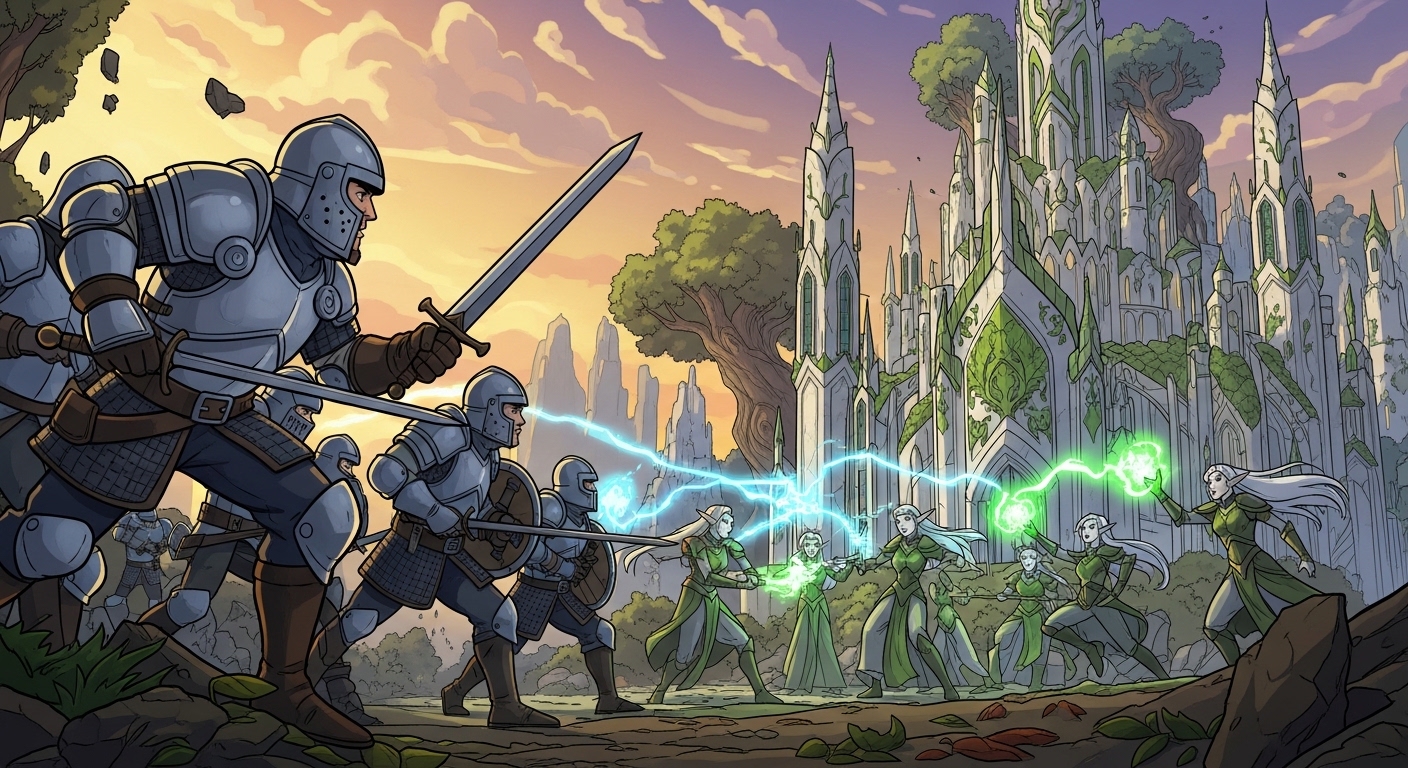
    Your Barracks is the cornerstone of military production, unlocked early in Chapter 1. This building trains five unique units for each race: Elves receive Sword Dancers, Archers, Sorceresses, Treants, and Golems; Humans train Axe Barbarians, Crossbowmen, Priests, Paladins, and Mortars

    . While both races have equal unit strength, their tactical styles differ—Human units typically hit harder but defend weaker, while Elven units are more balanced

    .

    Barracks Upgrades reduce training time and increase available slots. Every size increase adds another training slot, allowing parallel unit production. From Chapter XXI onward, Barracks also provide Prosperity, a special requirement for certain chapter buildings

    . Prioritize Barracks upgrades early; faster training means faster army replenishment and more battles per day.

    Training Grounds: Shared Elite Units

    Available from Chapter 2, the Training Grounds trains five shared units for both races: Cerberus, Dryad, Banshee, Orc Warrior, and Orc Strategist

    . These units fill tactical gaps not covered by race-specific troops. Cerberus excel at killing enemy Mages quickly; Banshees specialize as Heavy Range killers; Orc Warriors and Orc Strategists provide powerful mid-to-late game options

    .

    Upgrade your Training Grounds significantly—each upgrade dramatically increases training speed, making these elite units available faster for critical battles

    .

    Mercenary Camp: Specialized Reinforcements

    The Mercenary Camp (unlocked later) provides additional specialized units including Blossom Mages, Rangers, Drone Riders, and Vallorian Veterans. These units often have unique abilities that excel in specific situations, such as Rangers’ mage-killing capabilities or Drone Riders’ exceptional speed for reconnaissance

    .


    Unit Classes and the Combat Pentagon

    Elvenar features five unit classes arranged in a combat advantage system:

    Light Melee (LM)

    Fast, balanced frontline fighters with high initiative. Includes Sword Dancers (Elves), Axe Barbarians (Humans), Cerberus, and Drone Riders. Strong against Light Range, weak against Heavy Melee

    .

    Heavy Melee (HM)

    Slow, tanky units with massive health but limited movement. Includes Treants (Elves), Paladins (Humans), and Orc Warriors. Strong against Light Melee, weak against Light Range and Mages

    .

    Light Range (LR)

    High-damage, fragile shooters. Includes Archers (Elves), Crossbowmen (Humans), Rangers, and Dryads. Strong against Heavy Melee and Mages, weak against Light Melee and Heavy Range

    .

    Heavy Range (HR)

    Armored ranged units with special protections. Includes Golems (Elves), Mortars (Humans), Banshees, and Orc Strategists. Strong against Light Range, weak against Heavy Melee

    .

    Mages

    Support units with powerful special abilities. Includes Sorceresses (Elves), Priests (Humans), and Blossom Mages. Strong against Heavy Melee, weak against Light Melee

    .

    The Combat Pentagon: Light Melee → Light Range → Heavy Melee → Mages → Heavy Range → Light Melee (with variations). Understanding these relationships is fundamental to tactical deployment

    .


    Training and Army Management

    Training Size vs. Speed

    Two factors determine army production: Training Size (how many units per slot) and Training Speed (how fast slots complete). Training size increases with Armories, Shrines of Shrooms, and Dwarven Bulwarks—but larger stacks take longer to train. Training speed increases with building upgrades and wonders like Needles of the Tempest, Victory Springs, and Flying Academy

    .

    The Balance: If you check the game twice daily, aim for training queues lasting 12+ hours. If training completes in 2 hours but you sleep for 8, you lose 6 hours of potential production. Adjust your training size and speed so queues finish shortly after you typically log in

    .

    Armory Strategy

    Armories increase training queue size but consume significant population and space. For active players checking twice daily, 2 Armories suffice; for less frequent players, 4 Armories prevent queue overflow

    . Balance based on your schedule, not maximum theoretical capacity—excess armories waste resources better spent on production buildings.

    Troop Production Rotation

    Don’t train all unit types equally. Focus on your most-used troops based on current tournament types and world map enemies. For example, during Steel Tournaments, prioritize Archers and Rangers; during Marble Tournaments, emphasize Sorceresses and Blossom Mages

    . Mercenary Camp units often provide the best value for specific encounters.


    Tactical Deployment and Battle Strategies

    The Default Deployment Strategy

    When selecting troops, the order you place them matches the opposing lineup order

    . As a default strategy:

    • Place Archers/Rangers opposite Mages and Heavy Melee
    • Place Banshees opposite Heavy Range
    • Place Orc Strategists opposite Light Range
    • Place Golems opposite Light Melee

    This creates favorable matchups across the front line, but adapt based on battlefield terrain and enemy composition.

    Terrain and Positioning

    Before deploying, scout the battlefield with a single fast unit (like a Drone Rider or Cerberus) to view terrain obstacles

    . Retreat without penalty to adjust your strategy. Use obstacles to create bottlenecks, protecting fragile ranged units while melee forces engage. Position Heavy Melee to block enemy advancement while your ranged units deal damage from safety

    .

    Manual vs. Auto-Fighting

    Auto-fighting is convenient but often results in higher losses—AI doesn’t optimize positioning or target priority. Manual fighting allows strategic retreats, focus fire, and terrain exploitation. Even occasional manual fighting improves your understanding of unit behaviors, helping you select better troops for auto-fights

    .

    When to Manual Fight:

    • Difficult tournament provinces (4+ stars)
    • Spire of Eternity boss battles
    • Encounters where auto-fight consistently fails
    • When preserving specific troops matters

    The “Niche Unit” Strategy

    When standard lineups fail, deploy “ignored” units with highest stats: Drone Riders, Sinister Cerberus, Vallorian Veterans, and Gruff Orcs. These units excel in specific matchups where conventional strategies fail

    :

    • Drone Riders opposite Light Range (speed kills)
    • Vallorian Veterans opposite Heavy Range (tank and spank)
    • Gruff Orcs opposite Light Melee (overwhelming force)

    You’ll lose troops securing victory, but sometimes a win with losses beats consistent defeat.


    Tournament and Spire Strategies

    Tournament Preparation

    Before tournaments, craft every combat building available in the Magic Academy: Enlightened Light Range (ELR), Magnificent Mage Multiplier (MMM), and Unleashed Unit Upgrade (UUU). Even if not immediately used, stockpile these—there’s no storage limit, and they’re crucial for high-score attempts

    .

    Tournament-Specific Tactics

    Each tournament type features specific enemy compositions requiring tailored strategies

    :

    Marble Tournament: Dominated by Heavy Melee, Heavy Range, and Light Range. Key units: Sorceresses, Priests, Blossom Mages. Use Light Range support but protect them from Mist Walkers.

    Steel Tournament: Mage-heavy with Steinling and Thief support. Key units: Archers, Rangers. Use Light Melee to protect Archers from War Dogs. Prioritize killing enemy Mages early.

    Planks Tournament: Mixed Heavy Melee, Light Melee, and Light Range. Key units: Golems, Mortars, Orc Strategists. Focus on eliminating Ancient Orcs first.

    Crystal Tournament: Heavy Range, Light Melee, and Mage mix. Key units: Treants, Paladins, Orc Warriors. Eliminate Enchantresses and Hellhounds early.

    The Timewarp Advantage

    The Timewarp Ancient Wonder (or fed Polar Bear) reduces tournament cooldown between rounds. At maximum level, this allows completing 6 tournament rounds or even 2 full tournaments within 5-day booster durations, effectively doubling your score potential

    . This is arguably the most powerful military investment for serious tournament players.


    Ancient Wonders for Military Might

    Essential Combat Wonders

    1. Simia Sapiens: The best military wonder in the game—provides free troops and training bonuses
    2. Needles of the Tempest: Speeds Barracks training and boosts Light Range damage
    3. Flying Academy: Speeds Mercenary Camp training and boosts Heavy Range
    4. Victory Springs: Speeds Training Grounds training and boosts Light Melee
    5. Timewarp: Reduces tournament cooldowns—game-changing for active players

    Wonder Investment Strategy

    Focus on maximizing 1-2 wonders before adding new ones. Random low-level wonders provide minimal benefit; concentrated investment creates powerful assets. For pure fighters, prioritize Simia Sapiens and Timewarp. For balanced play, add Needles and Flying Academy

    .


    Advanced Combat Techniques

    Initiative and Turn Order

    Units act based on initiative (displayed in unit stats) and placement. Light units generally act before heavy units. Understanding turn order lets you plan kill sequences—eliminating enemies before they act saves your troops from return fire

    .

    Targeting Priority

    Target enemies based on who can strike you first, not just damage advantages. An enemy that moves before your key unit and can reach it should die first, even if another enemy has worse matchup against you .

    Retreat and Reroll

    Don’t hesitate to retreat from unwinnable battles. Troops return unharmed, allowing you to adjust strategy or wait for better conditions. Similarly, if world map enemies are unfavorable, scout different provinces rather than fighting disadvantageous matchups.

  • Elvenar: Elves vs Humans – Which Race Should You Choose?

    Elvenar: Elves vs Humans – Which Race Should You Choose?

    Introduction: Your First Critical Decision

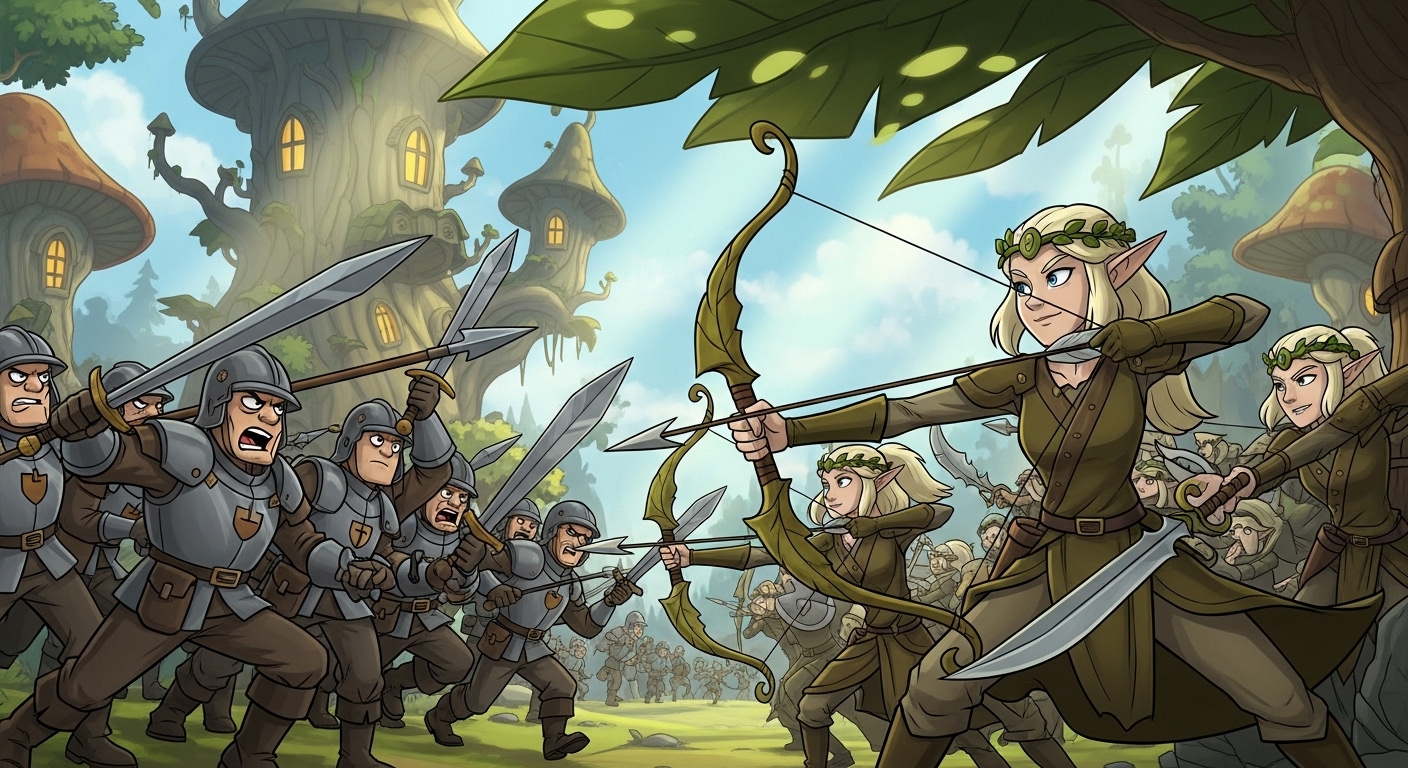
    When you start playing Elvenar, the very first and most important decision you’ll make is whether to choose the Elves or the Humans. This choice is permanent for your city – once you’ve built your settlement, you cannot change your race (though you can create a new city on a different server) . Understanding this decision thoroughly before committing is crucial for long-term satisfaction.

    Both races share identical core mechanics – the same resources, research trees, and building functions. The differences lie purely in aesthetics (building designs), unit appearances, and some minor building size variations

    . However, these “minor” differences can become significant in the late game, affecting your space efficiency, military performance, and overall strategy.


    Visual Differences: Magic Versus Medieval

    Elves: Nature’s Magic

    Elven cities look like fantasy paradises. Their buildings feature sleek, organic designs that appear grown rather than constructed. Flowers, plants, and magical elements are everywhere. Curved lines, ethereal beauty, and harmony with nature define Elven architecture

    .

    For example, the planks factory is actually a tree that shakes its head – eco-friendly and magical at the same time

    . Residences and workshops look like they naturally emerged from the forest rather than being built by hand.

    Humans: Industrial Power

    Human cities resemble medieval Europe – sturdy stone fortifications, practical designs, smokestacks, forges, and angular defensive walls. These feel more “realistic” and relatable to real-world history

    .

    Human buildings come in brown and earthy tones, which some players dislike (“I hate brown” – one player commented on the forum

    ). But for those who appreciate historical and military aesthetics, this is perfect.


    Building Size Differences: Space Management

    This is where real strategic differences begin to emerge:

    Key Size Differences:

    Table

    Building TypeElves SizeHumans SizeImpact
    Guild Hall6×6 tiles6×7 tilesElves save 6 tiles
    ResidencesVaries by chapterVaries by chapterHumans better during Dwarf to Faerie transition
    Workshops3×6, 4×5, etc.3×6, 4×5, etc.Similar progression
    Tier 1 ManufactoriesSmaller footprintLarger footprintElves advantage in Fellowship Adventures

    Important: Elves are generally more space-efficient, especially saving 6 tiles with the Guild Hall

    . However, there’s a transition between the Dwarf and Faerie chapters where Human residences become temporarily better

    .

    Fellowship Adventures (FA) advantage for Elves: Elven Tier 1 factories (Marble, Steel, Planks) have smaller footprints, allowing them to create “manu badges” in 8 tiles compared to Humans needing 10 tiles

    . This means an active FA team with 7-8 Elven cities gains a significant advantage.


    Military Comparison: Which Race is Stronger?

    This is the most controversial topic in the Elvenar community. Recent updates have shifted this balance considerably.

    Unit-by-Unit Comparison:

    Light Melee (Cannon Fodder):

    • Elves: Sword Dancers
    • Humans: Axe Barbarians
    • Verdict: Both are similar, and both “suck” in the early game . Sword Dancers have slightly more HP, while Barbarians deal slightly more damage. Both are primarily used to absorb enemy attacks.

    Light Ranged:

    • Elves: Archers
    • Humans: Crossbowmen
    • Verdict: Early game they’re similar, but Humans become better with upgrades. Archers’ special ability (reducing enemy defense power) is more effective than Crossbowmen’s (reducing attack power) .

    Mages (Most Important):

    • Elves: Sorceress
    • Humans: Priest
    • Verdict:Humans are WAY better. The Priest is considered “the best mage unit in the game” . The Sorceress has a range of 3 (previously 4, then nerfed), making her weak. The Priest’s abilities and survivability are both superior.

    Heavy Melee (Tanks):

    • Elves: Treants
    • Humans: Paladins/Valorian Guards
    • Verdict:Humans are better, especially for auto-fighting. Treants have double the HP and more damage, but they’re slow (high initiative means they move last) . Paladins have 1 extra range (2 vs 1), making them more reliable for auto-combat AI. Treants suffer more from terrain and AI issues.

    Heavy Ranged:

    • Elves: Golems
    • Humans: Mortars/Cerberus (Merc Camp)
    • Verdict:Elves are better. Golems are “WAY++ better” than Mortars . Mortars are called “the most useless unit in the game” until the Frog Prince unlocks in late chapters. Golems’ damage and abilities are consistently superior.

    Overall Military Assessment:

    Early game (Chapters 1-5): Both races are balanced, with minor differences

    .

    Mid-to-Late game: Humans are superior, especially once the Merc Camp fully unlocks (after Chapter 15). The reason is that Humans have options to train high-quality troops in both Barracks AND Merc Camp, while Elves can only make strong troops in the Merc Camp – their Barracks units remain relatively weak

    .

    From an auto-fight perspective: Humans are more reliable because Paladins and Priests are predictable for the AI. Treants require manual control for optimal performance

    .


    Economic Differences: Production and Trading

    Goods Production:

    Both races have access to the same 9 goods (3 Basic: Marble/Steel/Planks; 3 Refined: Crystal/Scrolls/Silk; 3 Precious: Elixir/Magic Dust/Gems). Every player has 3 “boosted” goods (one from each tier) that produce at 100% efficiency, while others produce at only 25% efficiency

    .

    There is no significant economic advantage – both races follow the same production rates. Only the building sizes differ, which affects space efficiency.

    Trading Dynamics:

    Are Human cities more common or Elven? According to forum discussions, Elven cities are more popular

    . This means Elven goods are more available in the market, though demand may also be higher.


    Late Game Evolution: Guest Races

    As you complete chapters, your city adopts technology from “Guest Races” (Dwarves, Fairies, Orcs, etc.). Here’s an interesting twist:

    Your city’s appearance changes! Whether you’re Elves or Humans, when you research Dwarven technology, your buildings transform into Dwarven style. The same happens with Fairies, Orcs, and others

    .

    This means in the late game, your city looks different from your original race. Players who chose purely for “Elven fantasy” or “Human medieval” looks must eventually accept a hybrid aesthetic

    .


    Which Race Should You Choose? Decision Framework

    Choose Elves If:

    1. Aesthetics are your priority: If you love nature, magic, and fantasy themes
    2. Space efficiency matters: Especially if you want to be active in Fellowship Adventures
    3. You enjoy manual combat: Treants and Golems are strong with manual control
    4. You prefer “small is beautiful”: Early game compact cities appeal to you
    5. Trading-focused playstyle: More Elven cities mean better goods availability

    Choose Humans If:

    1. Military performance is your priority: Better Barracks units, especially Mages and Heavy Melee
    2. You prefer auto-fighting: Human units are more reliable for the AI
    3. You love medieval/historical aesthetics: Sturdy, practical buildings
    4. You want to play competitive tournaments: Humans generally have an edge in tournament performance
    5. You’re focused on late game: Humans are significantly better after Chapter 15

    Community Consensus: What Do Players Say?

    Forum discussions and experienced player opinions are mixed:

    The “follow your heart” approach: Many players say the differences aren’t so large that one race becomes “unplayable.” Choose aesthetics, and everything else can be managed

    .

    The competitive perspective: Players who want to compete in high-level tournaments or top Fellowships generally recommend Humans, especially for late game

    .

    The balanced view: InnoGames developers have confirmed that both races are balanced, and they maintain this balance through continuous updates

    .

    Interesting statistic: Despite Humans being “better” on paper, Elven cities are more common

    . This suggests more players prioritize aesthetics over pure performance.


    Practical Tips: After Choosing Your Race

    For Elves:

    • Learn to use Treants effectively – they’re slow but powerful
    • Take advantage of Golems in Heavy Ranged situations
    • Use your space efficiency – fit more buildings in the same space
    • Practice manual combat for better results than auto-fight

    For Humans:

    • Prioritize Priests – they’re the best mage units in the game
    • Take advantage of Paladins’ extra range in positioning
    • Use auto-fight confidently – your units are reliable for the AI
    • Avoid Mortars until the Frog Prince unlocks

    For Both Races:

    • Always focus on boosted goods – never build manufactories for non-boosted resources
    • Join a Fellowship for trading and support
    • Participate in events – limited buildings are more powerful than regular ones
    • Be patient – this is a marathon, not a sprint

    Conclusion: There’s No Wrong Choice

    Ultimately, Elvenar is a game for enjoyment. If you have time, try both races on different servers. But if you’re committed to one city, remember:

    Elves = Beauty + Space Efficiency + Manual Combat SkillHumans = Military Might + Auto-fight Reliability + Late Game Power

    You can reach end-game with either race, win tournaments, and belong to top Fellowships. The difference is only in the journey – which playstyle suits you better.

    Final Advice: Choose the race whose aesthetics attract you more, because you’ll be looking at this city for months or even years – it should look good to you! Everything else can be adjusted through strategy and management.

  • The Lost Art of the Neighbor Visit: A Surprising Key to Motivation

    In the golden age of self-improvement, we talk a lot about discipline. We obsess over Atomic Habits, cold plunges, and the 5 AM club. But there is one ancient, hyper-effective motivational tool that has quietly disappeared from our lives: the spontaneous neighbor visit.

    Before the rise of endless scrolling, the neighbor visit was a daily ritual. You walked fifty feet. You knocked on a door. You talked to another human being with no agenda other than presence. For the modern “motivation buff,” reviving this lost art isn’t just about being friendly—it is a tactical strategy for breaking inertia, building accountability, and recharging your mental batteries.

    Let’s break down why neighbor visits are the ultimate motivation hack, and how to resurrect them in a world that has forgotten how to knock.

    The Psychology of Proximity and Inertia

    Motivation isn’t a lightning bolt; it is a muscle. And like any muscle, it atrophies without use. The single biggest killer of motivation is not laziness—it is isolation.

    When you live in a bubble (home office, grocery delivery, streaming services), your brain enters a low-energy default mode. You stop receiving external cues to act. A neighbor visit disrupts this entropy.

    Psychologists call this social facilitation: the tendency for people to perform better on tasks simply because other people are present. When you know the family next door is up and active, your brain subconsciously raises its own baseline. When you chat with a neighbor over the fence, your cortisol (stress hormone) drops and your oxytocin (bonding hormone) rises. That chemical shift is the biological foundation of motivation. You cannot feel motivated when your nervous system is locked in isolation-mode. A five-minute porch chat resets the system.

    Why Digital Connection Isn’t Enough

    The skeptic says: “I already talk to people online. I have a Discord server. I follow motivational influencers. Why do I need a physical neighbor?”

    Because digital interaction lacks stakes.

    You can rage-type in a comment section and walk away. You can watch a David Goggins video, feel pumped for ten minutes, and then order pizza. But when your actual neighbor—a real human who sees your car in the driveway every day—asks, “How’s that project coming along?” something shifts. Social pressure becomes positive fuel.

    The neighbor visit provides three things that no app can:

    1. Non-negotiable accountability – You can unfollow a guru. You can’t unfollow the person who lives twenty feet from your bedroom window.
    2. Spatial energy – Being in someone else’s physical space (their kitchen, their garage, their garden) exposes you to new micro-habits. You see their organized toolbox. You notice their morning stretching routine. This visual learning is far more powerful than a PDF checklist.
    3. Unscripted spontaneity – Motivation thrives on novelty. Algorithms show you what you already like. A neighbor shows you what you didn’t know you needed—a book recommendation, a tool you can borrow, a shared complaint about the street’s drainage that turns into a collaborative solution.

    The Five Types of Neighbor Visits (And Their Motivational Payoffs)

    Not all neighbor visits are equal. Here’s how to match the visit type to your motivational goal.

    1. The Tool-Borrowing Visit (For Overcoming Procrastination)

    The scenario: You need to fix a fence, but you lack a specific drill bit. Instead of ordering one online (and waiting three days, by which point your motivation has died), you walk next door.
    The payoff: Action momentum. The simple act of walking, knocking, and asking breaks the procrastination loop. By the time you return home with the tool, you are already in “doing” mode. The fence gets fixed in twenty minutes.

    2. The Coffee Porch Visit (For Mental Recovery)

    The scenario: You’ve been grinding for four hours on a work project. Your focus is shot. Instead of doomscrolling, you take a mug to the porch. Your retired neighbor two doors down is also sitting outside.
    The payoff: Cognitive reset. Low-stakes conversation (weather, birds, old stories) activates your brain’s default mode network, which is where creative problem-solving happens. You return to your work with a fresh solution that was hiding in plain sight.

    3. The “I Made Too Much” Food Drop (For Social Dopamine)

    The scenario: You baked bread or grilled extra chicken. You wrap a portion and deliver it.
    The payoff: Purpose fulfillment. Motivation is not just about productivity; it is about feeling needed. The gratitude on a neighbor’s face produces a clean, lasting dopamine hit that no notification can match. You feel like a valuable member of a tribe—which is the deepest human motivator.

    4. The Walk-and-Talk (For Accountability)

    The scenario: You and a neighbor agree to a 7 PM lap around the block every Tuesday. No phones. Just walking.
    The payoff: Consistency architecture. This is the “buddy system” applied to life. On days when your internal motivation is zero, the external commitment of “they are waiting for me” gets your shoes on. And once you’re moving, motivation often follows.

    5. The Emergency Help Visit (For Resilience Training)

    The scenario: A pipe bursts. A car won’t start. A tree falls. You knock on a neighbor’s door for help.
    The payoff: Anti-fragile confidence. Helping someone (or being helped) in a real, non-digital emergency trains your brain to handle stress. You realize: I am not alone. We solve things together. That realization is the foundation of long-term grit.

    The Generational Divide: Why Boomers Know This and Gen Z Is Rediscovering It

    Motivation buffs love studying high performers. Ask any successful person over 60 about their childhood, and they will describe a world of open doors and impromptu neighbor visits. It wasn’t “networking.” It was just life. That constant low-level social connection provided a baseline of emotional regulation and motivation that required zero apps.

    Younger generations face a paradox: they are more digitally connected than ever but more physically isolated. The result is a motivation deficit. You can watch a thousand productivity TikToks, but without a real person to reflect your energy back to you, your drive sputters.

    The good news? Gen Z and Millennials are hungry for this. Post-pandemic, there is a quiet resurgence of “porch culture,” communal gardens, and street potlucks. The motivation buffs who recognize this trend are getting ahead—not because they have better planners, but because they have better neighbors.

    How to Start (Even If You’re Introverted)

    If the idea of knocking on a stranger’s door makes your palms sweat, you are not broken. You are normal. Here is a five-step protocol for the motivation-minded introvert:

    Step 1: The Low-Friction Wave
    Start with zero verbal commitment. Wave when you see them. Make eye contact. Do this for a week. You are building neural pathways that associate “neighbor” with “safe.”

    Step 2: The Prop
    Walk outside holding something obvious—a watering can, a bag of trash, a basketball. Props give people an easy conversation opener. “Nice plant” or “Big game today?” is all it takes.

    Step 3: The Ten-Second Ask
    When you do knock, keep it absurdly short. “Hi, I’m [Name] from number 24. Could I borrow a ladder for ten minutes? I’ll return it right away.” Brevity lowers anxiety for both parties.

    Step 4: The Return Visit
    This is the secret weapon. When you return the ladder (or the measuring cup, or the screwdriver), add a tiny bonus. A cookie. A compliment. “Thanks again. Hey, I noticed your car—if you ever need a jump start, I’m home most evenings.” You have now established a reciprocal relationship.

    Step 5: The Scheduled Spontaneity
    Ironically, you may need to schedule neighbor time at first. Put “porch check-in” on your calendar for Saturday at 10 AM. Walk outside. If no one is there, enjoy five minutes of sunlight. If someone is there, great. Over time, the schedule becomes habit, and habit becomes natural flow.

    Real-World Results: What the Data Says

    Sociological research backs this up. A long-term Harvard study on happiness (the Grant Study) found that the single strongest predictor of a flourishing life at age 80 was not cholesterol levels or wealth—it was warm relationships. And the most accessible form of those relationships? Neighbors.

    Furthermore, a 2022 study in the Journal of Positive Psychology found that people who reported at least one “casual friendly interaction” with a neighbor per week had 18% higher self-reported motivation scores than those who did not. They exercised more, completed more personal projects, and reported fewer “do-nothing” days.

    Why? Because a neighbor visit is a commitment device. Once you’ve told someone you’re training for a 5K, you feel a gentle pressure to actually run. Once you’ve shown a neighbor your half-painted garage, you feel a quiet urge to finish it. That pressure isn’t toxic—it’s the engine of follow-through.

    A Cautionary Note (For the Motivation Purist)

    Not every neighbor will be your tribe. Some will be grumpy. Some will be overbearing. Some will want to talk for an hour when you have fifteen minutes. That’s fine.

    The goal is not to become the neighborhood social director. The goal is to add one or two low-stakes, real-world accountability partners to your motivational ecosystem. Treat neighbor visits like a supplement, not a replacement for your core habits. You still need your morning routine. You still need your workout. But the neighbor visit is the glue that prevents those habits from feeling robotic and lonely.

    The Bottom Line

    We live in an era of motivational abundance. There are more podcasts, more apps, more challenges, and more gurus than ever. And yet, we feel less motivated than ever. Why? Because we’ve forgotten that motivation is relational.

    You cannot scroll your way to discipline. You cannot optimize your way out of loneliness. But you can walk fifty feet, knock on a door, and say hello.

    That small, brave act does three things simultaneously:

    1. It breaks your current state of inertia (a physical win).
    2. It releases neurochemicals that support drive (a biological win).
    3. It builds a web of gentle accountability (a social win).

    For the motivation buff who has tried every productivity system and still feels stuck, the answer is not a new app. It is not a stricter schedule. It is an old, forgotten technology called your neighbor.

    So here is your challenge for this week: pick one neighbor you have never spoken to. Find a trivial reason to knock (borrow an egg, ask about recycling day, compliment their plant). Stay for less than two minutes. Then go back inside.

    What you will feel is not just friendliness. You will feel a tiny, powerful surge of energy. That is motivation. And it was waiting for you the whole time, just on the other side of the door.


    Word count: ~1,550

    Tournament scores

    It sounds like you’re asking about tournament scores — possibly in the context of motivation, competition, or tracking performance. Since your previous requests focused on “motivation buffs” and then “neighbor visits,” I’ll connect tournament scores to motivational psychology and self-improvement.

    Here’s a concise breakdown of how tournament scores relate to motivation — whether in sports, esports, board games, or even workplace competitions.


    Tournament Scores as a Motivational Engine

    For a “motivation buff,” tournament scores are not just numbers — they are feedback loopsaccountability markers, and social proof of progress.

    1. The Leaderboard Effect

    Tournament scores create a visible ranking. Research shows that seeing your name on a leaderboard (even a small one) increases:

    • Effort – People try harder when they know they’re being compared.
    • Persistence – Falling behind can trigger a “catch-up” motivation spike.
    • Social comparison – Healthy rivalry drives improvement.

    Motivation takeaway: If you want to boost your own drive, join a tournament (even a casual one). The scoreboard becomes an external accountability partner.

    2. Score = Objective Feedback

    Unlike vague self-assessments (“I did okay”), a tournament score is unambiguous. It tells you:

    • Exactly where you stand
    • How far you are from the next tier
    • Whether your training methods are working

    This aligns with goal-setting theory (Locke & Latham): specific, challenging goals paired with clear feedback produce the highest motivation.

    3. The “Near Win” Phenomenon

    Psychologists have studied the “near win” — finishing just a few points behind the leader. Far from being demotivating, near misses often fuel greater effort in the next tournament. The brain treats a close loss as a learning signal, not a failure.

    Famous example: Olympic silver medalists are often less happy than bronze medalists (because silver compares upward to gold). But in repeated tournaments (e.g., a season), close losses predict the biggest performance jumps.

    4. Tournament Scores vs. Personal Bests

    A pure motivation buff balances two metrics:

    • Absolute score (how you rank against others)
    • Personal score improvement (how you rank against your past self)

    Research suggests that focusing only on tournament placement can increase anxiety. The healthiest approach:

    “I want to win, but my real goal is to beat my previous round’s score.”

    This is called a mastery orientation (improving self) paired with a performance orientation (beating others). The combination is powerful.


    Example: Applying Tournament Scores to Daily Life

    You don’t need an official event. Create a personal tournament:

    ActivityTournament FormatScore Metric
    Work tasksPomodoro challenge with friendsCompleted cycles per day
    FitnessWeekly step leaderboard (family/neighbors)Total steps or workout reps
    LearningQuiz yourself every SundayCorrect answers vs. previous week
    Neighbor visits (from your last request)“Friendly knock” challengeNumber of unique neighbors met

    Key Takeaway for Motivation Buffs

    Tournament scores externalize your progress. They turn invisible improvement into visible numbers. That visibility triggers dopamine, fuels friendly competition, and creates a story of growth.

    But remember: the score is a tool, not the goal. The real win is the discipline and community you build along the way.

  • Elvenar: A Deep Dive into the Fantasy City-Building Strategy Game

    In the vast landscape of online strategy games, few titles manage to capture the imagination quite like Elvenar. Developed by InnoGames, the creators of popular titles such as Tribal Wars and Forge of Empires, Elvenar emerged in 2015 as a unique entry in the city-building genre. Unlike traditional strategy games that focus primarily on warfare and conquest, Elvenar offers players a refreshing alternative—a world where diplomacy, trade, and harmonious development take center stage. This article explores the intricate mechanics, compelling features, and enduring appeal of this fantasy strategy game that has attracted millions of players worldwide.

    The Core Concept: Building Without Bloodshed

    At its heart, Elvenar represents a paradigm shift in strategy gaming. The game presents players with a fundamental choice at the outset: align with the mystical Elves or the industrious Humans. This decision isn’t merely cosmetic—it fundamentally shapes the entire gameplay experience, from architectural aesthetics to economic strategies and unit compositions. The Elven faction emphasizes harmony with nature, featuring elegant, organic structures that blend seamlessly with their forest surroundings. Their buildings curve and flow like natural formations, constructed from living wood and crystal. Conversely, the Human faction embodies medieval craftsmanship and engineering prowess, with sturdy stone fortifications, towering castles, and efficient, grid-like city layouts.

    What truly distinguishes Elvenar from its competitors is its deliberate departure from player-versus-player combat. While most strategy games incentivize aggression and raiding, Elvenar creates a cooperative environment where players focus on developing their cities, trading resources, and collaborating rather than destroying. This philosophy attracts a diverse player base, including those who prefer thoughtful planning over frantic clicking and competitive stress. The absence of direct warfare doesn’t mean the game lacks challenge—instead, it redirects strategic thinking toward economic optimization, space management, and long-term planning.

    Economic Foundations: The Resource Management Dance

    The economic system in Elvenar operates on multiple interconnected layers that demand careful attention. Basic resources form the foundation: coins, supplies, and population serve as the primary currencies for construction and expansion. Coins generate automatically from residences and through trading, while supplies require active production in workshops. Population limits determine how many buildings you can support, creating a delicate balancing act between housing and functional structures.

    As cities advance, secondary resources introduce additional complexity. Steel, planks, and marble become essential for higher-tier buildings and technologies. The sentient goods system represents a significant evolution in the mid-game, requiring specialized manufactories and trading networks. Later chapters introduce ascended goods, pushing economic management to sophisticated levels where production chains span multiple buildings and timeframes.

    The trading system serves as Elvenar’s social and economic backbone. Players establish Fellowships (guilds) where members exchange goods, provide mutual aid, and coordinate strategies. The game implements a fair trading ratio system that prevents exploitation while encouraging specialization. A player focusing on marble production can trade surplus with neighbors producing steel or planks, creating interdependent economic relationships that mirror real-world trade dynamics. This cooperative element transforms solitary city-building into a communal experience where success depends on social connections and negotiation skills.

    The Tech Tree: A Journey Through Fantasy Lore

    Elvenar’s research system unfolds like an epic fantasy narrative. The technology tree spans numerous chapters, each representing a distinct era in the game’s lore. Beginning with basic settlement technologies, players progress through medieval advancements, magical discoveries, and eventually reach futuristic and otherworldly technologies. Each chapter unlocks new buildings, units, economic options, and story elements that gradually reveal the rich mythology of Elvenar’s world.

    The Ancient Wonders system adds monumental construction projects to the technological progression. These massive structures provide empire-wide bonuses and represent significant long-term investments. Building an Ancient Wonder requires collecting rune shards through various activities, then dedicating resources and time to construction. Once completed, these wonders offer benefits ranging from production boosts to military enhancements, though their true value lies in the prestige and strategic advantages they provide. The choice of which wonders to prioritize shapes a player’s development path and often reflects their playstyle—whether focusing on economic dominance, military strength, or cultural advancement.

    The Combat System: Tactical Challenges Without Aggression

    While Elvenar avoids player-versus-player warfare, it incorporates a sophisticated player-versus-environment combat system. Provinces on the world map contain hostile forces that must be defeated to expand territory and access new resources. The combat mechanics utilize a turn-based tactical system where unit positioning, terrain advantages, and counter-strategies determine outcomes.

    The game features diverse unit types with distinct strengths and weaknesses. Light melee units excel against ranged attackers but struggle against heavy cavalry. Mage units deal devastating magical damage but remain vulnerable in close combat. This rock-paper-scissors dynamic requires players to scout enemy compositions and adapt their armies accordingly. Unit promotion through training grounds allows veterans to gain experience and improved statistics, creating emotional investment in carefully cultivated armies.

    Tournament and Spire of Eternity events provide regular combat challenges that test military preparation and tactical acumen. These activities offer valuable rewards including rare resources, exclusive buildings, and powerful artifacts. The Spire, in particular, presents a multi-level dungeon-style challenge where players negotiate or fight through increasingly difficult encounters, offering choices between peaceful resolution and combat based on their current capabilities and preferences.

    Seasonal Events and Evolving Content

    Elvenar maintains player engagement through a robust event calendar featuring seasonal celebrations and special occasions. Spring festivals, summer carnivals, Halloween hauntings, and winter wonderlands transform the game world with thematic decorations, limited-time quests, and exclusive rewards. These events introduce event currencies and grand prize mechanics that reward active participation with unique buildings, avatar portraits, and powerful boost items.

    The Battle Pass system, implemented in recent years, provides structured progression paths with free and premium reward tracks. Daily quests, weekly challenges, and event-specific tasks create a satisfying gameplay loop that respects both casual and dedicated players. The developers at InnoGames demonstrate remarkable commitment to content updates, regularly introducing new chapters, building types, quality-of-life improvements, and gameplay mechanics that keep the experience fresh for veteran players while maintaining accessibility for newcomers.

    Visual Design and Atmospheric Immersion

    Elvenar’s art direction deserves particular recognition in an era where many browser and mobile games prioritize function over form. The isometric perspective showcases meticulously detailed buildings with distinct architectural styles that evolve dramatically as players advance through chapters. Early settlements feature humble cottages and basic workshops, while endgame cities display floating islands, crystal spires, and impossible geometries that blend magic with technology.

    The sound design complements the visual experience with ambient music that shifts between peaceful, pastoral themes and more dramatic compositions during events or combat. Sound effects provide satisfying feedback for production completions, construction finishes, and combat actions without becoming overwhelming or repetitive. The interface design prioritizes clarity and accessibility while maintaining thematic consistency through ornate borders, fantasy-inspired fonts, and intuitive iconography.

    The Community and Social Fabric

    Beyond the game mechanics, Elvenar has cultivated a remarkably positive community that reflects its cooperative design philosophy. Fellowships range from casual, social groups to highly organized competitive teams aiming for tournament dominance. The Fellowship Adventures feature introduces cooperative events where members collaborate to complete shared objectives, reinforcing social bonds and collective achievement.

    The neighborly help system allows players to assist friends and fellowship members by polishing buildings (boosting production temporarily) or providing culture bonuses. These small interactions create a network of reciprocal relationships that transform the game from a solitary experience into a genuine community. Many players report forming lasting friendships through their Fellowships, with some groups maintaining active communication through external platforms for years.

    Strategic Depth and Long-term Engagement

    What begins as a simple city-building exercise gradually reveals surprising strategic depth. Space management becomes increasingly complex as cities expand and building footprints grow. Players must optimize road networks, balance culture requirements (which boost productivity), and plan for future expansions that may require demolishing and rebuilding entire districts. The city layout puzzle attracts optimization enthusiasts who calculate precise arrangements to maximize efficiency within limited space constraints.

    Diamonds, the premium currency, introduce monetization considerations without creating pay-to-win dynamics. While purchasable with real money, diamonds are also obtainable through gameplay achievements, event participation, and daily rewards. Wise diamond management—deciding whether to spend on instant completions, extra building slots, or exclusive premium buildings—becomes part of the strategic decision-making process.

    Conclusion: A Timeless Fantasy Experience

    Elvenar succeeds by recognizing that strategy gaming doesn’t require conflict between players. By emphasizing cooperation, trading, and peaceful development, it creates a niche that appeals to gamers seeking thoughtful, low-stress experiences without sacrificing depth or challenge. The game respects player time through flexible engagement options—sessions can range from brief daily check-ins to extended optimization marathons depending on individual preferences.