Author: wp-a-dmin

  • Elvenar: Elves vs Humans – Which Race Should You Choose?

    Elvenar: Elves vs Humans – Which Race Should You Choose?

    Introduction: Your First Critical Decision

    When you start playing Elvenar, the very first and most important decision you’ll make is whether to choose the Elves or the Humans. This choice is permanent for your city – once you’ve built your settlement, you cannot change your race (though you can create a new city on a different server) . Understanding this decision thoroughly before committing is crucial for long-term satisfaction.

    Both races share identical core mechanics – the same resources, research trees, and building functions. The differences lie purely in aesthetics (building designs), unit appearances, and some minor building size variations

    . However, these “minor” differences can become significant in the late game, affecting your space efficiency, military performance, and overall strategy.


    Visual Differences: Magic Versus Medieval

    Elves: Nature’s Magic

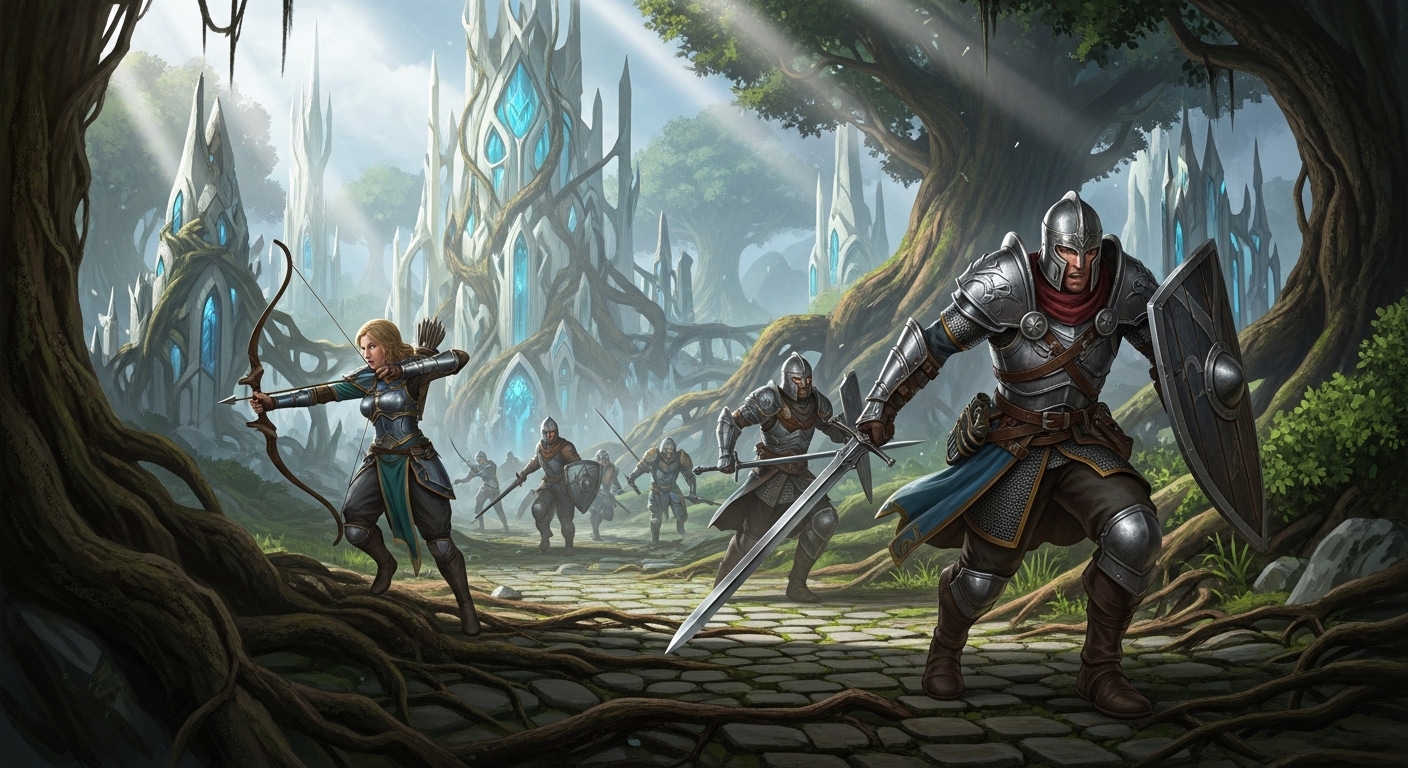
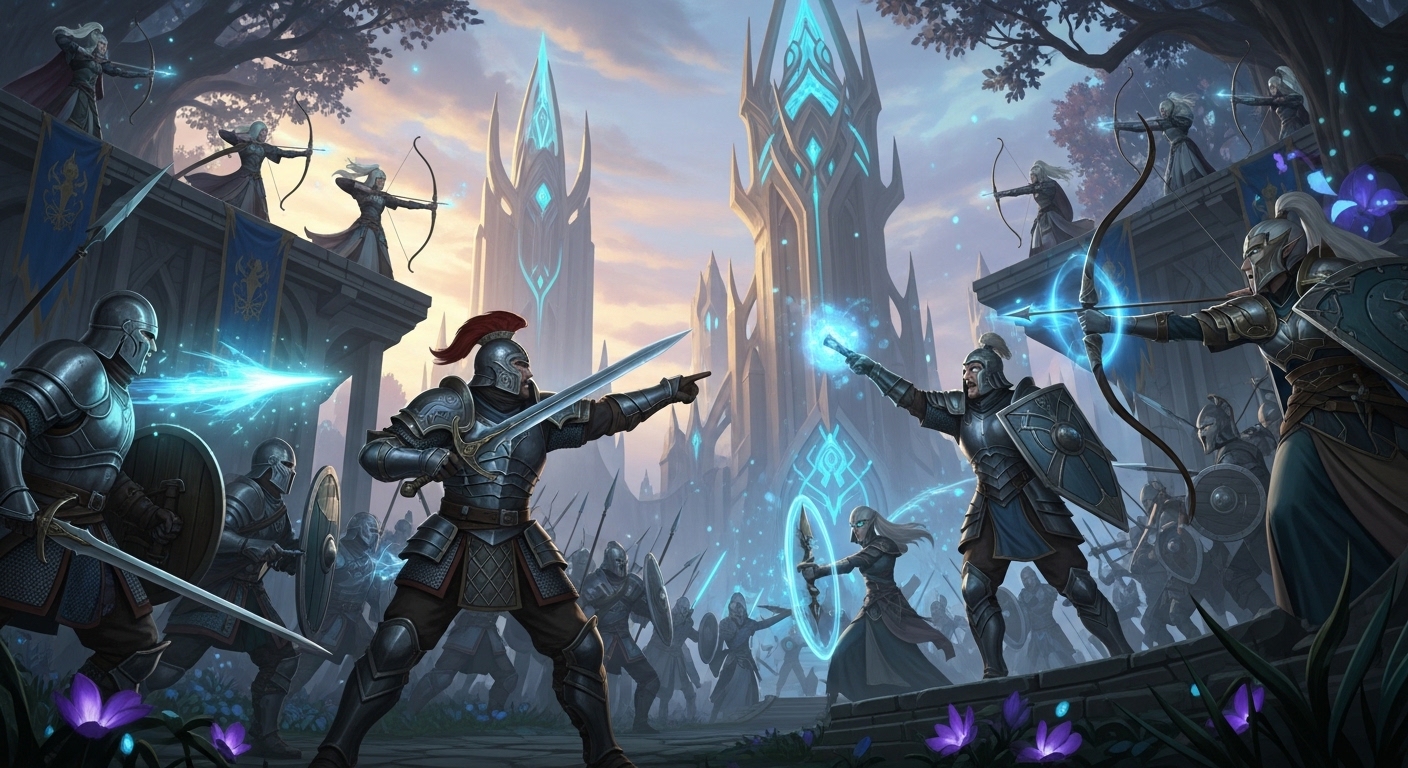
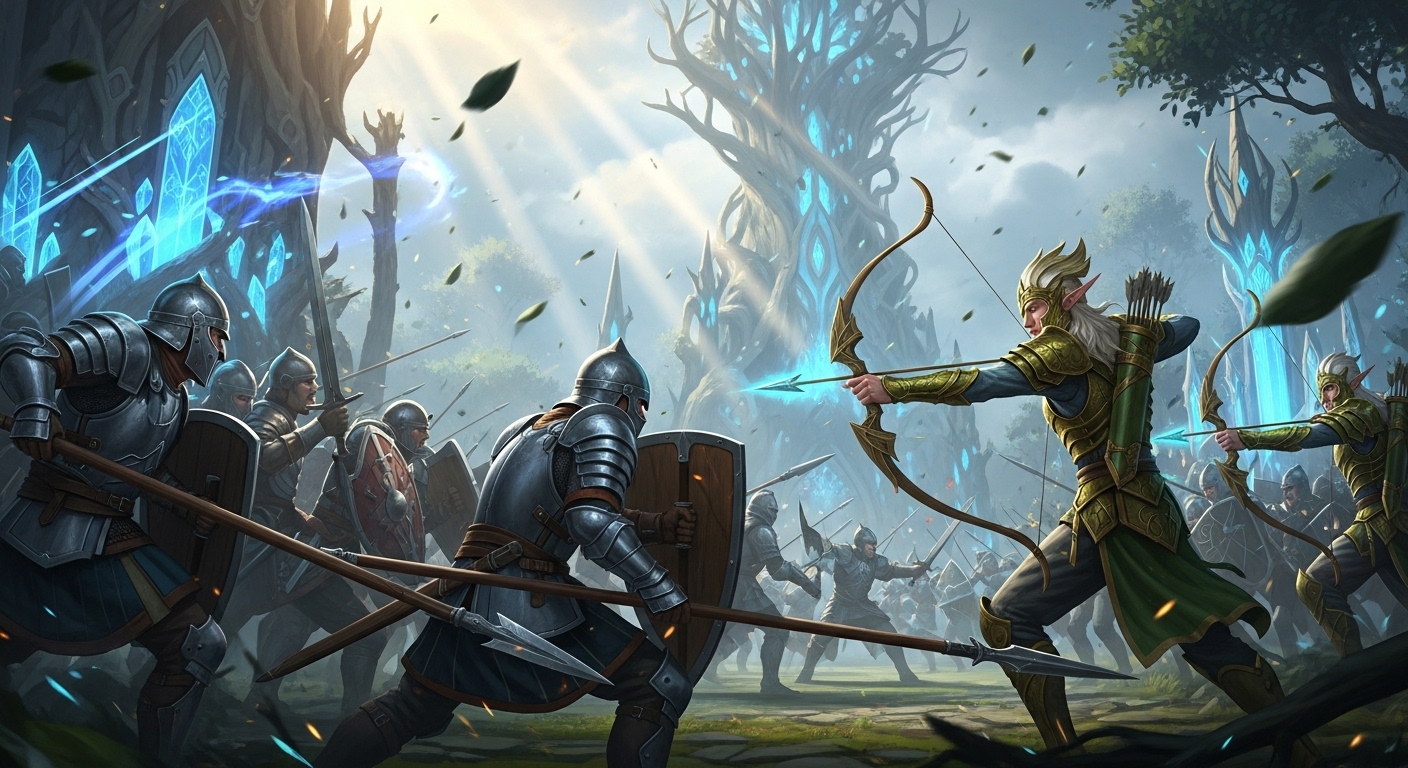
    Elven cities look like fantasy paradises. Their buildings feature sleek, organic designs that appear grown rather than constructed. Flowers, plants, and magical elements are everywhere. Curved lines, ethereal beauty, and harmony with nature define Elven architecture

    .

    For example, the planks factory is actually a tree that shakes its head – eco-friendly and magical at the same time

    . Residences and workshops look like they naturally emerged from the forest rather than being built by hand.

    Humans: Industrial Power

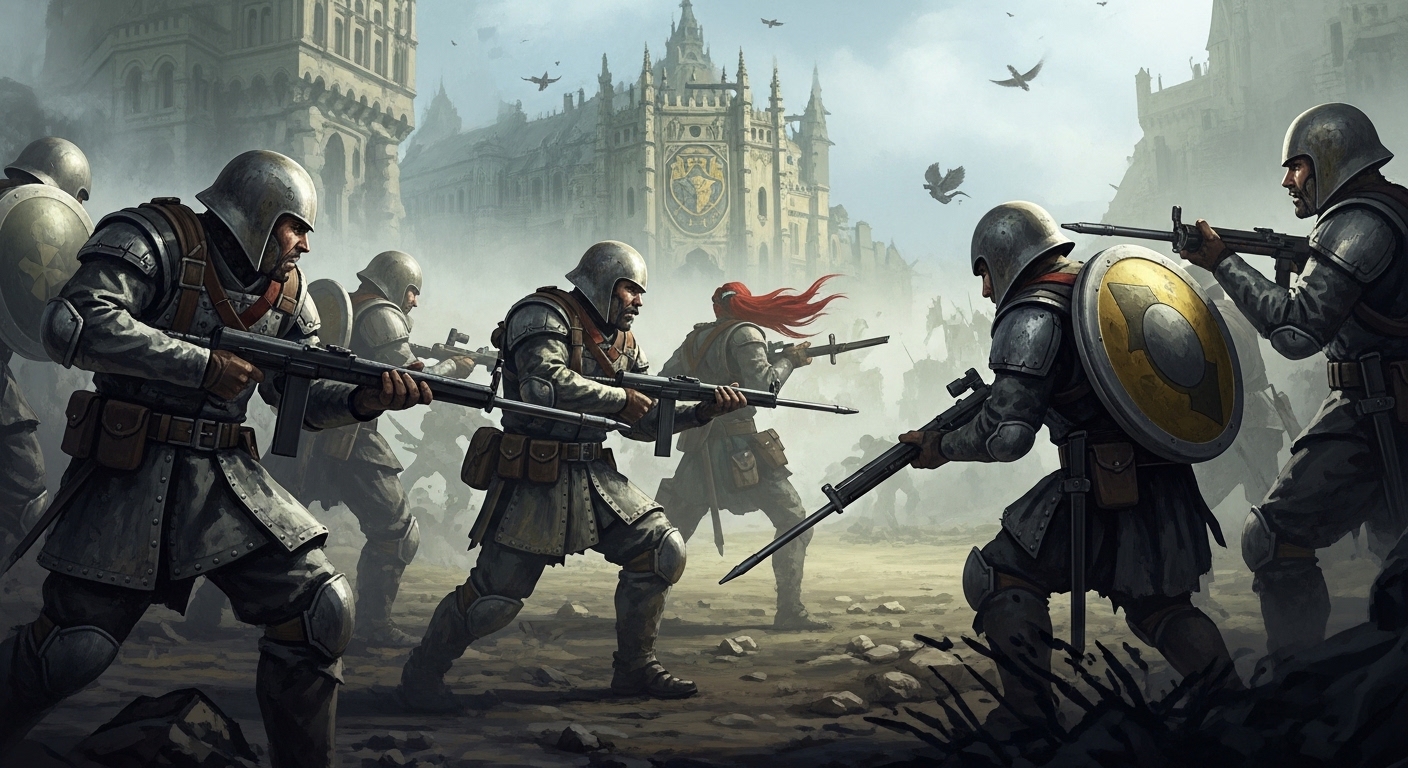
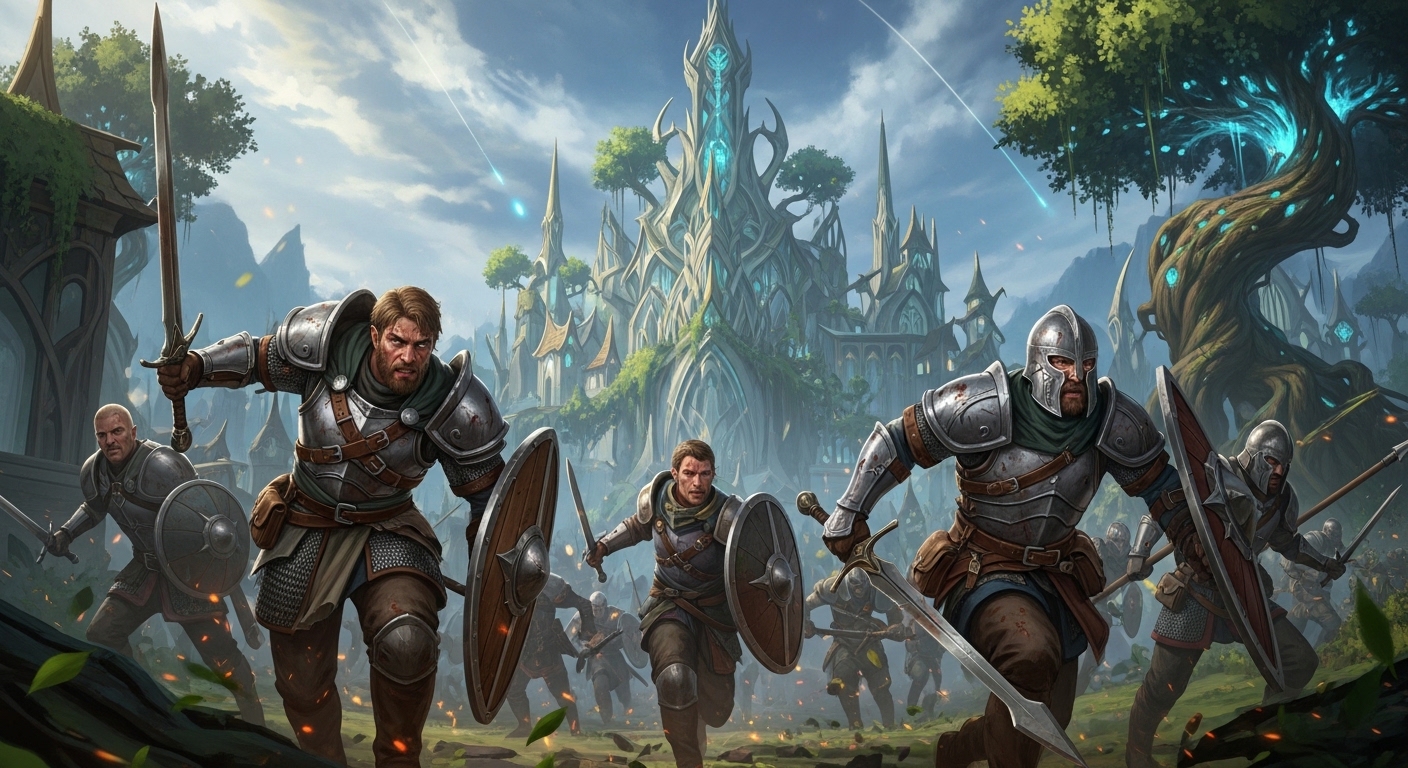
    Human cities resemble medieval Europe – sturdy stone fortifications, practical designs, smokestacks, forges, and angular defensive walls. These feel more “realistic” and relatable to real-world history

    .

    Human buildings come in brown and earthy tones, which some players dislike (“I hate brown” – one player commented on the forum

    ). But for those who appreciate historical and military aesthetics, this is perfect.


    Building Size Differences: Space Management

    This is where real strategic differences begin to emerge:

    Key Size Differences:

    Table

    Building TypeElves SizeHumans SizeImpact
    Guild Hall6×6 tiles6×7 tilesElves save 6 tiles
    ResidencesVaries by chapterVaries by chapterHumans better during Dwarf to Faerie transition
    Workshops3×6, 4×5, etc.3×6, 4×5, etc.Similar progression
    Tier 1 ManufactoriesSmaller footprintLarger footprintElves advantage in Fellowship Adventures

    Important: Elves are generally more space-efficient, especially saving 6 tiles with the Guild Hall

    . However, there’s a transition between the Dwarf and Faerie chapters where Human residences become temporarily better

    .

    Fellowship Adventures (FA) advantage for Elves: Elven Tier 1 factories (Marble, Steel, Planks) have smaller footprints, allowing them to create “manu badges” in 8 tiles compared to Humans needing 10 tiles

    . This means an active FA team with 7-8 Elven cities gains a significant advantage.


    Military Comparison: Which Race is Stronger?

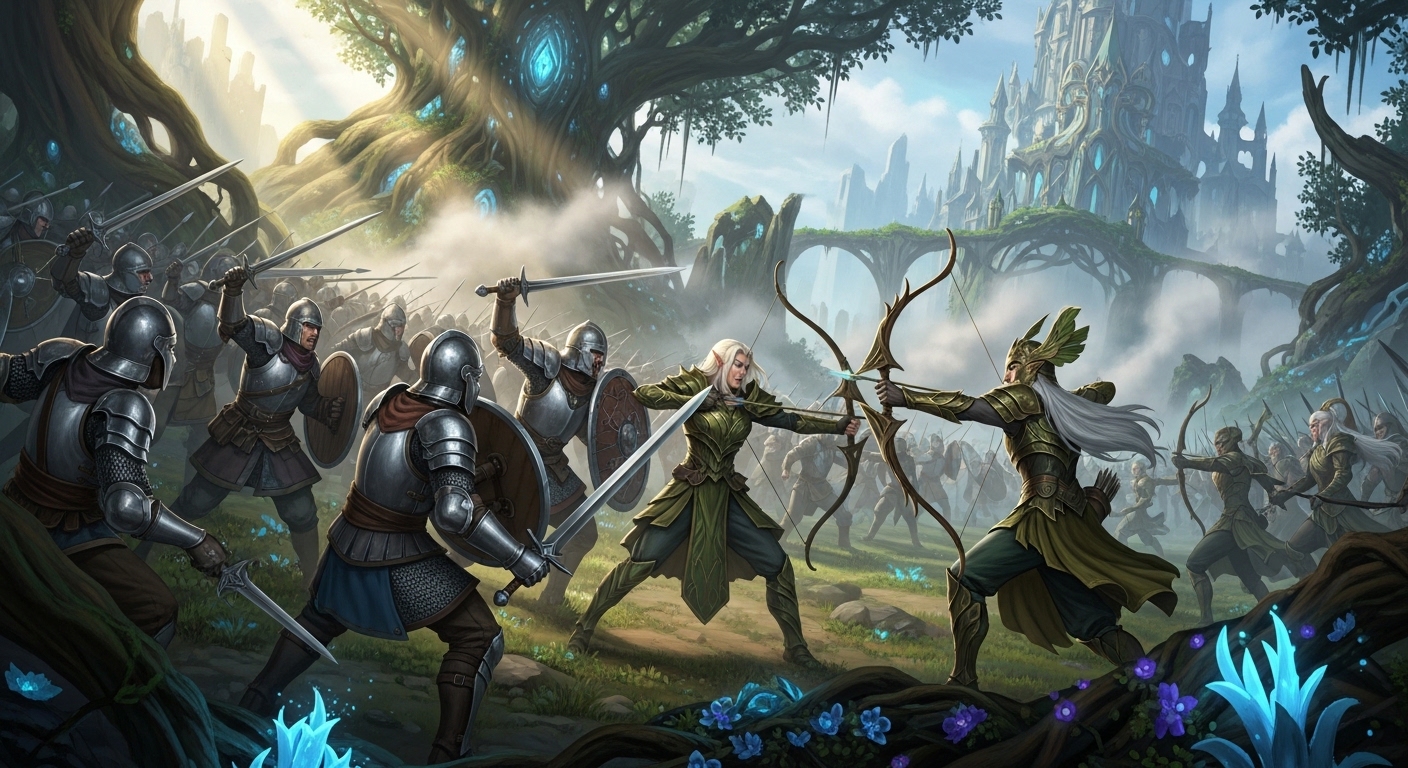
    This is the most controversial topic in the Elvenar community. Recent updates have shifted this balance considerably.

    Unit-by-Unit Comparison:

    Light Melee (Cannon Fodder):

    • Elves: Sword Dancers
    • Humans: Axe Barbarians
    • Verdict: Both are similar, and both “suck” in the early game . Sword Dancers have slightly more HP, while Barbarians deal slightly more damage. Both are primarily used to absorb enemy attacks.

    Light Ranged:

    • Elves: Archers
    • Humans: Crossbowmen
    • Verdict: Early game they’re similar, but Humans become better with upgrades. Archers’ special ability (reducing enemy defense power) is more effective than Crossbowmen’s (reducing attack power) .

    Mages (Most Important):

    • Elves: Sorceress
    • Humans: Priest
    • Verdict:Humans are WAY better. The Priest is considered “the best mage unit in the game” . The Sorceress has a range of 3 (previously 4, then nerfed), making her weak. The Priest’s abilities and survivability are both superior.

    Heavy Melee (Tanks):

    • Elves: Treants
    • Humans: Paladins/Valorian Guards
    • Verdict:Humans are better, especially for auto-fighting. Treants have double the HP and more damage, but they’re slow (high initiative means they move last) . Paladins have 1 extra range (2 vs 1), making them more reliable for auto-combat AI. Treants suffer more from terrain and AI issues.

    Heavy Ranged:

    • Elves: Golems
    • Humans: Mortars/Cerberus (Merc Camp)
    • Verdict:Elves are better. Golems are “WAY++ better” than Mortars . Mortars are called “the most useless unit in the game” until the Frog Prince unlocks in late chapters. Golems’ damage and abilities are consistently superior.

    Overall Military Assessment:

    Early game (Chapters 1-5): Both races are balanced, with minor differences

    .

    Mid-to-Late game: Humans are superior, especially once the Merc Camp fully unlocks (after Chapter 15). The reason is that Humans have options to train high-quality troops in both Barracks AND Merc Camp, while Elves can only make strong troops in the Merc Camp – their Barracks units remain relatively weak

    .

    From an auto-fight perspective: Humans are more reliable because Paladins and Priests are predictable for the AI. Treants require manual control for optimal performance

    .


    Economic Differences: Production and Trading

    Goods Production:

    Both races have access to the same 9 goods (3 Basic: Marble/Steel/Planks; 3 Refined: Crystal/Scrolls/Silk; 3 Precious: Elixir/Magic Dust/Gems). Every player has 3 “boosted” goods (one from each tier) that produce at 100% efficiency, while others produce at only 25% efficiency

    .

    There is no significant economic advantage – both races follow the same production rates. Only the building sizes differ, which affects space efficiency.

    Trading Dynamics:

    Are Human cities more common or Elven? According to forum discussions, Elven cities are more popular

    . This means Elven goods are more available in the market, though demand may also be higher.


    Late Game Evolution: Guest Races

    As you complete chapters, your city adopts technology from “Guest Races” (Dwarves, Fairies, Orcs, etc.). Here’s an interesting twist:

    Your city’s appearance changes! Whether you’re Elves or Humans, when you research Dwarven technology, your buildings transform into Dwarven style. The same happens with Fairies, Orcs, and others

    .

    This means in the late game, your city looks different from your original race. Players who chose purely for “Elven fantasy” or “Human medieval” looks must eventually accept a hybrid aesthetic

    .


    Which Race Should You Choose? Decision Framework

    Choose Elves If:

    1. Aesthetics are your priority: If you love nature, magic, and fantasy themes
    2. Space efficiency matters: Especially if you want to be active in Fellowship Adventures
    3. You enjoy manual combat: Treants and Golems are strong with manual control
    4. You prefer “small is beautiful”: Early game compact cities appeal to you
    5. Trading-focused playstyle: More Elven cities mean better goods availability

    Choose Humans If:

    1. Military performance is your priority: Better Barracks units, especially Mages and Heavy Melee
    2. You prefer auto-fighting: Human units are more reliable for the AI
    3. You love medieval/historical aesthetics: Sturdy, practical buildings
    4. You want to play competitive tournaments: Humans generally have an edge in tournament performance
    5. You’re focused on late game: Humans are significantly better after Chapter 15

    Community Consensus: What Do Players Say?

    Forum discussions and experienced player opinions are mixed:

    The “follow your heart” approach: Many players say the differences aren’t so large that one race becomes “unplayable.” Choose aesthetics, and everything else can be managed

    .

    The competitive perspective: Players who want to compete in high-level tournaments or top Fellowships generally recommend Humans, especially for late game

    .

    The balanced view: InnoGames developers have confirmed that both races are balanced, and they maintain this balance through continuous updates

    .

    Interesting statistic: Despite Humans being “better” on paper, Elven cities are more common

    . This suggests more players prioritize aesthetics over pure performance.


    Practical Tips: After Choosing Your Race

    For Elves:

    • Learn to use Treants effectively – they’re slow but powerful
    • Take advantage of Golems in Heavy Ranged situations
    • Use your space efficiency – fit more buildings in the same space
    • Practice manual combat for better results than auto-fight

    For Humans:

    • Prioritize Priests – they’re the best mage units in the game
    • Take advantage of Paladins’ extra range in positioning
    • Use auto-fight confidently – your units are reliable for the AI
    • Avoid Mortars until the Frog Prince unlocks

    For Both Races:

    • Always focus on boosted goods – never build manufactories for non-boosted resources
    • Join a Fellowship for trading and support
    • Participate in events – limited buildings are more powerful than regular ones
    • Be patient – this is a marathon, not a sprint

    Conclusion: There’s No Wrong Choice

    Ultimately, Elvenar is a game for enjoyment. If you have time, try both races on different servers. But if you’re committed to one city, remember:

    Elves = Beauty + Space Efficiency + Manual Combat SkillHumans = Military Might + Auto-fight Reliability + Late Game Power

    You can reach end-game with either race, win tournaments, and belong to top Fellowships. The difference is only in the journey – which playstyle suits you better.

    Final Advice: Choose the race whose aesthetics attract you more, because you’ll be looking at this city for months or even years – it should look good to you! Everything else can be adjusted through strategy and management.

  • Elvenar City Building: The Complete Guide to Creating Your Fantasy Empire

    Elvenar City Building: The Complete Guide to Creating Your Fantasy Empire

    Introduction: The Art of City Building in Elvenar

    Elvenar stands as one of the most visually stunning and strategically deep city-building games available today. Developed by InnoGames, this browser-based fantasy strategy game challenges players to construct thriving cities while managing complex resource systems, engaging in tactical combat, and collaborating with fellow players. Unlike typical city builders that focus solely on aesthetics, Elvenar demands careful planning, long-term thinking, and efficient space management. Whether you’ve chosen the graceful Elves with their organic, nature-inspired architecture or the industrious Humans with their imposing medieval structures, your success depends entirely on how well you master the fundamentals of city building

    .

    The journey from a small settlement to a magnificent metropolis spans dozens of chapters and potentially years of gameplay. Every decision you make—from the placement of your very first residence to the selection of your endgame Ancient Wonders—ripples through your entire experience. This comprehensive guide will walk you through the essential strategies, common pitfalls, and advanced techniques that separate thriving cities from struggling ones.

    Early Game Foundation: Laying the Groundwork

    Your first hours in Elvenar set the trajectory for everything that follows. The game begins with a tutorial that introduces basic mechanics, but true mastery requires looking beyond these introductory lessons. The most critical early decision involves understanding your economy’s three pillars: Coins, Supplies, and Knowledge Points

    .

    Coins and Supplies: The Economic Engine

    Coins generate from Residences, while Workshops produce Supplies. These two resources fuel virtually every action in the game—building construction, unit training, research, and trading. New players often make the mistake of building too many cultural buildings or decorative elements before securing their economic foundation. Resist this temptation. Upgrade your Residences and Workshops to the maximum available level before expanding into other areas. A city with level 6 Residences and Workshops generates exponentially more resources than one with twice as many low-level buildings

    .

    Knowledge Points: The Progression Currency

    Knowledge Points represent your most valuable long-term resource. While they regenerate at one per hour (capping at ten stored points), passive generation alone severely limits your progress. Active players scout the World Map aggressively, completing encounters that reward additional Knowledge Points and relics. This “active scouting” strategy can double or triple your research speed compared to players who simply wait for hourly regeneration. Prioritize map expansion early; the provinces you unlock today provide resources for months to come

    .

    Space Management: Your Most Precious Resource

    Space in Elvenar is finite and non-renewable. Unlike resources that regenerate or buildings that upgrade, once you place something on your grid, that space is committed. This reality makes spatial efficiency the single most important skill in city building.

    The Main Hall Strategy

    Position your Main Hall in a corner of your available space. This building serves as your city’s heart, and placing it centrally creates inefficiency because it requires road connections while serving no production function. Corner placement minimizes the road tiles needed to connect it to your network, freeing space for actual productive buildings

    .

    Road Optimization

    Roads represent necessary evil in Elvenar—they connect buildings to your Main Hall but consume space without providing benefits. Minimize this waste through several techniques: First, upgrade roads to their highest available tier immediately, as higher-tier roads provide culture bonuses that partially offset their space cost. Second, design your city so single road segments serve multiple buildings; a road touching six buildings is six times more efficient than one touching a single structure. Third, place buildings that don’t require roads—primarily culture buildings and your Builder’s Hut—along the outer edges of your city where road access would be problematic anyway

    .

    Building Orientation and Grouping

    Rectangular buildings should touch roads with their shorter side, not their longer side. This simple geometric principle can save 20-30% of road space over time. Additionally, group similar buildings together—not just for aesthetic reasons, but for practical management. When your Residences cluster together, you can collect from them efficiently without hunting across your entire city. When Workshops align in rows, you can queue productions visually and maintain consistent supply chains

    .

    The Ancient Wonder Strategy: Long-Term Investments

    Ancient Wonders unlock in Chapter 4 and fundamentally alter your city’s capabilities. These monumental structures provide permanent bonuses but require massive investments in Knowledge Points and resources to construct and upgrade. The 2025-2026 meta has established clear priorities for optimal progression

    .

    Golden Abyss: The Universal First Choice

    Every experienced player recommends Golden Abyss as your first Ancient Wonder. This structure provides population and coins, functioning essentially as a super-residence. While it appears inefficient in early chapters (providing less population per square than standard residences until approximately Chapter 5), its long-term value is unmatched. At maximum level, Golden Abyss provides an 18% population discount across your entire city. This bonus effectively frees hundreds of thousands of population capacity, allowing you to build more production facilities, armories, or guest race settlements than would otherwise be possible

    .

    Mountain Halls: The Perfect Partner

    Mountain Halls serves as the ideal second wonder, pairing with Golden Abyss to create an economic powerhouse. This wonder provides an additional 18% population discount plus significant bonuses to your boosted goods production. Together, these two wonders create the foundation upon which all late-game strategies are built. Without them, you’ll struggle with population constraints that efficient players simply don’t face

    .

    Timewarp: The Tournament Game-Changer

    For players interested in competitive tournament play, Timewarp represents a revolutionary investment. Tournaments feature a 16-hour cooldown between rounds, normally forcing players to spread their participation across multiple days. Timewarp reduces this cooldown, and when combined with a fed Polar Bear pet, enables “instant tournament” completion—finishing all six rounds in a single session. This efficiency translates directly into higher weekly scores and better rewards

    .

    The Leveling Philosophy

    Perhaps the most common mistake in Ancient Wonder management involves spreading resources too thin. New players often construct four or five wonders simultaneously, keeping them all at low levels. Veteran players strongly recommend the opposite approach: focus all Knowledge Point investments on one wonder until it reaches maximum level (30), then move to the next. A single level 30 wonder provides exponentially more benefit than three level 10 wonders occupying the same space. This “power spike” approach creates noticeable jumps in your city’s capabilities rather than gradual, barely perceptible improvements

    .

    Guest Race Settlements: Managing Temporary Expansion

    Beginning in Chapter 6, Elvenar introduces guest races—temporary civilizations that occupy your city and provide resources necessary for chapter progression. Dwarves, Fairies, Orcs, Wood Elves, Sorcerers, Halflings, and others each bring unique mechanics, buildings, and space requirements

    .

    Preparation is Everything

    Before unlocking a guest race’s portal, clear substantial space in your city. These settlements consume enormous areas—often 20-30% of your total available grid—and arriving unprepared forces you to sell permanent buildings or halt production. Scout ahead, knowing which chapter unlocks which guest race, and prepare your layout accordingly

    .

    Portal Placement Strategy

    Each guest race centers around a portal building that enables settlement construction. Place this portal centrally within your cleared space. Central positioning minimizes the road tiles needed to connect settlement buildings to the portal, as these buildings must touch the portal directly or connect via roads. A poorly placed portal can waste dozens of squares in inefficient road networks

    .

    Production Timing

    Guest race buildings feature production timers similar to your main city workshops. Align these with your play schedule: set 9-hour productions before sleep, 3-hour productions during work or school, and 1-hour productions during active play sessions. This alignment prevents wasted time and maximizes resource generation

    .

    Tournament and Combat Integration

    While city building forms Elvenar’s core, tournaments provide the rewards that accelerate your progress. Weekly tournaments feature one of nine goods types and offer Knowledge Points, relics, and premium rewards for participation

    .

    The Efficiency Curve

    Tournament difficulty scales with your city advancement level, not your chapter progress. The first 6-10 provinces feature relatively easy encounters where your squad size significantly outnumbers the enemy. Beyond Province 10, difficulty spikes dramatically—by Province 20, you face 1.5x numerical disadvantages regardless of your army composition

    .

    Strategic Participation

    Rather than attempting all provinces at minimal stars, focus on completing fewer provinces to maximum stars. Six provinces completed to 6-star level yields more tournament points than fifty-four provinces at 1-star, while requiring significantly easier fights. This concentrated approach also conserves resources for future tournaments

    .

    Military Infrastructure

    Combat-focused cities require different building priorities than pure economic cities. However, avoid the common trap of building excessive Armories—these population-heavy structures drain your workforce. Instead, invest in Ancient Wonders like the Shrine of the Shrewdy Shrooms (or Dwarven Bulwark for Humans), which increase training queue capacity without the massive population cost of additional Armories. This wonder-based approach maintains military strength while preserving population for other buildings

    .

    Trading and Fellowship Dynamics

    Elvenar functions as a multiplayer experience through its trading and fellowship systems. No city can efficiently produce all goods, making specialization and trade essential

    .

    Boosted Goods Focus

    Check which goods have relic bonuses surrounding your city—these are your “boosted” goods, producing at 400% efficiency compared to non-boosted production. Focus your manufacturing on these goods exclusively, trading surplus for everything else you need. When placing trades in the trader, offer slight premiums (10-25% above 1:1 ratio)—these attract takers quickly, converting your surplus into needed resources faster than waiting for perfect trades

    .

    Fellowship Benefits

    Joining an active fellowship accelerates progress through multiple mechanisms. Knowledge Point threads allow members to mutually invest in each other’s Ancient Wonders, effectively generating free Knowledge Points daily. Fellow members trade goods without cross-tier penalties that apply to external trades. Tournament coordination helps fellowships push for 10+ chests weekly, unlocking premium rewards for all members. Finally, Neighborly Help—the ability to polish or motivate other players’ buildings—creates chains of mutual benefit

    .

    Choose your fellowship based on activity level. Casual players become frustrated in hardcore fellowships with strict participation requirements, while competitive players stagnate in relaxed groups that don’t push tournament performance. Find your match for optimal enjoyment.

    Event Participation and Evolving Buildings

    Regular events provide exclusive buildings that improve through artifact collection. These “evolving buildings” become permanent fixtures in your city, providing ongoing bonuses that scale with your investment

    .

    Strategic Selection

    Events typically offer multiple building options, but you can’t maximize them all. Choose buildings aligned with your playstyle: military players should prioritize barracks boosts and unit training accelerators; economic players want goods production and culture bonuses; hybrid players seek balanced benefits. Spreading artifacts across multiple buildings creates several mediocre structures; concentrating on one creates a powerhouse

    .

    Royal Restoration Management

    As you advance chapters, older evolving buildings become less efficient relative to new options. Royal Restorations allow chapter upgrades for these buildings, but use them sparingly. Only upgrade buildings that remain central to your strategy; sell or replace obsolete structures rather than sinking resources into maintaining them

    .

    Common Mistakes and How to Avoid Them

    Over-Expanding Early

    New players often unlock map expansions aggressively, spending resources and Knowledge Points on border provinces while their core city remains underdeveloped. This creates a “wide but shallow” city that struggles with production. Focus first on maximizing existing space before expanding

    .

    Neglecting Culture

    Culture buildings provide essential morale bonuses that increase Coin and Supply production. Players focused purely on “functional” buildings often find their economy stagnating because low culture reduces income multipliers. Maintain culture at “Enthusiastic” level (130% of required) for optimal production

    .

    Ignoring the Spire

    The Spire of Eternity intimidates new players with its difficulty, but even partial completion provides valuable rewards. Don’t assume you must complete the entire Spire—reaching the first or second gate still yields diamonds, time boosters, and useful items. As your city strengthens, gradually push deeper

    .

    Rigid Building Placement

    Buildings change size when upgraded, particularly at levels 5 and 6. Placing structures with no room for growth forces you to sell and rebuild when upgrades become available, wasting resources and time. Always leave expansion room around permanent buildings

    .

    Conclusion: The Long Game

    Elvenar rewards patience and planning more than quick reflexes or monetary investment. The cities that dominate tournaments and top the rankings weren’t built in weeks—they represent months or years of careful optimization, strategic decisions, and adaptive planning. Your city is a living project that evolves with each chapter, each event, and each update.

    Master the fundamentals: efficient space usage, economic prioritization, and Ancient Wonder investment. Adapt to new mechanics as guest races introduce them. Engage with the community through fellowships and trading. Most importantly, enjoy the process—Elvenar’s beauty lies not just in the destination of a maxed-out city, but in the journey of watching your settlement grow from humble beginnings into a fantasy empire that reflects your strategic vision.

  • Mastering Elvenar: Essential Strategy Tips for Building Your Fantasy Empire

    Mastering Elvenar: Essential Strategy Tips for Building Your Fantasy Empire

    Introduction: Laying the Foundation for Success

    Elvenar is a game of patience, strategic planning, and efficient resource management. Whether you’ve just begun your journey as an Elf or Human ruler, or you’re looking to optimize an established city, understanding core strategic principles will transform your gameplay experience. This comprehensive guide covers essential tips from early-game fundamentals to advanced optimization techniques, helping you build a thriving metropolis that stands the test of time

    .

    Early Game Strategy: Your First Steps

    Choose Your Race Wisely

    Your journey begins with a crucial decision: Elves or Humans. While both races share identical core mechanics ensuring balanced gameplay, their distinct aesthetics and unit compositions create different experiences. Elves embody magical sophistication with nature-connected architecture, while Humans represent industrial medieval determination with sturdy, practical designs

    . If you’re uncertain, consider creating accounts on different servers to experience both races—there’s no penalty for exploring both options

    .

    Follow the Storyline Quests

    New players often overlook the importance of storyline quests, but these serve as your tutorial and early-game accelerator. These guided missions introduce core mechanics gradually while providing valuable rewards including Coins, Supplies, and even premium Diamonds. Beyond resources, quests unlock new buildings, technologies, and game features that expand your capabilities. Never ignore these narrative-driven objectives—they’re designed to prevent overwhelming new players while ensuring steady progression

    .

    The Eight Residence Rule

    Establish your population foundation early by building at least eight residences. These structures provide both housing and Coin income through taxation. Position them strategically near cultural buildings to maximize productivity bonuses. Simultaneously, construct workshops to begin Supply production—essential for construction, upgrades, and military training

    . This dual-focus on population and production creates the economic engine that powers all future expansion.

    Resource Management Mastery

    The Knowledge Point Strategy

    Knowledge Points (KP) are your progression currency, regenerating at one per hour (maximum 10 stored). Never let your KP bar fill completely—wasted regeneration stalls your advancement. However, there’s a powerful trick: scout nearby provinces on the world map and solve encounters. Each completed encounter awards 1 KP instantly plus valuable relics, bypassing the hourly limit entirely when you’re eager to progress

    . This technique transforms the world map from passive scenery into an active KP farm.

    Production Optimization

    Workshops offer multiple production cycles—from 5 minutes to 1 day. Match your selection to your play schedule: 5-15 minute cycles for active play sessions, 1-hour cycles for regular check-ins, and 9-hour cycles for overnight

    . Shorter orders always yield better efficiency than longer ones; two 3-hour orders outproduce one 9-hour order in the same timeframe. For endgame efficiency, maintain minimum 8 workshops set to 1-hour cycles for quest completion

    .

    The Boosted Goods Focus

    Check your Main Hall to identify your production-boosted goods—these receive significant bonuses from collected relics. Focus your manufacturing on these boosted types and trade for others rather than building diverse factories. This specialization creates massive efficiency advantages, particularly as you advance to Crafted Goods (Scrolls, Crystal, Silk) and Magical Goods (Elixir, Magic Dust, Gems)

    . One boosted manufactory often outproduces three unboosted alternatives.

    City Layout and Space Optimization

    The Road Efficiency Principle

    Roads are necessary evils—they consume space while providing only culture bonuses. Minimize them ruthlessly by following golden rules: never place roads at city edges (they only serve one building), position narrow building edges toward roads (a 3×2 building should show its 2-square side to the road, saving 20+ road blocks), and ensure roads serve at least two buildings

    . The difference between efficient and inefficient road networks can free space for an entire additional building.

    The Corner Main Hall Strategy

    Place your Main Hall in a corner with no more than 2 roads leading from it. This bulky, awkwardly-sized structure dictates your entire layout if centered—corners minimize road waste and free prime space for productive buildings. Veteran players recommend the top corner, building streets downward and sideways. There will come a day when you desperately need to move it; establish this efficient foundation early when fewer buildings require relocation

    .

    Culture Building Placement

    Counter-intuitively, place culture buildings in the CENTER of your city, not the edges. This allows maximum-length straight roads at the perimeter where they’re most efficient. Since culture buildings don’t need road access, central placement optimizes space usage perfectly while freeing edge space for road-dependent structures

    . Group all culture buildings together in rows, with your Builder’s Hut alongside them—neither requires roads, so keep paths far away

    .

    The Double Spiral Design

    For maximum efficiency, implement advanced layout principles: zero crossroads (keep roads straight until hitting corners), place biggest buildings at road ends (only need 1 road square), group same-sized buildings together for easy reorganization, and expand in perfect squares (5×5, 6×6, 7×7) to maintain optimal ratios

    . When restructuring, use spare expansions as staging areas—move buildings to temporary spaces while reorganizing, then return them to optimized positions

    .

    Military and Combat Strategy

    Understanding Unit Classes

    Elvenar features five unit classes with distinct roles: Light Melee (balanced frontline), Heavy Melee (tank units), Light Ranged (high-damage shooters), Heavy Ranged (armored shooters), and Mages (support units)

    . Each race trains five unique units in their Barracks, plus ten shared units in the Training Grounds and Mercenary Camp. While stats are balanced between races, tactical styles differ—Human Light Melee hits harder but defends weaker, while Elven versions are more balanced

    .

    Combat Formation Tactics

    The order you place troops matches the opposing lineup order. Default strategy: place Archers/Rangers opposite Mages and Heavy Melee, Banshees opposite Heavy Ranged, Orc Strategists opposite Light Ranged, and Golems opposite Light Melee

    . However, adapt based on battlefield terrain—use obstacles to create bottlenecks protecting fragile ranged units while melee forces engage.

    For manual fighting, deploy fast Light Melee first to scout terrain, then position your army based on enemy formation. Retreat Light Ranged into back corners when facing Mages to avoid first-round shredding, bringing them out after melee troops have engaged

    . This “snatch victory from defeat” technique often turns losing auto-fights into wins through strategic positioning.

    The Niche Unit Advantage

    When standard lineups fail, deploy “ignored” units with highest stats: Drone Riders, Sinister Cerberus, Vallorian Veterans, and Gruff Orcs. Substitute Dogs opposite Mages, Drones opposite Light Ranged, Veterans opposite Heavy Ranged, and Gruff Orcs opposite Light Melee. You’ll lose troops but secure victory against seemingly impossible encounters

    . These units require manual control but excel in specific matchups where conventional strategies fail.

    Advanced Progression Strategies

    Ancient Wonder Prioritization

    Ancient Wonders provide powerful passive bonuses but require significant investment. Priority for new players: Golden Abyss (population boost) and Mountain Halls (population concentration). At maximum level, each provides 18% population discount—combined they save over 700,000 population in late-game, freeing massive space for other buildings

    . These general-use wonders benefit any playstyle, whether fighting or catering-focused.

    Timewarp becomes essential for active players, reducing tournament cooldowns from 16 hours to near-instant with high levels and fed Polar Bear—transforming tournament participation from spread-out obligation to single-session completion

    .

    The “Max Before Adding” Rule

    Focus on maximizing 1-2 Ancient Wonders before adding new ones. This creates hugely beneficial buildings with highly efficient benefits per square. Wonder costs increased significantly in recent updates, making concentrated investment more important than scattered low-level wonders

    . A level 30 wonder provides exponentially better returns than ten level 3 wonders occupying the same space.

    Short-Term vs. Long-Term Balance

    Decide your progression philosophy early. Short-term strategy prioritizes rapid technology advancement through the research tree—fast progress but minimal wonders until “end-game.” Long-term strategy invests heavily in wonders early, accepting slower chapter progression for powerful permanent benefits

    . Most successful players find balance: allocate daily KP between technologies and wonders, adjusting based on current needs. Approaching guest races or competitive tournaments may demand temporary focus shifts.

    Community and Trading Optimization

    The 3-Star Trading Trick

    Make trades irresistible by offering 2 units less than the default amount. This creates a “3-star offer” appearing at the top of other players’ trade lists, accepted within minutes even in saturated markets

    . The rapid turnover means faster resource acquisition than full-price trades sitting for days. Since InnoGames changed cross-tier balance ratios from 1:4 to 1:1.5, cross-tier trading stigma has reduced significantly

    .

    Fellowship Selection and Participation

    Join an active Fellowship early. These 25-player groups enable resource trading, mutual aid, and coordinated chat. Helping Fellowship members generates bonus rewards when they return the favor. Check city names when visiting—many players indicate preferences like “Culture please!” or specific building help requests

    . Motivate their strongest culture buildings for maximum mutual benefit.

    Quality of Life Enhancements

    Swipe-to-Collect Efficiency

    Click and hold on one ready building, then swipe across all other ready buildings to collect resources instantly. This cuts collection time by 90% compared to individual tapping

    . Combine with fully zoomed-out view to spot all harvestable buildings across your expanding kingdom.

    Batch Production Setup

    Click the circle icon when selecting production to apply the same item to all identical buildings simultaneously. For Workshops, this works across all buildings. For Manufactories, it batches identical types at the same upgrade level—upgrade in pairs for maximum efficiency

    .

    Keyboard Shortcuts

    When resetting production, press number keys 1-6 to select options quickly: 1=5min, 2=15min, 3=1hr, 4=3hr, 5=9hr, 6=1 day for Workshops; 1=3hr, 2=9hr, 3=1 day, 4=2 days for Manufactories . Use arrow keys to navigate the world map without mouse clicking.

    Conclusion: Patience and Persistence

    Elvenar rewards strategic thinking over rushed expansion. The most successful cities result from patient optimization—efficient road networks, focused production, balanced wonder investment, and active community participation. Whether you prefer peaceful trading or military conquest, these strategies provide the foundation for building not just a city, but a lasting legacy in the magical realm of Elvenar.

  • Mastering Elvenar: Advanced Tricks and Pro Strategies for Dominating Your Fantasy Realm

    Mastering Elvenar: Advanced Tricks and Pro Strategies for Dominating Your Fantasy Realm

    Introduction: Beyond the Basics

    Elvenar is a game of patience, strategy, and efficient resource management. While beginners focus on simply keeping their city running, advanced players understand that success lies in optimizing every grid square, every production cycle, and every interaction. This comprehensive guide reveals the sophisticated tricks and professional strategies that separate thriving metropolises from struggling settlements, helping you maximize efficiency and accelerate your progression through the chapters

    .


    Resource Generation Secrets

    The Instant Knowledge Point Hack

    Waiting 10 hours for your Knowledge Point (KP) bar to refill is a beginner’s mistake. Professional players scout nearby provinces on the world map and solve encounters—each completed encounter awards 1 KP instantly plus valuable relics

    . This technique bypasses the hourly regeneration limit entirely, allowing rapid research progression when you’re eager to unlock new technologies. Scout continuously as long as you have sufficient Coins and Supplies, turning the world map into your personal KP farm rather than a passive waiting game

    .

    Coin Generation Beyond Taxation

    Running low on Coins? Don’t just wait for residence collections. Visit other players’ cities and “help” them with their current quests. This generates bonus Coins without spending resources, and Fellowship members can help each other for mutual Coin rewards

    . Additionally, completing encounter negotiations on the world map provides substantial Coin rewards, creating a virtuous cycle where exploration fuels both research and economy

    .

    The 3-Star Trading Advantage

    Make your trades irresistible by offering 2 units less than the default amount. This creates a “3-star offer” that appears at the top of other players’ trade lists and gets accepted within minutes, even when the market is saturated

    . While the discount seems minor, the rapid turnover means you acquire needed resources faster than competitors posting full-price trades that sit for days. This trick is especially powerful for cross-tier trading, where the stigma has reduced since InnoGames changed the balance ratio from 1:4 to 1:1.5

    .


    City Layout Optimization: The Science of Space

    The Corner Main Hall Strategy

    Place your Main Hall in a corner with no more than 2 roads leading from it. This bulky, awkwardly-sized building dictates your entire layout if centered—corners minimize road waste and free up prime space for productive buildings

    . Veteran players recommend the top corner, building streets downward and sideways from there. There will come a day when you desperately need to move it; better to establish this efficient foundation early when fewer buildings require relocation

    .

    Road Efficiency Mathematics

    Roads are space parasites—minimize them ruthlessly. Follow these golden rules:

    • Never place roads at city edges—they only touch one building, wasting space
    • Put narrow building edges toward roads: A 3×2 residence should have its 2-square side touching the road, not the 3-square side. This simple rotation can save 20+ road blocks—enough for an extra building
    • Roads should serve two buildings minimum—avoid dead-end roads entirely
    • Overwrite roads when upgrading: Drag new road types directly over old ones—no deletion required

    The Counter-Intuitive Culture Placement

    Place culture buildings in the CENTER of your city, not the edges. This allows maximum-length straight roads at the perimeter where they’re most efficient. Since culture buildings don’t need road access, central placement optimizes space usage perfectly while freeing edge space for road-dependent structures

    . Group all culture buildings together in rows, with your Builder’s Hut alongside them—neither requires roads, so keep paths far away

    .

    The Double Spiral Design

    For maximum efficiency enthusiasts, implement these advanced principles:

    • Zero crossroads—keep roads straight until hitting corners
    • Place biggest buildings at road ends (only need 1 road square)
    • Group same-sized buildings together for easy reorganization
    • Expand in perfect squares (5×5, 6×6, 7×7) to maintain optimal ratios

    When restructuring, use spare expansions as staging areas. Move buildings to temporary 5×5 spaces while reorganizing, then return them to optimized positions. Don’t fear demolition—rebuilding from scratch often yields better results than incremental adjustments

    .


    Production Mastery

    The Swipe-to-Collect Technique

    Click and hold on one ready building, then swipe across all other ready buildings to collect resources instantly. This cuts collection time by 90% compared to tapping individually

    . Combine this with fully zoomed-out view to spot all “harvest-ables” easily across your expanding kingdom

    .

    Batch Production Setup

    Click the circle icon when selecting production to apply the same item to all identical buildings simultaneously. For Workshops, this works across all buildings. For Manufactories, it only batches identical types at the same upgrade level—so upgrade in pairs for maximum efficiency

    . This trick transforms tedious individual clicking into streamlined mass production.

    The 9-Hour vs. 1-Day Calculation

    Shorter orders always beat longer ones in efficiency. Two 3-hour orders outproduce one 9-hour order in the same timeframe, and the difference increases with shorter cycles. For Workshops, 5-minute orders provide maximum yield if you can maintain active play

    .

    However, match production to your schedule: 9-hour orders for overnight, 1-day orders only if you’ll be offline 24+ hours. Setting 1-day orders when you check in twice daily actually loses resources compared to shorter cycles

    .

    Workshop Optimization for Endgame

    Endgame players need minimum 8 Workshops set to 1-hour cycles for quest efficiency. Remove excess manufactories (down to 2 per tier) to free massive population for upgrades

    . With a maxed Prosperity Towers Ancient Wonder and Power of Provision spells, 2 Magical Workshops can replace 9 normal ones, saving enormous space while maintaining production

    .


    Combat and World Map Tactics

    Selective Scouting Strategy

    Don’t “joy-scout” randomly. Prioritize provinces based on your needs:

    • Need trading power? Target provinces with relics matching your boosted goods
    • Need land expansions? Check Province Overview and target “easy” difficulty provinces

    Remember: each consecutive expansion requires completing one more province than the last. First expansion needs 1 province, second needs 2, third needs 3, and so on

    .

    Combat Damage Mechanics

    Units deal identical damage regardless of stack size—32 Berserkers hit as hard as 1 Berserker until they die. Always finish off enemy stacks completely rather than spreading damage, and prioritize eliminating threats over damaging multiple units

    . Use terrain obstacles to create bottlenecks, protecting fragile ranged units while melee forces engage

    .

    Army Composition Math

    Building more Armories isn’t always better. 2 Armories suffice for active players checking twice daily; 4 Armories for players checking less frequently. Balance based on your login schedule, not maximum capacity—excess armories waste population and space that could support production buildings

    .


    Ancient Wonder Strategies

    The “Max Before Adding” Rule

    Focus on maximizing 1-2 Ancient Wonders before adding new ones. This creates “hugely beneficial buildings with highly efficient benefits per square,” saving space for other content. Wonder costs increased significantly in recent updates, making this strategy essential

    .

    Priority Wonders for New Players

    1. Golden Abyss (population boost)
    2. Mountain Halls (population concentration)
    3. Timewarp (tournament cooldown reduction—game-changing for active players)

    These provide general benefits that remain useful throughout all game stages. At maximum level, Golden Abyss and Mountain Halls each provide 18% population discount, totaling over 700,000 population savings in late-game

    .

    Spell Fragment Farming

    During events, target large daily reward buildings (16+ squares) specifically for disenchanting. These provide massive Spell Fragment returns perfect for “Crab Hotels” (high-turnover crafting). Also stockpile Portal Profits from Trading Stations for emergency fragment needs

    . Artifacts disenchant for 2000 fragments each—if you have duplicates or decide against certain evolving buildings, these become valuable resources

    .


    Advanced Fellowship and Trading

    The Neighborly Help Optimization

    When visiting cities, check their town name—many players change it to indicate preferences like “Culture please!” or “Polish please!”

    . Motivate their strongest culture buildings for maximum mutual benefit. This reciprocal system generates extra rewards when they return the favor

    .

    Cross-Tier Trading Mastery

    Since InnoGames changed the balance ratio from 1:4 to 1:1.5, cross-tier trading stigma has reduced significantly

    . However, ensure your Fellowship has diverse boosted goods producers—if everyone trades down, nobody supplies the lower tiers. Specialize in your boosted goods, trade for everything else, and maintain production diversity within your group

    .


    Diamond and Premium Efficiency

    Smart Diamond Spending

    If purchasing Diamonds, prioritize:

    • Premium cultural buildings (permanent benefits)
    • City expansions (permanent space)
    • Builder’s Huts (permanent construction slots)

    Avoid spending on instant completions or temporary conveniences—these provide poor long-term value. Patience is cheaper than diamonds

    .


    Quick Reference: Essential Shortcuts

    Table

    ActionTrick
    Collect resourcesClick-hold and swipe across buildings 
    Upgrade roadsDrag new type directly over old 
    Batch productionClick circle icon to apply to all 
    Instant KPScout provinces, solve encounters 
    Fast tradesOffer 2 units less for 3-star priority 
    Space savingNarrow building edge to road 
    Culture placementCenter city, not edges 
    Road efficiencyZero crossroads, straight lines 

  • The Complete Elvenar Guide: Mastering Your Fantasy Kingdom

    The Complete Elvenar Guide: Mastering Your Fantasy Kingdom

    Getting Started: Your First Steps in Elvenar

    Welcome to Elvenar, InnoGames’ enchanting fantasy city-builder where your strategic decisions shape the destiny of an ancient world. Whether you’ve chosen the mystical Elves with their nature-infused architecture or the industrious Humans with their medieval fortifications, this guide will help you navigate the complexities of building a thriving kingdom from humble beginnings to majestic empire

    .

    Your journey begins with a critical choice that affects aesthetics, building designs, and thematic elements—but rest assured, both races share identical core mechanics. Elves feature sleek, organic structures intertwined with flowers and magical elements, while Humans construct sturdy, practical buildings with industrial flair

    . This choice is permanent for your city, so select the visual style that resonates with your preferences.

    Understanding Core Resources and Buildings

    The Foundation: Coins, Supplies, and Population

    Three fundamental resources drive your city’s growth. Coins, generated primarily from Residences through taxation, fund construction, upgrades, and research. Supplies, produced in Workshops, power production activities, building improvements, and military training. Your Population, housed in Residences, determines how many workers you can support across all buildings

    .

    Residences serve dual purposes: they provide both population capacity and coin generation. Upgrade these regularly to increase both outputs. Strategic placement matters—positioning Residences adjacent to Cultural Buildings boosts their productivity significantly

    .

    Workshops are your supply engines. Early game, maintain at least 4-6 Workshops to meet quest demands and production needs. As you progress, upgrade these before adding more, as higher-level workshops offer better efficiency per tile

    .

    The Culture System: More Than Decoration

    Unlike typical city-builders where decorations serve purely aesthetic purposes, Elvenar’s Culture Buildings directly impact productivity. Every cultural structure generates happiness, which translates to production bonuses when you reach specific thresholds (125%, 150%, 160%, and 170% culture bonus levels)

    .

    Place sanctuaries, sculptures, trees, and other ornaments strategically. The “Ensorcelled Endowment” spell can double a building’s culture output temporarily, making it invaluable for reaching higher bonus tiers. Veteran players recommend maintaining at least two large culture buildings (3×4 or 3×3) that can be “sparkled” by neighbors to ensure consistent high-level bonuses

    .

    Quests and Progression: The Storyline Framework

    Following the Tutorial Quests

    Storyline quests serve as your tutorial and primary progression mechanism. These guided objectives introduce core mechanics gradually while providing essential rewards—Coins, Supplies, Knowledge Points (KP), and even premium Diamonds

    . Complete these diligently; they unlock new buildings, technologies, and game areas while providing resources that accelerate early development.

    Key early quests include building your first Residences and Workshops, researching the Trader, constructing Barracks, and completing initial province encounters

    . Pay special attention to quests marked in red on community guides—these are mandatory progression gates that cannot be skipped

    .

    Chapter-Based Advancement

    Elvenar organizes progression into 22 chapters, each with specific questlines and unlockable technologies. Chapter 1 establishes your foundation with basic production and military units. Chapter 2 introduces Fellowships (guilds), advanced buildings, and the Training Grounds

    . By Chapter 3, you’ll unlock refined goods production (Crystal, Scrolls, Silk), and Chapter 4 opens Ancient Wonders and Tournaments

    .

    Each chapter demands careful planning. For example, Chapter 3 requires upgrading your Main Hall to level 4, maintaining 8 Residences at level 4, and completing numerous provinces

    . Chapter 4 intensifies with requirements like upgrading two Tier 1 factories to level 8, building your first Ancient Wonder, and reaching 53 completed provinces

    .

    City Layout and Space Optimization

    The Grid System and Road Networks

    Elvenar operates on a grid system where every building requires road connections to function. Your Main Hall serves as the connection hub, with roads extending to reach other structures. This creates spatial puzzles where efficient placement maximizes your limited area

    .

    Key layout principles:

    • Group buildings by type to minimize road usage
    • Place cultural buildings to cover multiple production structures
    • Leave minimal “dead space” between buildings
    • Plan for future expansions—don’t build permanently in areas you’ll need later

    The 4×4 and Expansion Strategy

    Experienced players often recommend planning around a 4×4 grid concept, though this becomes insufficient by Chapter 5

    . Prioritize unlocking city expansions early through research, province completion, and premium purchases if desired. Each expansion represents permanent value, while buildings can be sold or teleported as strategies evolve

    .

    Use temporary structures like 1×1 signposts to fill empty tiles until you need the space. Remember: open tiles are wasted tiles, but poorly placed permanent buildings create long-term inefficiencies

    .

    Military Strategy: Combat and Unit Management

    Understanding the Combat Triangle

    Elvenar features five unit types in a rock-paper-scissors dynamic: Light Melee, Light Ranged, Mages, Heavy Melee, and Heavy Ranged. Each type excels against two others while struggling against two more

    .

    Combat fundamentals:

    • Light Melee defeats Light Ranged and Mages; loses to Heavy Melee and Heavy Ranged
    • Light Ranged defeats Heavy Melee and Heavy Ranged; loses to Light Melee and Mages
    • Mages defeat Heavy Melee and Heavy Ranged; lose to Light Melee and Light Ranged
    • Heavy Melee defeats Light Melee and Light Ranged; loses to Mages and Heavy Ranged
    • Heavy Ranged defeats Light Melee and Heavy Melee; loses to Light Ranged and Mages

    Scout enemy compositions before battles and counter-pick accordingly. Manual control generally outperforms auto-fight, especially in challenging encounters

    .

    Training and Army Composition

    Early game, focus on your boosted units and versatile combinations. Training Grounds (unlocked Chapter 2) allow simultaneous training of two unit types—essential for maintaining diverse armies

    . Many veterans succeed using just two unit types for 95% of encounters, such as Cerberi paired with Treants/Paladins for Elves

    .

    Armories increase your training queue capacity, but balance these against production buildings. One level 8+ Armory suffices for many players, supplemented by other troop-producing structures

    .

    Economic Mastery: Production and Trading

    The Boosted Goods System

    Your kingdom has three “boosted” goods—one from each tier (Basic, Refined, Precious)—that produce at 100% efficiency. All other goods manufacture at 25% efficiency, making trade essential

    .

    Production strategy:

    • Focus manufacturing on your three boosted goods exclusively
    • Use the Trader to exchange surplus for needed materials
    • Never produce non-boosted goods unless absolutely necessary

    Trading and Fellowship Economics

    The Trader interface allows you to create offers exchanging your abundant goods for needed resources. Fair trades follow a 1:1 ratio for same-tier goods or 4:1/16:1 cross-tier ratios

    . Joining an active Fellowship (guild) provides trading partners who understand these economics and often offer favorable internal rates.

    Neighborly Help enables daily visits to other players’ cities. Prioritize “polishing” (boosting) cultural buildings, as this provides the most significant mutual benefit

    .

    Advanced Systems: Ancient Wonders and Events

    Ancient Wonders

    These massive structures provide permanent empire-wide bonuses but require significant investment. Your first Ancient Wonder becomes available in Chapter 4 through the “Secret Ancient Wonder” research

    . Choose based on your playstyle—some boost military production, others enhance economy or culture.

    Upgrading Wonders requires rune shards, which come from provinces, tournaments, and events. Plan your Wonder investments carefully; they’re permanent and expensive to change

    .

    Seasonal Events and Limited Buildings

    Elvenar regularly hosts seasonal events offering unique multi-purpose buildings that combine population, culture, and production benefits. These “grand prizes” often outperform standard buildings of similar size, making event participation crucial for efficient city development

    .

    Prioritize events that offer buildings matching your current needs. A building providing 500 population, 400 culture, and 300 supplies daily saves significant space compared to separate structures offering equivalent benefits.

    Long-Term Strategy and Patience

    The Marathon Mindset

    Elvenar rewards patience over rushing. Later chapters can take months—or even a year for Chapter 22—to complete

    . This deliberate pacing targets mature players seeking a long-term hobby rather than instant gratification

    .

    Sustainable practices:

    • Log in multiple times daily for short sessions rather than occasional marathon plays
    • Maintain consistent production cycles (3-hour, 9-hour, or 1-day productions based on your schedule)
    • Participate in weekly Tournaments for rewards and fellowship bonding
    • Plan upgrades during “build” events that offer bonus rewards

    Free-to-Play Success

    Elvenar remains genuinely playable without spending money, though progress requires more time. Free players should prioritize:

    • Daily quest completion for Diamond rewards
    • Tournament participation for premium currency chances
    • Efficient space usage to minimize need for premium expansions
    • Fellowship membership for trading advantages and support

    Common Pitfalls to Avoid

    New players frequently make several mistakes that hinder long-term success:

    Over-building military structures early game drains resources needed for economic expansion. Focus on production first, military second

    .

    Ignoring culture creates production bottlenecks. Maintain at least 170% culture bonus for optimal efficiency

    .

    Producing non-boosted goods wastes enormous resources. Always trade for these instead

    .

    Rushing chapter advancement without preparing resources leads to “paywall” situations where progress stalls. Complete all available research and upgrades before advancing

    .

    Neglecting neighborly relationships reduces your culture bonuses and trading opportunities. Visit neighbors daily and join an active Fellowship as soon as possible

    .

    Conclusion: Your Kingdom Awaits

    Elvenar offers a rich, strategic city-building experience that rewards thoughtful planning and patient execution. By understanding the interplay between culture and production, mastering the combat system, optimizing your city layout, and engaging with the community through Fellowships and trading, you’ll build a kingdom that stands the test of time.

    Remember that Elvenar is a marathon, not a sprint. The choices you make today—building placement, research priorities, economic focus—ripple through months and years of gameplay. Take time to enjoy the journey, appreciate the beautiful fantasy aesthetic you’ve chosen, and celebrate each milestone as your small settlement grows into a magnificent empire.

  • Mastering Elvenar: Advanced Strategy Guide for 2025-2026

    Mastering Elvenar: Advanced Strategy Guide for 2025-2026

    Introduction: Building Your Fantasy Empire

    Elvenar, InnoGames’ beloved fantasy city-builder, continues to captivate strategy enthusiasts with its unique blend of city management, tactical combat, and long-term progression. Whether you’ve just chosen between the graceful Elves or industrious Humans, or you’re a veteran seeking to optimize your endgame strategy, this comprehensive guide will provide the tactical depth needed to thrive in the ever-evolving world of Elvenar

    .

    Success in Elvenar isn’t measured in days or weeks—it’s a marathon of strategic decisions spanning months and years. The game rewards patience, planning, and adaptability, with multiple paths to victory depending on your preferred playstyle. This guide synthesizes community-tested strategies, recent meta shifts, and fundamental principles to help you build a city that stands the test of time.

    Early Game Foundation: Chapters 1-5

    Your first critical decision—choosing between Elves and Humans—sets the aesthetic and strategic tone for your entire journey. While both races share identical core mechanics, their unique unit compositions and building aesthetics create distinct experiences. Elves favor defensive, nature-themed units with smaller building footprints, while Humans command offensive, medieval-styled forces with more rectangular structures

    .

    Resource Management Fundamentals

    The holy trinity of Elvenar resources—Coins, Supplies, and Knowledge Points—requires careful balance. Coins flow from Residences, Supplies from Workshops, and Knowledge Points regenerate at one per hour (with a maximum storage of 10). Early players should prioritize upgrading Residences and Workshops to establish a stable economic base before expanding aggressively

    .

    A crucial early-game strategy involves leveraging the World Map for Knowledge Point generation. Rather than waiting for the hourly regeneration, scout and negotiate provinces actively. Each completed encounter rewards a Knowledge Point and relics, accelerating your research progression significantly. This “active scouting” approach can double or triple your KP income during periods of intense play

    .

    Space Optimization: The Golden Rules

    Space is your most precious and non-renewable resource. Veteran players emphasize ten fundamental principles for city layout:

    1. Position your Main Hall in a corner to minimize road requirements
    2. Place culture buildings and the Builder’s Hut along the outer edges (they don’t need road access)
    3. Upgrade roads to the highest available tier for bonus culture
    4. Ensure roads serve multiple buildings—single-building roads waste space
    5. Keep your city shape compact and square
    6. Orient rectangular buildings with their shorter side touching roads
    7. Group similar buildings together for easier management
    8. Replace obsolete culture buildings with higher-efficiency models
    9. Utilize “wasted” road-end spaces for small culture ornaments
    10. Plan for building size increases at levels 5-6

    Following these principles can free up 15-20% more space for production buildings, directly accelerating your progression.

    Mid-Game Mastery: Chapters 6-15

    As you advance beyond the introductory chapters, Ancient Wonders (AWs) become central to your strategy. These monumental structures provide permanent bonuses but require substantial investment in Knowledge Points and resources. The 2025 meta has shifted significantly regarding AW priorities due to cost rebalancing and new chapter releases

    .

    Ancient Wonder Priority Strategy

    The community consensus identifies several “must-have” wonders regardless of playstyle:

    Golden Abyss remains the universal recommendation for new players. Despite early-game inefficiency (it provides less population per square than standard Residences until approximately Chapter 5), its long-term value is undeniable. At maximum level, it provides an 18% population discount, freeing hundreds of thousands of population capacity for other buildings

    .

    Mountain Halls pairs perfectly with Golden Abyss, offering another 18% population discount plus significant goods production bonuses. Together, these wonders create the economic foundation for advanced gameplay

    .

    For combat-focused players, Martial Monastery (Humans) or Sanctuary (Elves) provides essential health buffs to all units, while Needles of the Tempest accelerates barracks training and enhances Light Ranged units. The Shrine of the Shrewdy Shrooms (or Dwarven Bulwark for Humans) increases training queue capacity, effectively adding virtual Armories without population cost

    .

    The Timewarp has emerged as a game-changing wonder for tournament participation, reducing the 16-hour cooldown between tournament rounds. Combined with a fed Polar Bear pet, this enables “instant tournament” completion—completing all rounds in a single session rather than spreading them across days

    .

    The “Max Before Adding” Philosophy

    Experienced players strongly recommend fully leveling one or two wonders before constructing additional ones. This approach creates “power spikes” where wonders become highly efficient space-wise, rather than spreading resources thinly across multiple underleveled structures. A level 30 Golden Abyss provides exponentially more value than three level 10 wonders occupying the same space

    .

    Tournament Domination: Weekly Competitive Play

    Tournaments represent Elvenar’s primary competitive element and the main source of Knowledge Points, relics, and premium rewards. Understanding tournament mechanics separates casual players from elite city-builders.

    Tournament Structure and Strategy

    Each weekly tournament features one of nine goods types (Steel, Planks, Crystal, Scrolls, Silk, Magic Dust, Elixir, Gems, or Marble). The tournament consists of six rounds across multiple provinces, with difficulty scaling based on your city advancement level—not your chapter progress

    .

    Critical insight: The first several provinces feature “easy” encounters where your squad size outnumbers the enemy. The difficulty spike begins around Province 8, with significant jumps at Province 10 and beyond. By Province 20, you’re fighting at a 1.5x numerical disadvantage

    .

    Optimal Tournament Approach

    To maximize points while minimizing resource expenditure:

    1. Fight early provinces, cater later ones: The first 6-10 provinces are efficient to fight; beyond that, catering becomes more resource-effective
    2. Complete fewer provinces to higher stars: Six provinces to 6-star completion yields more points than 54 provinces to 1-star, with significantly easier encounters
    3. Use military boost buildings strategically: Unleashed Unit Upgrade, Magnificent Mage Multiplier, Enlightened Light Range, and Dwarven Armorer should be placed late in the week to span two tournament cycles
    4. Prepare troops in advance: Begin training tournament-specific units one week before the relevant tournament

    Combat Tactics by Tournament Type

    Each tournament favors specific unit compositions:

    • Steel Tournament: Dominated by Mages; use Light Ranged (Archers/Rangers) with Golem support
    • Planks Tournament: Heavy in Light Ranged; deploy Orc Strategists and Drones
    • Crystal Tournament: Mage-heavy; leverage Dryads for 50% bonus damage against Heavy Melee
    • Scrolls Tournament: Challenging mix requiring Banshees against Heavy Ranged with Golem backup
    • Dust Tournament: Considered most difficult due to unpredictable enemy compositions

    Advanced players utilize “niche” units like Vallorian Veterans, Gruff Orc Warriors, and Sinister Cerberus in specific matchups where their high stats overcome type disadvantages

    .

    Spire of Eternity: Endgame Challenge

    The Spire of Eternity offers weekly high-difficulty encounters with premium rewards including diamonds, combat buildings, and exclusive artifacts. Success requires either substantial military strength or diplomatic resources.

    Diplomacy vs. Combat

    The Spire presents three paths: fighting, negotiating, or a hybrid approach. Negotiation costs scale with your city advancement level, making it increasingly expensive for advanced players. However, the “Spire Wizard” community tool helps calculate encounter odds, enabling informed decisions about which encounters to fight versus cater

    .

    Resource Management for Spire

    Successful Spire runners maintain substantial reserves of:

    • Orcs (for military encounters)
    • Mana and Seeds (for higher-level negotiations)
    • Time instants (for accelerating troop training)
    • Pet food (for maintaining Phoenix and Bear buffs)

    Late Game Optimization: Chapters 16-24

    As you approach the current chapter cap (Chapter 24 as of early 2026), strategy shifts from expansion to refinement. Guest races settlements, introduced in Chapter 6, consume massive space but provide essential progression resources

    .

    The Guest Race Cycle

    Each guest race (Dwarves, Fairies, Orcs, Wood Elves, Sorcerers, Halflings, Elementals, Amuni, Constructs, and others) introduces unique mechanics:

    1. Space Preparation: Clear sufficient area before unlocking guest race technologies
    2. Portal Placement: Position portals centrally to minimize road connections to settlement buildings
    3. Efficient Layouts: Use community-tested “settlement layouts” to maximize production per square
    4. Timed Production: Align long productions with your play schedule; 9-hour productions overnight, 1-hour during active play

    Evolving Buildings and Artifacts

    Events provide evolving buildings that improve through artifact collection. Strategic players plan artifact usage carefully—using Royal Restorations to upgrade building chapters only when necessary, saving artifacts for buildings that align with their strategy (military, goods, or hybrid)

    .

    Advanced Economic Strategies

    The Trading Economy

    Elvenar’s trading system enables specialization. Focus production on your boosted goods (indicated by relics surrounding your city) and trade for non-boosted materials. Place trades offering slight premiums (10-25%) to attract takers quickly, and check the trader regularly for favorable deals

    .

    Fellowship Dynamics

    Joining an active fellowship accelerates progress through:

    • Knowledge Point threads (mutual AW investments)
    • Goods trading without cross-tier penalties
    • Tournament coordination for collective rewards
    • Neighborly Help motivation chains

    Seek fellowships matching your activity level—casual players thrive in relaxed groups, while competitive players need high-activity fellowships pushing for 10+ tournament chests weekly.

    Conclusion: The Long Game

    Elvenar rewards strategic patience. The most successful players combine efficient city planning with consistent tournament participation, adapting their wonder priorities as their playstyle evolves. Whether you choose the military path of tournament dominance or the economic route of trading and negotiation, the fundamentals remain: optimize space, maximize efficiency, and plan for the long term.

    As the game continues to evolve with new chapters and features, the community remains the best resource for emerging strategies. Engage with fellow players, experiment with different approaches, and remember—every “mistake” is just a learning opportunity in your Elvenar journey.

  • Mastering Elvenar: The Ultimate Gameplay Guide for Aspiring City Rulers

    Mastering Elvenar: The Ultimate Gameplay Guide for Aspiring City Rulers

    Introduction: Your Journey Begins

    Welcome to Elvenar, the acclaimed fantasy city-building MMO that has captivated strategy enthusiasts since 2015. Whether you’re drawn to the ethereal elegance of the Elves or the industrial might of the Humans, this game offers a deeply satisfying blend of resource management, tactical combat, and creative city planning. This comprehensive guide will walk you through the essential gameplay mechanics, advanced strategies, and insider tips you need to transform your humble settlement into a magnificent metropolis

    .

    Choosing Your Path: Elves vs. Humans

    Your Elvenar journey begins with a crucial decision that shapes your entire experience. Elves embody harmony with nature, featuring cities where buildings intertwine with flowers, plants, and organic designs. Their aesthetic emphasizes magic and sleek, sophisticated architecture. Humans, conversely, represent medieval industrialism with sturdy, practical structures built from stone and timber

    .

    While both races share identical core mechanics ensuring balanced gameplay, their visual differences create distinct atmospheres. Elven cities feel like enchanted forests, while Human settlements resemble bustling medieval townships. Choose based on your aesthetic preference—there’s no wrong answer, only different flavors of fantasy

    .

    Foundations of City Building

    The Road Network: Your City’s Lifeline

    Unlike simpler city builders, Elvenar implements a road connection system where every building must link to your Main Hall via roads. This creates fascinating spatial puzzles as your city expands. Roads consume valuable space, so efficient layout planning becomes crucial from day one

    .

    Veteran players recommend several proven layouts. The “Comb” layout features one long central road with smaller roads branching off like hair comb teeth, allowing strategic grouping of similar buildings. The “Right-Angle” layout uses two main roads forming a rectangular core, with branches for specialized districts. Avoid ring roads and excessive crossroads—they waste space and reduce efficiency

    .

    Essential Buildings and Resources

    Your city’s economy revolves around several key structures:

    Residences house your population and generate Coins through taxation. These should be upgraded whenever possible rather than building new ones, as upgrades maximize population density and income while conserving space. Place residences strategically near Cultural Buildings to boost their productivity

    .

    Workshops produce Supplies, the secondary resource essential for construction, upgrades, and troop training. Balance your production between short-term (5-15 minute) and long-term (1+ hour) cycles based on your play schedule. Active players benefit from frequent short productions, while casual players should opt for longer cycles

    .

    The Main Hall serves as your central storage facility, determining maximum capacity for both Coins and Supplies. Regular upgrades are essential to prevent resource caps that halt progress

    .

    The Research Tree and Technological Progression

    Elvenar features a chapter-based research system spanning 24 chapters as of 2025. Each chapter unlocks new buildings, resources, story quests, and Ancient Wonders—massive structures providing powerful passive bonuses

    .

    Knowledge Points (KP) fuel your research, regenerating at one per hour (maximum 10 stored). Early game, prioritize unlocking workshops and residences. As you advance, focus on technologies that unlock new unit types and production capabilities. Scout nearby provinces to earn additional KP through encounters, bypassing the hourly wait when you’re eager to progress

    .

    Resource Management Mastery

    Standard Goods Production

    Early chapters introduce three Standard Goods: Marble, Steel, and Planks. You’ll receive a production boost for one type based on your city’s surrounding relics. Most players specialize in one good and trade for others, rather than building all three manufactories

    .

    Later chapters unlock Crafted Goods (Scrolls, Crystal, Silk) and eventually Magical Goods (Elixir, Magic Dust, Gems). Plan your city layout to accommodate these evolving production needs, as manufactories grow larger and more complex

    .

    Advanced Resource Strategies

    Collect Relics by exploring the world map and completing encounters. These enhance workshop efficiency significantly, providing production bonuses that accelerate your entire economy

    . Use the Wholesaler to convert surplus Coins or Supplies into needed goods, preventing resource waste from hitting storage caps

    .

    Instants—items that instantly complete building or upgrade timers—are precious and non-craftable. Save them for critical moments rather than routine convenience

    .

    Tactical Combat System

    Unit Classes and Strategy

    Elvenar’s combat features five unit classes with distinct roles:

    • Light Melee: Balanced frontline fighters with good initiative
    • Heavy Melee: Tank units with massive HP but limited mobility
    • Light Ranged: High-damage, fragile shooters
    • Heavy Ranged: Armored ranged units with special protections
    • Mages: Support units that buff allies or debuff enemies

    Each race trains five unique units in their Barracks, plus ten shared units in the Training Grounds and Mercenary Camp. While unit stats are balanced between races, their tactical styles differ—Human Light Melee hits harder but defends weaker, while Elven versions are more balanced

    .

    Combat Tactics

    Understanding the combat pentagon (unit type advantages) is crucial. Light Melee counters Light Ranged and Mages; Heavy Melee resists Light Melee but falls to ranged attacks; Mages support from the backline with powerful abilities

    .

    For manual combat, deploy a fast Light Melee unit first to scout terrain, then position your army based on enemy formation and battlefield layout. Use terrain features to create bottlenecks, protecting fragile ranged units while melee forces engage. Avoid auto-combat in difficult encounters—it often results in unnecessary losses

    .

    World Map and Multiplayer Interaction

    The world map extends your influence beyond city walls. Scout neighboring provinces to unlock Relics, gain City Expansions, and discover other players’ cities. You can resolve encounters through combat or negotiation—trading resources for peaceful resolution

    .

    Join a Fellowship (guild) early. These 25-player groups enable resource trading, mutual aid, and coordinated chat. Helping Fellowship members and visiting neighboring cities generates bonus Coins, creating a positive feedback loop of mutual benefit

    .

    Guest Races and Advanced Content

    As you progress through chapters, you’ll encounter Guest Races—Dwarves, Fairies, Orcs, and others—who temporarily occupy dedicated settlement areas. These introduce unique mechanics, resources, and storylines. Plan spare expansions for these settlements, as they grow substantially and require significant space

    .

    The Spire of Eternity and Tournaments provide endgame challenges with exceptional rewards. The Spire offers Tomes of Magical Foundations (enabling Magic Residences and Workshops), while Tournaments test your combat prowess against escalating difficulties

    .

    City Layout Optimization

    Efficient cities group buildings by size and function. Place production buildings (workshops, manufactories) near each other for easier collection. Position military buildings (barracks, armories) strategically for quick access. Reserve space near your Main Hall for buildings requiring frequent interaction

    .

    When restructuring, use temporary expansions as staging areas—move buildings there while reorganizing, then return them to optimized positions. Don’t fear demolition; rebuilding from scratch often yields better efficiency than incremental adjustments

    .

    Long-Term Success Strategies

    Patience defines Elvenar. This is a marathon, not a sprint. Set long production queues before logging off, allowing progress to continue offline. Focus on story quests initially—they provide essential resources and tutorial guidance

    .

    Balance your approach: maintain steady Coin/Supply production, advance research consistently, build a capable army, and engage with your Fellowship. Neglecting any pillar creates bottlenecks that stall progression.

    Diamonds (premium currency) accelerate progress but aren’t mandatory. Spend them wisely on permanent upgrades like premium cultural buildings or city expansions rather than temporary conveniences

    .

    Conclusion: Your Legacy Awaits

    Elvenar rewards strategic thinking, creative planning, and community engagement. Whether you’re optimizing road networks for maximum efficiency, mastering tactical combat formations, or trading with Fellowship members to complete your latest Ancient Wonder, every decision shapes your unique city.

    The journey from humble Sproutville to magnificent metropolis spans months or years, offering satisfying progression at every stage. With these gameplay fundamentals mastered, you’re equipped to build not just a city, but a legacy that will endure in the magical realm of Elvenar for years to come.

  • Elvenar: A Deep Dive into InnoGames’ Enchanting Fantasy City-Builder

    Elvenar: A Deep Dive into InnoGames’ Enchanting Fantasy City-Builder

    Introduction to a Magical World

    In the crowded landscape of online strategy games, Elvenar stands out as a distinctive fantasy city-building experience that has captivated players since its launch in April 2015. Developed by the German studio InnoGames—known for hits like Forge of Empires and Grepolis—Elvenar transports players to an ancient, untouched world where they must choose between two distinct civilizations: the mystical Elves or the industrious Humans. This browser-based MMO combines traditional city-building mechanics with turn-based combat, resource management, and a unique culture system that sets it apart from typical entries in the genre

    .

    What makes Elvenar particularly appealing is its accessibility. The game runs smoothly on virtually any modern web browser and requires minimal hardware specifications—just 512 MB of RAM and any graphics card, including integrated ones

    . This low barrier to entry has helped the game maintain a high playerbase nearly a decade after its initial release, contributing to InnoGames reaching 100 million Euros in revenue in 2015 alone

    .

    Choosing Your Path: Elves vs. Humans

    The first and most significant decision players face in Elvenar is their choice of race. This isn’t merely a cosmetic difference; it fundamentally shapes the gameplay experience, aesthetic direction, and strategic approach throughout the entire game

    .

    The Elven Kingdom embodies sophistication and harmony with nature. Their architecture features sleek, organic designs intertwined with flowers, plants, and magical elements. Elven buildings curve and flow like living things, creating cities that appear grown rather than constructed. Their units and abilities lean toward magical prowess, making them ideal for players who appreciate ethereal beauty and mystical themes

    .

    The Human Empire, by contrast, represents ambition and industrial might. Their cities feature sturdy medieval architecture with practical, angular designs. Smokestacks, forges, and stone fortifications dominate the landscape, reflecting humanity’s engineering capabilities and martial traditions. Players who prefer a more grounded, historical-fantasy aesthetic will find the Human option more appealing

    .

    While both races share identical core mechanics—the same resource types, building functions, and research trees—their visual presentations and thematic flavors create genuinely different gaming experiences. This dual-path system effectively doubles the game’s replay value, encouraging players to eventually try both options

    .

    Core Gameplay Mechanics

    City Building and Resource Management

    At its heart, Elvenar is a city-builder where efficient space management proves crucial. Players begin with a small starter area containing their Main Hall and must carefully plan their expansion. Every building requires road connections to function, and the limited grid space forces meaningful decisions about placement and prioritization

    .

    The resource system operates on multiple tiers. Coins, generated primarily from Residences through taxation, serve as the basic currency for construction and upgrades. Supplies, produced in Workshops, fuel production activities, building improvements, and military training. As players advance, they unlock Manufactories that produce nine distinct types of goods across three classes: Basic (Marble, Steel, Planks), Refined (Crystal, Scrolls, Silk), and Precious (Elixir, Magic Dust, Gems)

    .

    A unique element is the Culture System. Unlike many city-builders where decorations serve purely cosmetic purposes, in Elvenar, cultural buildings directly impact productivity. Placing sanctuaries, sculptures, trees, and other ornaments increases citizen happiness, which in turn boosts resource generation rates. This creates a delicate balancing act between functional buildings and aesthetic elements, preventing players from simply min-maxing their layouts

    .

    The Technology Tree and Progression

    Elvenar features an extensive research system with over 200 different improvements to discover

    . Players earn Knowledge Points (KP) hourly (up to a default cap of 10 for free players) and through exploring the world map, completing quests, and participating in events. These points unlock new buildings, units, production capabilities, and game features

    .

    The progression is deliberately paced. Unlike mobile games that encourage or enable rapid advancement through grinding, Elvenar embraces a slower, more methodical rhythm. Research becomes increasingly expensive and demanding as players advance through the game’s 22 chapters, with later chapters potentially taking months—or even a full year for Chapter 22—to complete

    . This design philosophy targets mature players who appreciate long-term planning over instant gratification

    .

    Exploration, Combat, and Diplomacy

    The World Map

    Beyond city management, Elvenar offers a vast World Map for exploration. Players can scout neighboring provinces, revealing territories controlled by NPC enemies or other players. Each province offers opportunities to acquire Relics—powerful artifacts that boost specific production types when collected

    .

    Conquering provinces serves dual purposes: it expands the player’s sphere of influence and unlocks the ability to scout further territories. However, claiming these lands requires either military force or diplomatic negotiation

    .

    Turn-Based Tactical Combat

    Elvenar distinguishes itself from many browser strategy games through its hands-on combat system. Rather than sending units into auto-battle, players directly control their forces in turn-based tactical encounters on hexagonal grids

    .

    The combat system features a rock-paper-scissors dynamic among five unit types: Light Melee, Light Ranged, Mages, Heavy Melee, and Heavy Ranged. Each type has specific strengths against two others and weaknesses against two more. For example, Light Melee units excel against Light Ranged and Mages but struggle against Heavy Melee and Heavy Ranged opponents

    . This creates strategic depth where scouting enemy compositions and counter-picking units becomes essential for victory.

    Players can field up to five squads per battle, and the system allows for meaningful tactical decisions about positioning, engagement order, and ability usage. For those less interested in micromanagement, an auto-battle option exists, though manual control generally yields better results

    .

    Negotiation as Alternative

    Not every conflict requires bloodshed. Players can choose to negotiate with province owners, offering goods in exchange for peaceful passage. This approach appeals to traders and builders who prefer economic development over military conquest. The choice between fighting and negotiating adds meaningful role-playing elements to the game, allowing players to define their kingdom’s character through actions rather than just dialogue choices

    .

    Community and Social Features

    Fellowships and Cooperation

    Elvenar emphasizes community interaction through its Fellowship system—essentially guilds that players can join after unlocking the appropriate technology in the second age. Fellowships provide group chat functionality, easier trading among members, and participation in Tournaments where collective effort earns rewards for all participants

    .

    The Neighborly Help mechanic encourages positive social interaction. Players can visit neighboring kingdoms daily to provide assistance, with the most valuable help being cultural boosts that double a building’s culture output for a limited time. This creates reciprocal relationships where active, helpful players tend to receive help in return

    .

    Trading Economy

    The Trader feature forms the economic backbone of Elvenar’s multiplayer experience. Since each kingdom can only have three “boosted” goods types (one per class), players must trade to acquire non-boosted resources efficiently. The trading interface allows players to create offers exchanging their abundant goods for needed materials, with the system rating deals from one to three stars based on fairness

    .

    This interdependence creates a living economy where active trading proves essential for progression. Veteran players consistently advise focusing production on boosted goods and trading for everything else, as producing non-boosted items is notoriously inefficient

    .

    The Free-to-Play Experience and Controversies

    Elvenar operates on a free-to-play model with optional in-game purchases using Diamonds—the premium currency. The game is genuinely playable without spending money, but the experience differs significantly between free and paying players

    .

    Patient players can progress through all content given sufficient time. As one dedicated free player noted after two years: “It’s all about strategy, patience, and of course, time involved. Don’t expect to come once a week and be at TOP… You can play it casual, or competitive, its pretty fun”

    . However, the pace slows considerably in later chapters, and city expansions become increasingly difficult without premium purchases.

    Critics argue that the game has become more aggressive in its monetization over time. Some players report hitting “paywalls” where progress effectively stalls without purchasing city expansions or premium cultural buildings

    . Recent updates have introduced additional rare resources required for upgrading Ancient Wonders, which some community members view as deliberate monetization tactics

    .

    The developer, InnoGames, continues to update Elvenar regularly, adding new chapters, events, and features. However, these updates sometimes include controversial “balancing” changes that reduce existing player advantages, creating friction with the community

    .

    Events and Seasonal Content

    Elvenar maintains player engagement through regular seasonal events like the Winter Magic, Autumn Zodiac, and various festival celebrations. These limited-time activities offer unique buildings that provide multiple benefits—combining population, culture, and goods production in single structures. Veteran players consistently recommend prioritizing these events, as the rewards often prove superior to standard buildings available through regular progression

    .

    The Magic Academy introduces spell-casting mechanics, allowing players to bless buildings with temporary boosts like increased production or extended Knowledge Point caps. Spells such as “Power of Provision” for Workshops and “Magical Manufacturing” for Manufactories reward active play and strategic timing, adding another layer of optimization for dedicated players

    .

    Conclusion

    Elvenar represents a mature, thoughtfully designed city-building experience that respects players’ time while offering genuine strategic depth. Its dual-race system, culture mechanics, and turn-based combat create a unique identity in the browser strategy genre. The game’s emphasis on patience, planning, and community interaction appeals to players seeking a long-term hobby rather than a quick diversion.

    However, potential players should approach with realistic expectations about the free-to-play model. While entirely possible to enjoy without spending money, Elvenar rewards those who either invest financially or commit significant time. The slow pacing that defines the game’s charm can become frustrating for those accustomed to faster progression systems.

    For fans of fantasy settings, city-building, and strategic combat who appreciate a methodical pace, Elvenar offers hundreds of hours of engaging gameplay. Its nearly decade-long lifespan and continued development demonstrate InnoGames’ commitment to the title, ensuring that the world of Elvenar will continue evolving for years to come.

  • Elvenar: A Decade of Fantasy City-Building Excellence

    Elvenar: A Decade of Fantasy City-Building Excellence

    Introduction to a Living Fantasy World

    In the ever-evolving landscape of online strategy games, few titles have demonstrated the longevity and consistent innovation that Elvenar has achieved. Developed by InnoGames GmbH and released in April 2015, this free-to-play city-building MMO has captivated millions of players worldwide with its unique blend of resource management, strategic combat, and immersive fantasy storytelling

    . As the game approaches its tenth anniversary in 2025, it continues to expand with new content, proving that thoughtful game design and community engagement can sustain a title well beyond the typical lifecycle of browser-based games.

    Core Gameplay: Building Your Dream City

    At its heart, Elvenar is a city-building strategy game where players must construct and manage a thriving metropolis in a magical realm. The experience begins with a crucial choice: Elves or Humans. This decision fundamentally shapes the player’s journey, as each race offers distinct architectural styles, technological paths, and cultural aesthetics

    .

    Elves embody sophistication and harmony with nature. Their cities feature elegant structures intertwined with living plants, flowers, and organic designs that seem to grow from the landscape itself. Humans, conversely, represent industrial ambition and medieval engineering, with sturdy stone buildings and practical, robust architecture that emphasizes functionality over natural beauty

    . Despite these visual differences, both races share identical core mechanics, ensuring balanced gameplay regardless of choice.

    The foundation of city management rests on several interconnected systems. Residences house your population and generate Coins through taxation, which serve as the primary currency for construction and research. Workshops produce Supplies—essential materials for building upgrades, troop training, and various production activities. The Main Hall acts as your central storage facility, determining maximum capacity for both Coins and Supplies

    .

    What distinguishes Elvenar from simpler city builders is its road connection system. Every building must be connected to the Main Hall via roads, creating interesting spatial puzzles as cities expand. Players must balance efficiency with aesthetics, often redesigning their layouts multiple times as new technologies unlock larger or differently-shaped structures.

    The Research Tree and Technological Progression

    Progression in Elvenar follows a chapter-based research system that has grown substantially over the years. As of 2025, the game features 24 chapters, with Chapter 23 “Secrets of the Unicorn” released in May 2025 and Chapter 24 following in November 2025

    . Each chapter introduces new buildings, resources, story quests, and Ancient Wonders—massive structures that provide powerful passive bonuses to your city.

    The narrative of Chapter 23 exemplifies Elvenar’s commitment to storytelling. Players face mounting evidence that Vallorion, a malevolent deity, has been resurrected and is causing natural disasters. To combat this threat, players must seek an audience with Enar, the god of the forest, by building a replica of the Treants’ sacred sanctuary and planting the legendary Unicorn Tree. This chapter introduces Heritage Huts for existing guest races and a powerful new combat ability called Divine Protection, which allows level 5 units to block debuffs from enemy types they’re strong against

    .

    Two new Ancient Wonders debuted in Chapter 23: the Unicorn Park (3×8), which produces Dryads every three hours and increases Magic Academy disenchantment bonuses, and the Fabulous Delivery Service (5×3), which boosts standard good production and reduces canned goods decay

    .

    Strategic Combat and World Map Exploration

    Beyond city management, Elvenar features a turn-based tactical combat system that pits players against various monsters and enemy forces. Battles occur on diverse battlegrounds with up to 20 different unit types available, creating tactically deep encounters that require careful consideration of unit strengths, weaknesses, and positioning

    .

    The world map serves as Elvenar’s multiplayer backbone. Here, players scout neighboring provinces, unlock powerful Relics through negotiation or combat, and interact with fellow rulers. Relics enhance workshop efficiency, providing significant production boosts that accelerate city development

    . This system encourages both peaceful cooperation and strategic conquest, allowing players to choose their preferred approach to expansion.

    Community and Social Features

    Elvenar emphasizes community through its Fellowship system (formerly Bands of Fellows), which allows up to 25 players to form persistent groups for trading, visiting, and coordinated chat

    . Fellowships provide crucial support networks where members exchange goods, share strategies, and participate in collective events.

    The development team maintains active communication with players through official forums, where they share development roadmaps, gather feedback, and announce upcoming features. In January 2025, the team revealed plans for two new chapters annually, a new community building (with both survey options being developed due to an unprecedented 50/50 vote split), and a revised update cycle moving from bi-weekly to tri-weekly releases to improve quality control

    .

    Events and Seasonal Content

    A vibrant calendar of seasonal events keeps the game fresh throughout the year. Recent events include the Living Chorus (March 2026), Cosmic Phoenix Rite (March 2026), Summit Trials (February 2026), and Winter Magic (November 2025)

    . These limited-time activities introduce exclusive buildings, special quests, and unique rewards that encourage regular engagement.

    The Seasons system represents another layer of progression, offering Blessings for Seasons that provide ongoing benefits to active players. Combined with the Magic Academy—where players disenchant items for valuable resources—and various crafting systems, Elvenar offers remarkable depth for those seeking long-term investment.

    Monetization and Player Experience

    As a free-to-play title, Elvenar utilizes a premium currency system centered on Diamonds. These can be purchased with real money or earned slowly through gameplay, and provide conveniences such as instant building completion, premium cultural buildings, and city expansions. Player opinions on monetization vary considerably: some praise the game as genuinely free-to-play with patience and strategy, while others argue that later chapters require significant investment to progress at reasonable speeds

    .

    Trustpilot reviews present a mixed but generally positive picture, with many long-term players (2+ years) emphasizing that success comes from strategic thinking rather than spending

    . However, some criticism exists regarding recent changes to Ancient Wonder upgrade requirements and account recovery issues. The development team has addressed some concerns through improvements to upgrade systems, with players noting that recent changes made it easier to upgrade previously stagnant Ancient Wonders

    .

    Technical Evolution and Platform Accessibility

    Elvenar began as a browser-based game but has expanded to include dedicated Android and iOS applications, with cross-platform progression ensuring players can manage their cities anywhere. The development team continues refining the technical foundation, with Version 1.225 released in September 2025 bringing various optimizations

    .

    Third-party tools like iDavis-Elvenar have emerged to support the community, offering city planners, building databases, event calculators, and quest lists. These resources demonstrate the dedication of Elvenar’s player base and the complexity that dedicated players navigate

    .

    The Future: Looking Ahead to 2026 and Beyond

    As Elvenar celebrates its tenth anniversary in 2025, the future appears bright. The commitment to two chapters per year ensures steady content flow, while the tri-weekly update cycle promises more polished feature releases

    . The development team has teased Spire improvements and continues refining existing systems based on community feedback

    .

    The game’s longevity speaks to its fundamental quality: a relaxing yet strategically engaging experience that respects player time while offering depth for those who seek it. Whether you’re drawn to the aesthetic pleasure of designing beautiful cities, the tactical challenge of turn-based combat, or the social aspects of Fellowship cooperation, Elvenar provides a fantasy sandbox that has matured gracefully over its decade of operation.

    Conclusion

    Elvenar stands as a testament to what persistent world games can achieve when developers prioritize consistent content updates and community dialogue. From its 2015 launch through its ambitious 2025 content roadmap, the game has evolved from a promising city-builder into a comprehensive fantasy MMO with remarkable breadth. As Chapter 24 unfolds and the tenth anniversary celebrations begin, both new players and veteran rulers have much to look forward to in this enchanting realm where magic and strategy intertwine.

    For those seeking a city-building experience that rewards patience, creativity, and strategic thinking, Elvenar remains one of the most compelling options in the free-to-play space—a fantasy kingdom that continues to grow more magnificent with each passing year.

  • Elvenar in 2025-2026: A Fantasy City-Builder’s Evolution Amidst Community Tensions

    Elvenar in 2025-2026: A Fantasy City-Builder’s Evolution Amidst Community Tensions

    The Enduring Appeal of Elvenar

    In the crowded landscape of browser-based strategy games, few titles have demonstrated the longevity and dedicated player base of Elvenar, the fantasy city-building game developed by Hamburg-based InnoGames. Since its launch, Elvenar has carved out a unique niche by combining city-building mechanics with turn-based tactical combat, all wrapped in a visually stunning fantasy aesthetic that distinguishes it from its more historically-grounded sibling, Forge of Empires

    .

    Elvenar invites players to choose between two distinct factions—Elves or Humans—each offering unique architectural styles, units, and gameplay approaches. The Elves favor graceful, nature-inspired structures with organic curves and forest aesthetics, while Humans construct imposing stone buildings with medieval architectural elements. This fundamental choice shapes the visual identity of each player’s city throughout their journey

    .

    Recent Content Expansions: Chapters 22-24

    The past year has been particularly significant for Elvenar’s content roadmap, with the release of three major chapter updates that have substantially expanded the game’s narrative and mechanical depth.

    Chapter 22 arrived in September 2024, continuing the ongoing storyline that has captivated players for years

    . However, it was Chapter 23 – Secrets of the Unicorn, released in May 2025, that truly captured the community’s attention. This chapter introduced a compelling narrative arc centered on the resurrection of Vallorion, a malevolent deity threatening the realm with natural disasters. Players are tasked with seeking an audience with Enar, the god of the forest, by constructing a replica of the Treants’ sacred sanctuary and planting the legendary Unicorn Tree

    .

    Chapter 23 also brought significant gameplay innovations, most notably Divine Protection, a powerful new ability for level 5 units that allows them to block debuffs from enemy unit types they’re strong against. This mechanic promises to influence not only Chapter 23 but future content as well

    . Additionally, players gained access to two new Ancient Wonders: the Unicorn Park, which produces Dryads every three hours and enhances the Magic Academy’s disenchantment bonus, and the Fabulous Delivery Service, which boosts standard good production and reduces the decay of canned goods

    .

    Building upon this momentum, Chapter 24 launched in November 2025, further extending the endgame content for dedicated players

    . These regular chapter releases demonstrate InnoGames’ commitment to providing long-term progression for its established player base, though some community members have expressed fatigue with this approach as the primary content delivery method

    .

    The Event Calendar: Constant Activity

    Elvenar’s event structure remains one of its most engaging features, with a steady stream of limited-time events keeping the gameplay experience fresh. The 2025-2026 period has seen an impressive array of themed events, each introducing unique buildings, quests, and rewards

    .

    Recent highlights include The Living Chorus (March 2026), Cosmic Phoenix Rite (March 2026), The Summit Trials (February 2026), and The Duplication Disaster (December 2025). Seasonal staples like Winter Magic (November 2025) and Autumn Zodiac (August 2025) continue to anchor the event calendar, providing familiar touchstones for returning players

    .

    These events serve multiple purposes: they offer exclusive buildings that enhance city production, provide narrative variety through questlines, and create urgency that encourages regular logins. The Elvarian Games (June 2025) and Crystal Expedition (July 2025) exemplify how InnoGames varies event themes while maintaining core mechanics that players have come to expect

    .

    The Crafting Controversy: Community Friction

    Despite the steady content pipeline, Elvenar’s community has experienced significant turbulence surrounding the Crafting Updates implemented in early 2026. What InnoGames positioned as an improvement to the Magic Academy crafting system has been met with substantial player backlash

    .

    The update increased crafting slots from five to six but fundamentally altered the reward structure. According to player reports from the Beta server, the new system drastically reduced the availability of valuable long-term time boosters (20-hour, 14-hour, and 8-hour variants), replacing them with minimal rewards like 10-15 minute boosters, small amounts of knowledge points, and common relics

    .

    Particularly concerning for players is the apparent removal of reliable access to Sips of Clarity, military buildings, and pet food from regular crafting rotations. While three “bonus” slots occasionally offer premium items, they require expensive blueprint investments—creating a system that many players interpret as a disguised monetization push rather than a genuine improvement

    .

    Community feedback has been overwhelmingly negative, with veteran players expressing frustration at what they perceive as a pattern of nerfs disguised as enhancements. One player noted: “This crafting overhaul, I believe, is the biggest nerf the game has ever experienced”

    . The controversy highlights a growing tension between InnoGames’ monetization strategies and player expectations, particularly among long-term community members who remember more generous reward structures.

    Community Manager Silmaril acknowledged the feedback, stating that the mechanic had been “majorly reworked since the first version appeared on Beta” and that additional feedback would be welcomed once live server players experienced the changes

    . However, skepticism remains high, with players questioning the purpose of Beta testing when controversial changes proceed to live servers despite negative reception.

    Spire of Eternity and Guardian Updates

    Beyond chapters and events, InnoGames has invested in expanding The Spire of Eternity, one of Elvenar’s key endgame features. Recent updates have introduced new Ancient Wonders, shop improvements, and additional challenges for high-level players

    . The Elvenar Guardians system, introduced in October 2025, represents another significant addition, offering players new ways to develop their cities and armies

    .

    These updates demonstrate InnoGames’ strategy of layering new systems atop the established foundation, providing multiple progression paths for different player types—whether they prefer narrative-driven chapter advancement, competitive tournament play, or the methodical optimization of city layout and production chains.

    The 10-Year Milestone and Future Outlook

    As Elvenar approaches its tenth anniversary, the game stands at a crossroads. The 2026 preview announcement hinted at two additional chapters in development, though community response suggests some players are seeking innovation beyond the established chapter-release cycle

    . The repeated formula of new chapters with guest races, Ancient Wonders, and expanded settlements—while proven—may be showing signs of diminishing returns in terms of player excitement.

    The crafting controversy serves as a microcosm of broader challenges facing mature free-to-play games: balancing sustainable monetization with player satisfaction, maintaining trust through transparent communication, and evolving systems without alienating established players. InnoGames’ handling of these tensions will likely determine whether Elvenar continues to thrive in its second decade or begins a gradual decline.

    Community Resources and Third-Party Support

    One indicator of Elvenar’s health is the robust ecosystem of community-created tools and resources. The iDavis Elvenar database has become an essential companion for serious players, tracking every building, event, and game mechanic with meticulous detail. This resource has evolved alongside the game, recently introducing a chapter selection feature and a new City Planner tool

    .

    The existence of such comprehensive third-party resources speaks to the dedication of Elvenar’s player base and the complexity that keeps players engaged long-term. These tools transform what could be overwhelming information management into strategic decision-making, allowing players to optimize their cities with precision.

    Conclusion

    Elvenar remains a visually striking and mechanically deep city-builder that continues to receive substantial content updates from its developer. The 2025-2026 period has brought narrative expansion through Chapters 22-24, regular event content, and system additions like the Guardians feature. However, the crafting update controversy reveals underlying tensions between InnoGames’ business model and player expectations.

    For new players, Elvenar offers an accessible entry point with its beautiful aesthetics and gradual learning curve. For veterans, the game provides ongoing challenges through tournament competition, fellowship adventures, and the endless optimization puzzle of city design. Whether InnoGames can navigate the current community dissatisfaction while maintaining the content velocity that keeps players engaged will determine Elvenar’s trajectory in the years ahead.

    As the game industry increasingly shifts toward mobile-first experiences and battle passes, Elvenar’s commitment to its browser-based roots and its dedicated community of city-builders represents a refreshing alternative—one that hopefully can sustain itself without sacrificing the player-friendly systems that built its reputation.