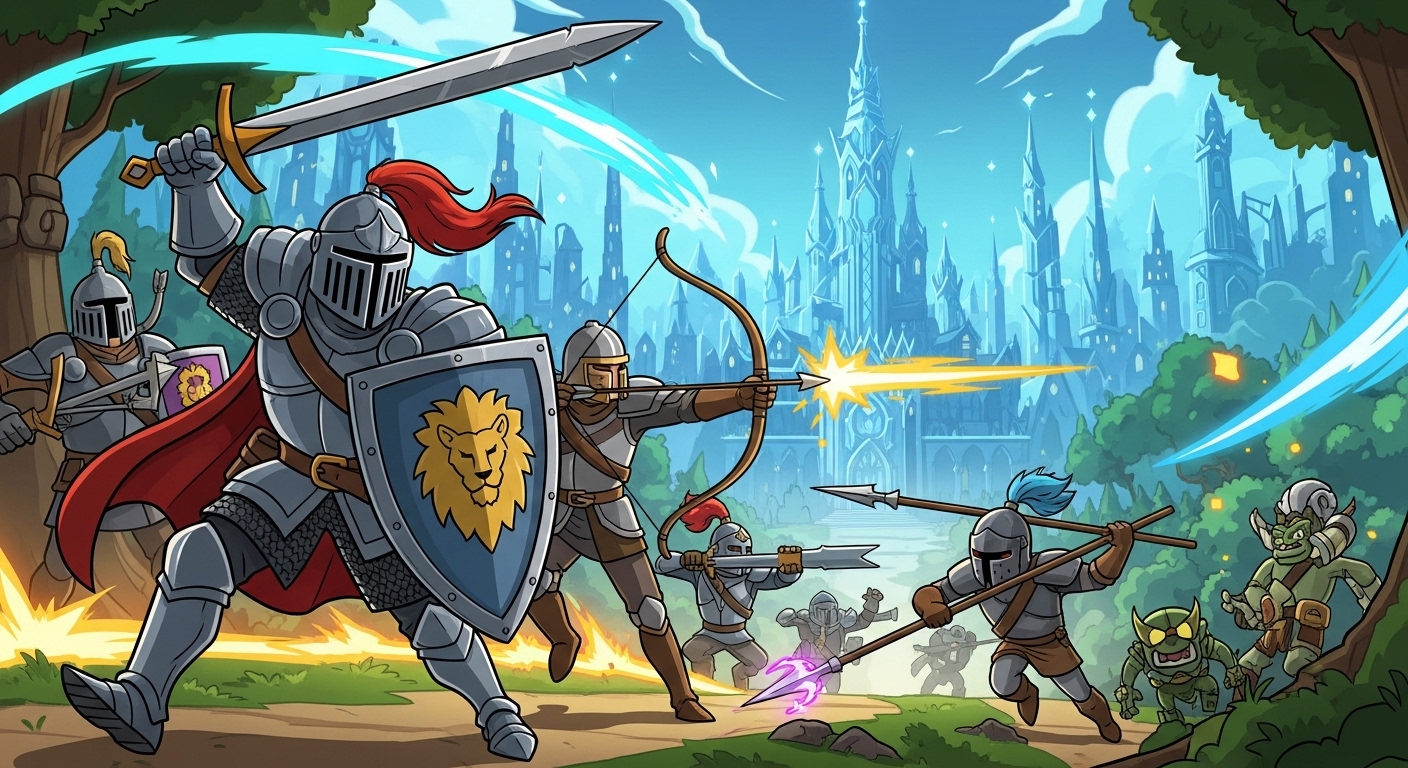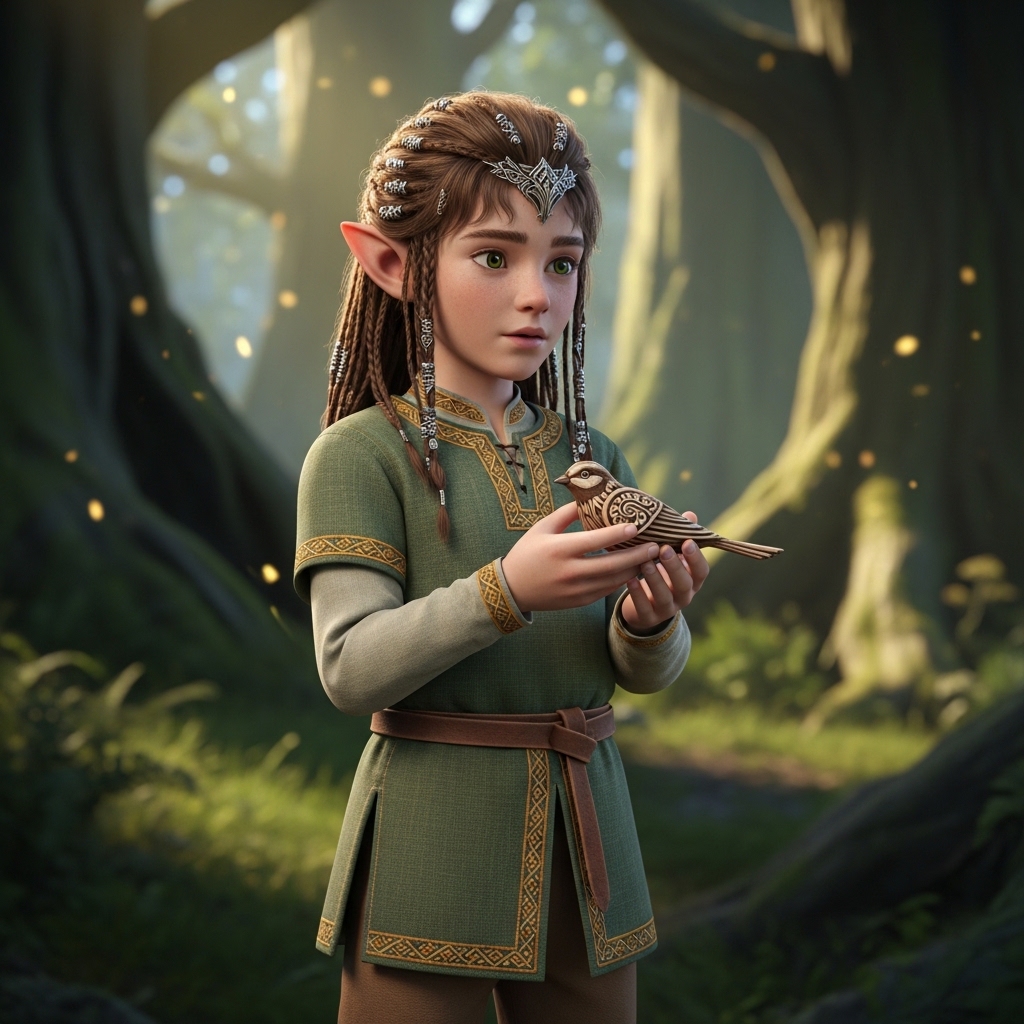
Every week from Tuesday through Saturday, thousands of Elvenar players across the world engage in the game’s most demanding competitive challenge: the Tournament. This recurring event transforms the peaceful city-building experience into a strategic battlefield where individual skill, resource management, and fellowship coordination determine success. With its sophisticated scoring system, escalating difficulty curves, and substantial rewards, the Tournament represents both the greatest challenge and the most lucrative opportunity for dedicated Elvenar commanders
.
Tournament Fundamentals: Structure and Timing
The Tournament operates on a strict weekly cycle, opening every Tuesday and closing Saturday evening. Each week features one of nine distinct tournament types, each corresponding to a specific relic type: Marble, Steel, Planks, Crystal, Scrolls, Silk, Elixir, Magic Dust, and Gems. This rotation ensures variety while allowing players to prepare appropriate strategies for upcoming challenges
.
Participation requires scouted and fully cleared World Map provinces of the corresponding type. If a player has discovered 20 Marble provinces on the world map, they can access 20 tournament provinces during Marble week. This mechanic directly links exploration progress to competitive capacity, incentivizing aggressive world map expansion
.
Each tournament province contains up to six sequential rounds (also called encounters or stars), with completion of earlier rounds unlocking subsequent challenges. The first round offers manageable opposition, but difficulty escalates dramatically with each successive round. By round six, even experienced players with advanced cities face opponents with superior numbers, enhanced statistics, and challenging terrain configurations
.
The Scoring System: Mathematics of Optimization
Tournament scoring follows a precise mathematical formula that rewards depth over breadth. Base points per encounter increase with each round: Round 1 provides 30 points, Round 2 yields 36, Round 3 offers 42, Round 4 gives 48, Round 5 awards 54, and Round 6 delivers 60 points. A fully completed six-star province thus generates 270 total points (30+36+42+48+54+60)
.
This progressive structure creates crucial strategic implications. Consider a player seeking 1,600 weekly points—the approximate “fair share” for a 25-member fellowship aiming for 10 chest rewards. They could achieve this through 54 provinces at 1 star (54 × 30 = 1,620) or 6 provinces at 6 stars (6 × 270 = 1,620). However, these equivalent point totals mask dramatically different resource costs
.
The first 5-9 provinces remain consistently easy regardless of city advancement, with players always outnumbering opponents. Province 8 marks the first significant difficulty spike, with Province 10 introducing severe numerical disadvantages where enemies outnumber your forces. By Province 20, the ratio reaches 1.5:1 against the player, with costs escalating non-linearly thereafter
.
Strategic conclusion: Completing fewer provinces to higher star levels proves substantially more resource-efficient than clearing many provinces at low rounds. Six provinces to 6 stars requires 36 encounters, while 54 provinces to 1 star demands 54 encounters—yet both yield similar points. The former concentrates effort in the “green zone” of easy provinces; the latter wastes resources on increasingly difficult encounters providing diminishing returns
.
The Cooldown Mechanic: Time as Resource
Between completing one round and accessing the next, players face a 16-hour mandatory cooldown period. This timer represents a fundamental constraint that separates casual participants from competitive contenders. Without intervention, completing all six rounds in a single province requires nearly four days—problematic for a five-day event
.
Several mechanisms reduce this delay:
Polar Bear Ancient Wonder: Each level reduces cooldown time by percentages. A level 10 Polar Bear provides substantial reduction, while higher levels approach theoretical minimums. One beta player reported achieving 1 hour 17 minute cooldowns using a level 19 TimeWarp combined with level 10 Polar Bear
.
TimeWarp Ancient Wonder: This structure reduces waiting time at all locations simultaneously, unlike single-use time boosters. Level 26+ TimeWarp combined with level 10 Polar Bear enables near-continuous tournament participation, allowing completion of two full tournaments and two Spire runs using a single set of five-day combat boosts
.
Time Boosters: Consumable items can accelerate individual province timers, though these prove less efficient than Wonder-based solutions for dedicated tournament players.
The cooldown system thus creates a strategic hierarchy: Casual players accept natural timers and limited participation; committed players invest in Polar Bear and TimeWarp construction; elite competitors optimize both Wonders to maximum levels, achieving participation rates impossible through standard gameplay
.
Combat vs. Catering: Dual Paths to Victory
Tournament encounters offer two resolution methods: fighting using trained military units or catering (negotiating) using manufactured goods. Each approach carries distinct advantages and resource implications.
Fighting demands substantial troop production infrastructure and combat expertise. Successful fighters analyze enemy compositions, exploit class advantages (Heavy Ranged defeating Light Melee and Light Ranged; Mages dominating Heavy units), and leverage terrain positioning. The Fire Phoenix pet provides +50% combat bonus when fed, while Twilight Phoenix offers unit resurrection capabilities. Combat boost buildings (Unleashed Unit Upgrade, Enlightened Light Range, Magnificent Mage Multiplier) provide additional advantages when strategically deployed
.
Catering requires robust goods production and trading networks. Negotiation costs escalate with province progression and round completion, eventually demanding substantial quantities of all nine goods types. While catering avoids troop losses, it can deplete economic reserves rapidly during deep tournament runs.
Hybrid approaches prove most sustainable for extended participation. Many elite players fight early rounds (where numerical advantages ensure victory) while catering difficult late-province encounters where troop losses would prove prohibitive. The TinLung pet rewards catering-focused players with Combining Catalysts—valuable crafting materials—making pure catering viable for players prioritizing specific resources
.
Fellowship Tournament System: Collective Achievement
While individual tournament performance generates personal rewards, Fellowship coordination unlocks superior benefits. Fellowship tournament scores aggregate member contributions, with collective achievements determining weekly rewards
.
The chest system structures fellowship rewards. Each unlocked chest requires specific point thresholds and provides guaranteed rewards including Knowledge Points, Relics, and valuable items. Reaching 10 chests guarantees a Blueprint—essential for constructing and upgrading premium buildings. Advanced fellowships regularly achieve 12, 14, or even 19+ chests, with each additional chest providing escalating rewards
.
Fellowship Perks enhance tournament performance through the Progression system:
- Tournament Archive: Stores unspent points from failed chest attempts, applying them to future weeks. This safety net prevents wasted effort when falling slightly short of thresholds
- Advanced Help: Extends received help duration, indirectly supporting tournament preparation through improved city efficiency
- Knowledge Points Sharing: Accelerates Ancient Wonder development, indirectly improving tournament capabilities through stronger military or economic infrastructure
Each unlocked tournament chest generates 4,000 Fellowship Experience Points, accelerating Perk advancement and creating virtuous cycles of improving performance
.
Elite Competition: Records and Optimization
The tournament’s competitive depth attracts dedicated players pursuing extraordinary achievements. Individual records exceed 37,000 points in single weeks, requiring completion of 100+ provinces across all six rounds. One player documented scoring 27,000 points using Azure Phoenix optimization, demonstrating how specific pet combinations enable exceptional performance
.
Fellowship competition reaches similar extremes. A veteran fellowship reported achieving 370,000+ weekly points during Steel tournaments—world records requiring coordinated participation from 25 members averaging 15,000 points each. Such achievements demand not merely individual skill but fellowship culture emphasizing tournament participation, resource sharing, and strategic coordination
.
Strategic Recommendations by Development Stage
Early Game (Chapters 1-5): Focus on unlocking Training Grounds and establishing basic troop production. Prioritize completing 6-10 provinces to 6 stars rather than spreading efforts thinly. Build Polar Bear early to reduce cooldown frustration
.
Mid Game (Chapters 6-12): Construct TimeWarp to enable serious tournament participation. Develop hybrid fight/cater capabilities. Join active fellowships with 10+ chest weekly targets. Optimize city layout for military production
.
Late Game (Chapter 13+): Maximize Polar Bear and TimeWarp levels. Maintain all three military buildings (Barracks, Training Grounds, Mercenary Camp) running 24/7. Develop specialized strategies for each tournament type based on enemy compositions. Pursue fellowship leadership roles to coordinate collective achievement
.
Conclusion: The Tournament as Elvenar’s Competitive Heart
The weekly Tournament transforms Elvenar from solitary city-building into dynamic competitive strategy. Its sophisticated scoring mathematics reward optimization; its cooldown mechanics separate dedication levels; its dual combat/catering systems accommodate diverse playstyles. Most significantly, its fellowship integration creates community bonds through shared achievement, where collective success exceeds individual capability.
For new players, the Tournament provides progression milestones and resource acquisition. For veterans, it offers endless optimization challenges and competitive recognition. Whether pursuing modest weekly participation or world-record achievements, the Tournament remains Elvenar’s most engaging recurring challenge—a weekly testament to strategic planning, resource management, and community cooperation in this magical realm .