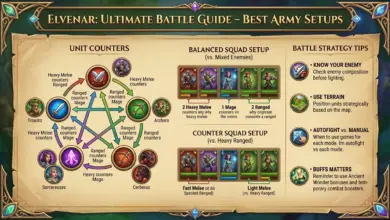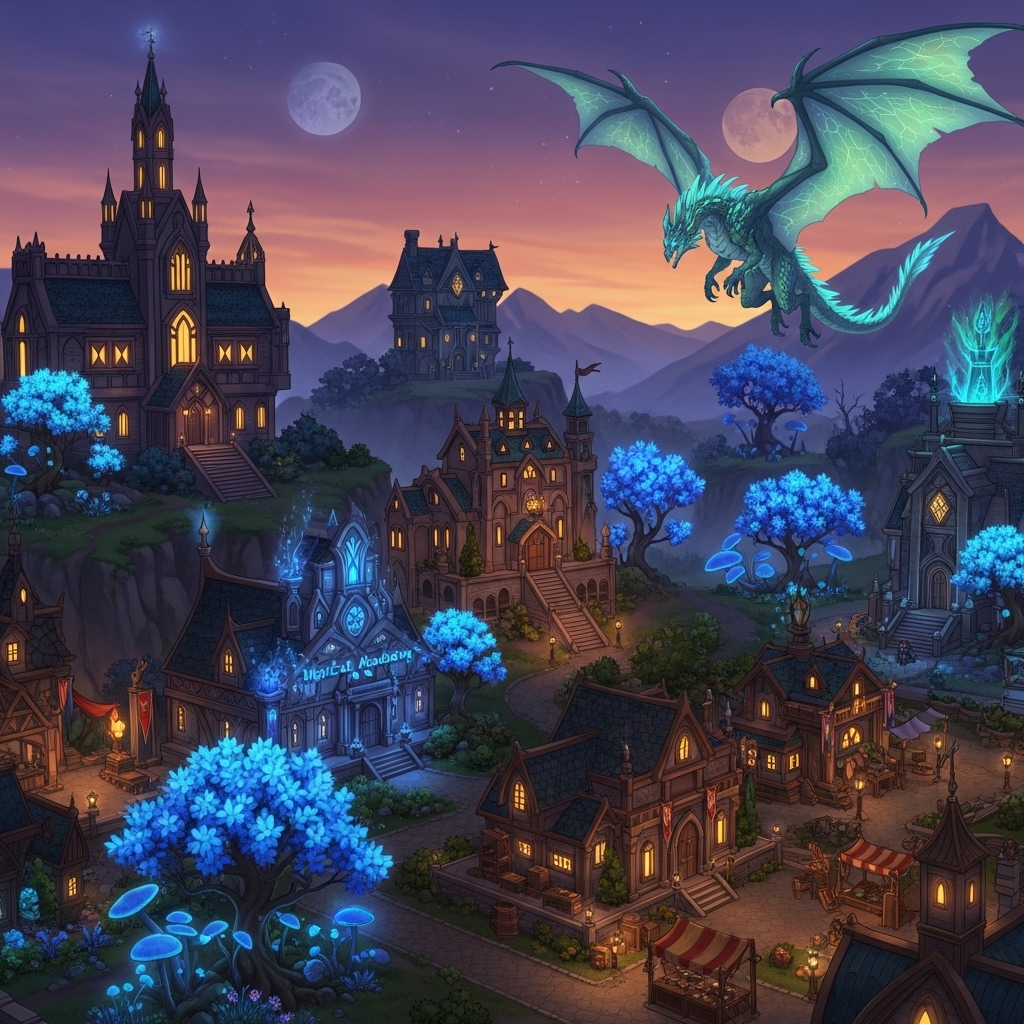
Elvenar’s combat system represents one of the most sophisticated aspects of this fantasy city-building game. With over 30 different unit types distributed across three military buildings and five distinct combat classes, mastering Elvenar’s military requires understanding complex rock-paper-scissors mechanics, terrain advantages, and strategic deployment. This comprehensive guide explores every unit class, their strengths, weaknesses, and optimal tactical applications
.
The Five Combat Classes
Elvenar organizes all military units into five fundamental classes, each with specific tactical roles and counter-relationships. Understanding these classes forms the foundation of successful combat strategy
.
Light Melee: The Swift Strikers
Light Melee units serve as the foundational combat force in Elvenar. These units feature high initiative (allowing them to act first in combat rounds), good movement range, and balanced damage output. However, they possess relatively lower hitpoints compared to heavy units, making them vulnerable if not properly supported
.
Elven Units:
- Sword Dancer (and upgrades: Sword Dancer II, Sword Acrobat, Sword Acrobat II): Balanced stats with good defense and offense capabilities
Human Units:
- Axe Barbarian (and upgrades: Axe Barbarian II, Storm Barbarian, Storm Barbarian II): Higher damage output but weaker defense compared to Elven equivalents
Shared Units (Training Grounds):
- Cerberus (and upgrades): Three-headed dogs with exceptional movement speed, making them ideal for catching enemy ranged units. They receive attack and defense bonuses against Mage units
- Orc Warrior (and upgrades): Powerful heavy hitters with bonuses against Light Melee units
Mercenary Camp:
- Drone Rider (and upgrades): Fast-moving units riding giant insects, excellent against Light Ranged units
Light Melee units excel at eliminating enemy ranged threats quickly due to their superior initiative. However, they suffer against Heavy Melee units and must avoid Heavy Ranged units that can decimate them before they close the distance
.
Light Ranged: Precision Archers
Light Ranged units provide the primary damage output for most armies. They feature excellent attack range and high damage values but possess the weakest hitpoints of any class. Their survival depends on maintaining distance from enemy melee units and proper positioning
.
Elven Units:
- Archer (and upgrades: Archer II, Elite Archer, Elite Archer II): Balanced ranged fighters with good maneuverability
Human Units:
- Crossbowman (and upgrades: Crossbowman II, Master Crossbowman, Master Crossbowman II): Slightly higher damage but reduced movement compared to Elven archers
Mercenary Camp:
- Ranger (and upgrades: Ranger II, Pro Ranger): Considered by many experienced players as the best Light Ranged unit in the game. Rangers possess Strike Back ability (counterattacking when hit in melee) and superior movement range, making them exceptionally versatile
Light Ranged units dominate against Heavy Melee and Mage units but must avoid Light Melee and Heavy Ranged opponents who can either close quickly or outrange them
.
Heavy Melee: The Immovable Wall
Heavy Melee units function as defensive powerhouses with exceptionally high hitpoints and strong armor. They move slowly but can absorb tremendous punishment while protecting more vulnerable units. Their damage output remains modest, making them specialists in attrition warfare rather than offensive operations
.
Elven Units:
- Treant (and upgrades: Treant II, Elder Treant, Elder Treant II): Living trees with massive health pools and bonuses against Light Melee and Heavy Ranged units
Human Units:
- Paladin (and upgrades: Paladin II, Blessed Paladin, Blessed Paladin II): Armored knights with similar defensive capabilities but different aesthetic
Mercenary Camp:
- Vallorian Guard (and upgrades: Veteran Guard): Specialized heavy defenders with unique tactical applications
Heavy Melee units serve as the ultimate frontline, absorbing enemy attacks while your ranged units deal damage from safety. They excel against Light Melee and Heavy Ranged but struggle against Light Ranged and Mage units who can exploit their slow movement
.
Heavy Ranged: Devastating Artillery
Heavy Ranged units combine armor protection with devastating long-range attacks. They represent the most specialized class, featuring extreme damage values but requiring careful positioning due to their vulnerability to certain unit types
.
Elven Units:
- Golem (and upgrades: Golem II, Granite Golem, Granite Golem II): Stone constructs with powerful ranged attacks and natural armor against Light Ranged units
Human Units:
- Mortar (and upgrades: Mortar II, Rad Mortar, Rad Mortar II): Artillery pieces with long-range bombardment capabilities
Training Grounds:
- Orc Strategist (and upgrades): Specialized anti-Light Ranged units with devastating attacks against enemy archers and crossbowmen
Mercenary Camp:
- Fainéant Frog (and upgrades: Frog Prince): Unique heavy ranged units riding giant frogs, excellent against Light Melee and Light Ranged when terrain allows proper positioning
Heavy Ranged units dominate against Light Ranged and Light Melee but must avoid Heavy Melee and Mage units. Their extreme vulnerability to mages makes them risky choices when enemy spellcasters are present
.
Mage: Tactical Supporters
Mage units represent the most unique class in Elvenar. They possess weak direct combat statistics but provide crucial special abilities that can turn the tide of battle. Mages can weaken enemy defenses (increasing damage taken) or reduce enemy attack strength (decreasing damage received), with these effects stacking for devastating combinations
.
Elven Units:
- Sorceress (and upgrades: Sorceress II, Bud Sorceress, Bud Sorceress II): Specializes in defense reduction debuffs, making enemies take more damage from subsequent attacks
Human Units:
- Priest (and upgrades: Priest II, Sacred Priest, Sacred Priest II): Specializes in attack reduction debuffs, protecting friendly units from enemy damage
Training Grounds:
- Banshee (and upgrades: Ghastly Banshee): Specialized Heavy Ranged killers with powerful debuffs against armored ranged units
Mercenary Camp:
- Blossom Mage (and upgrades: Blossom Princess): Considered the best Mage unit for Elven cities, outperforming even upgraded Sorceresses in most situations. They provide superior debuffs and versatility
Mages dominate against Heavy Melee and Heavy Ranged units but must avoid Light Ranged units who can eliminate them before they apply their debuffs. Proper mage deployment requires protecting them with other units while they apply their game-changing abilities
.
Military Buildings and Production
Elvenar’s military infrastructure consists of three distinct buildings, each producing different unit types and operating independent production queues
:
Barracks
The foundational military building available from the start, producing 5 race-specific units for each faction (Elves or Humans). These units represent general-purpose fighters suitable for most situations but lack the specialized advantages of other buildings’ troops
. The Barracks upgrades through 44 levels, with visual and production improvements unlocked through chapter research
.
Training Grounds
Unlockable in Chapter 2, this building produces 5 shared units: Cerberus, Dryad, Banshee, Orc Warrior, and Orc Strategist. These units fill tactical niches unavailable in the Barracks, particularly specialized anti-mage and anti-ranged capabilities
.
Mercenary Camp
Unlockable in the Fairies chapter (Chapter 7), this building produces 5 advanced shared units: Drone Rider, Ranger, Blossom Mage, Vallorian Guard, and Fainéant Frog. Many experienced players consider Mercenary Camp units superior to Training Grounds options, particularly Rangers and Blossom Mages
.
Critical Strategic Note: Experienced fighters emphasize building all three military structures because they operate parallel production queues. Running all three buildings 24/7 maximizes army generation, essential for sustained tournament and Spire participation
.
Combat Mechanics and Tactical Depth
Initiative System
Combat in Elvenar operates on an initiative-based turn system. Units with higher initiative act earlier in each round, making Light Melee and Light Ranged particularly valuable for striking first. Heavy units typically act later, requiring careful positioning to survive until their turn
.
Strike Back Ability
Certain units (particularly Rangers and some heavy melee) possess Strike Back, automatically counterattacking when hit in close combat. This ability significantly increases their effective damage output and deterrent value against enemy melee units
.
Terrain and Positioning
Battlefield terrain significantly impacts combat effectiveness. Obstacles can block line-of-sight for ranged units, while open terrain favors fast-moving light melee. Successful commanders scout battlefields before committing forces, identifying choke points and advantageous positions
.
Unit Weight and Squad Size
Units possess different weight values that determine squad composition. Heavier units result in smaller squads, making each individual unit more difficult to kill during combat. This mechanic adds another layer to unit selection, as heavier units provide more concentrated durability
.
Strategic Recommendations by Game Phase
Early Game (Chapters 1-3)
Focus on Barracks units: Light Melee (Sword Dancers/Axe Barbarians) and Light Ranged (Archers/Crossbowmen) form your army backbone. Use Cerberus from Training Grounds against enemy mages when available
.
Mid Game (Chapters 4-9)
Prioritize unlocking and upgrading Mercenary Camp units, particularly Rangers and Blossom Mages. These units outperform their Barracks equivalents in most scenarios. Maintain production in all three buildings to build army depth
.
Late Game (Chapters 10+)
Develop specialized armies for specific encounters. Experienced players recommend:
- Rangers as primary damage dealers (superior movement and Strike Back)
- Blossom Mages for debuff support (Elves) or Priests (Humans)
- Orc Warriors for anti-Light Melee situations
- Frogs for defensive ranged positions when terrain permits
Conclusion
Elvenar’s unit system offers remarkable strategic depth through its five-class combat triangle, diverse unit types, and production building specialization. Success requires understanding not just individual unit statistics, but complex interactions between classes, terrain advantages, and production optimization. Whether you prefer the magical elegance of Elven Sword Dancers and Treants or the industrial might of Human Paladins and Mortars, mastering Elvenar’s military system rewards patient study and tactical experimentation. The key to victory lies not in possessing the “best” units, but in deploying the right combination of forces against specific enemy compositions—a challenge that keeps Elvenar’s combat engaging through hundreds of battles across its vast world map .