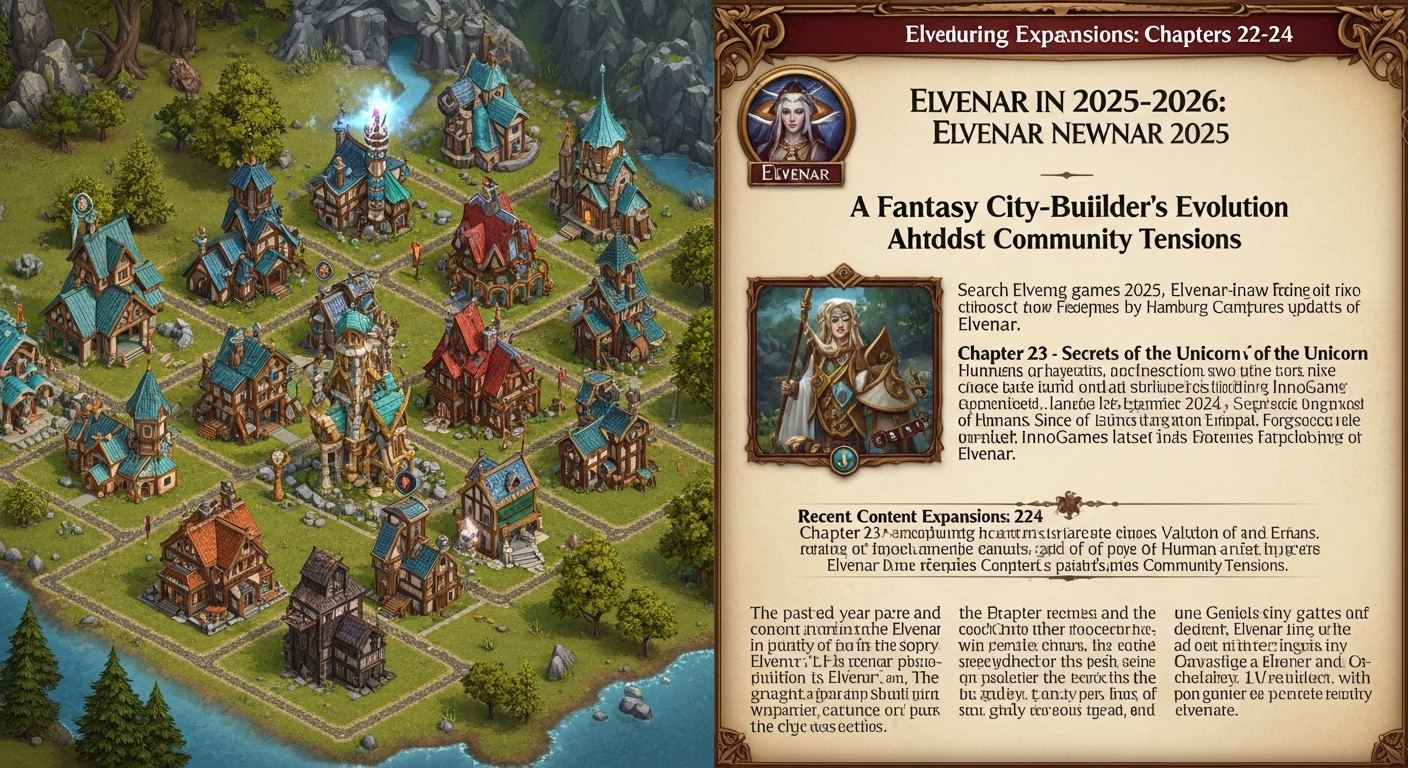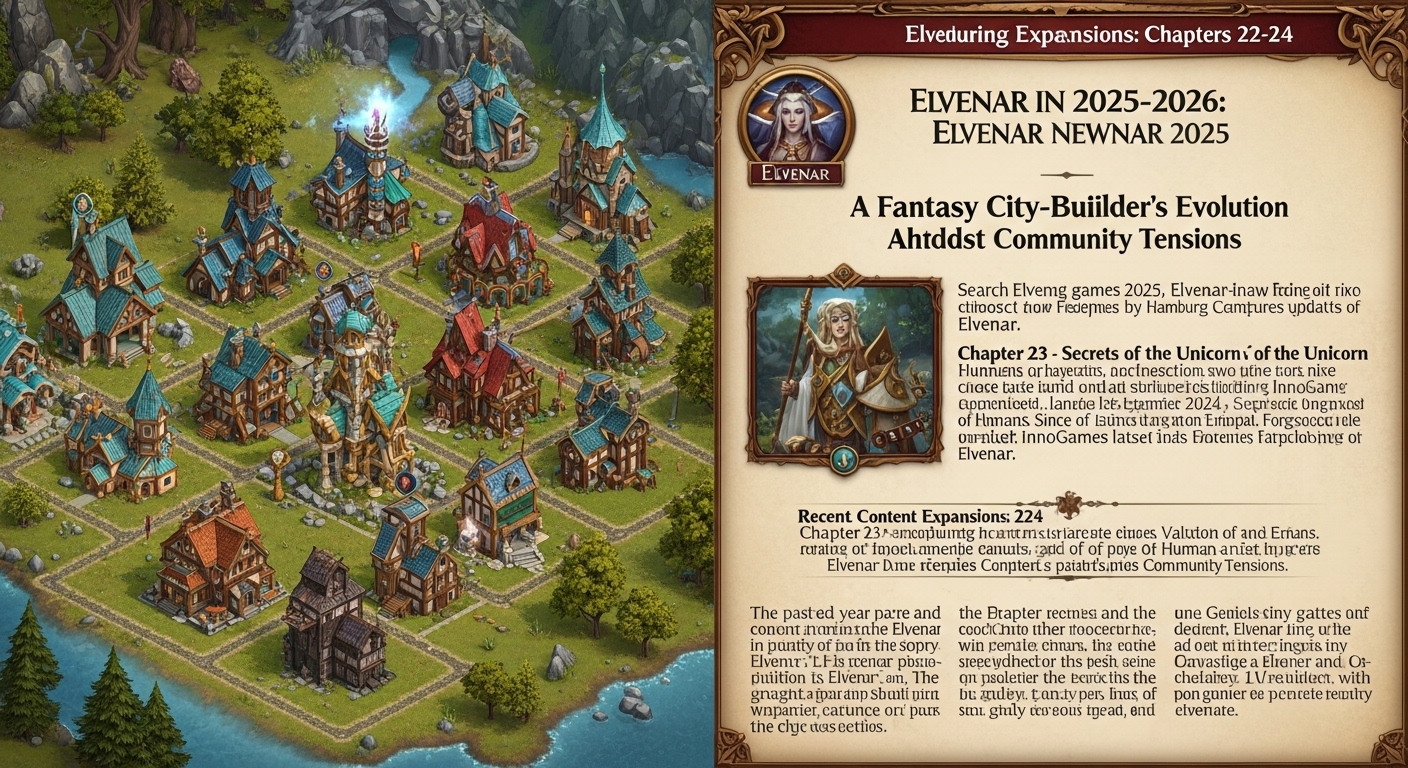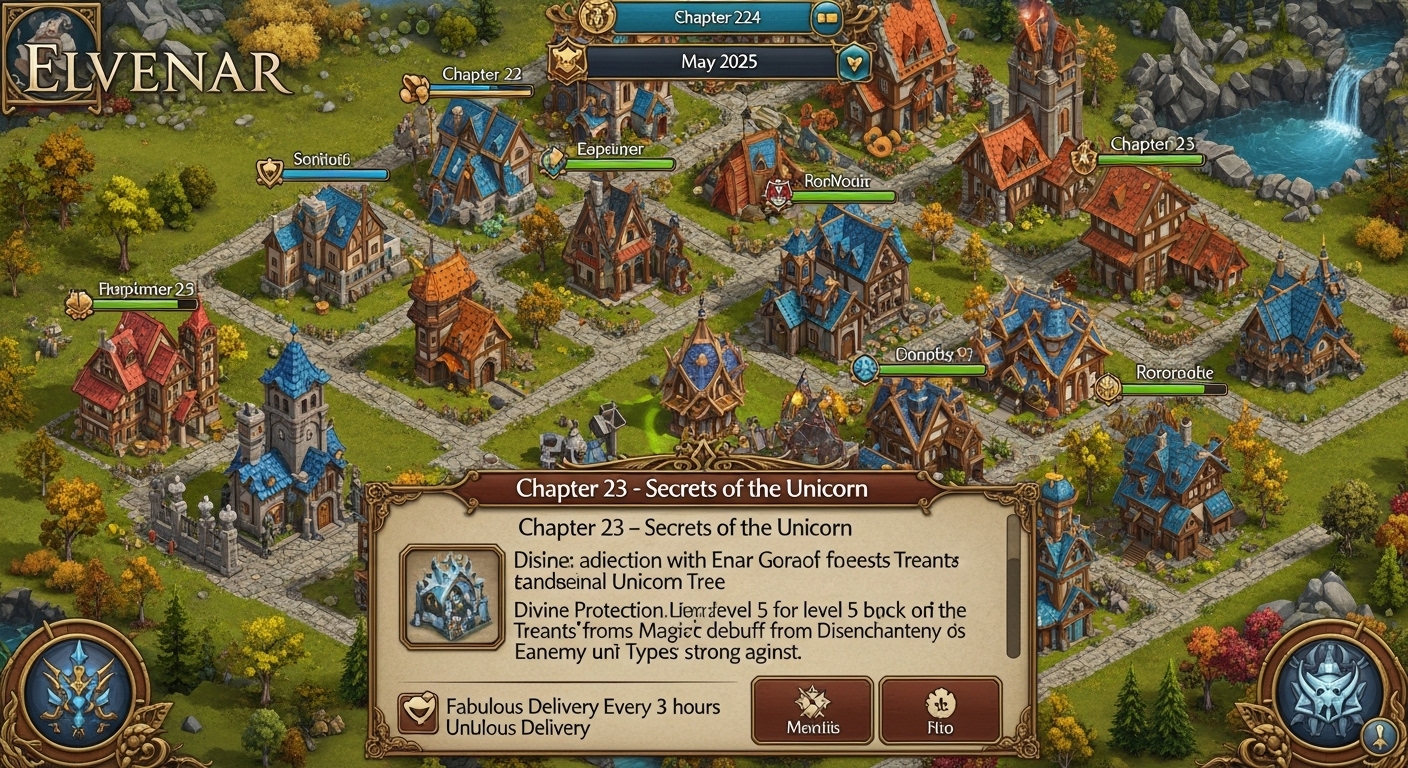
Welcome to the magical world of Elvenar, where your strategic decisions shape the destiny of your civilization. Whether you’ve chosen the mystical path of the Elves or the industrious way of the Humans, mastering city upgrades is essential for transforming your humble settlement into a magnificent metropolis. This comprehensive guide will walk you through every aspect of city development, from fundamental building mechanics to advanced optimization strategies that will set you apart from other players.
Understanding the Foundation: Core Building Mechanics
Every successful Elvenar city rests upon understanding the three-tier upgrade system that governs most structures in your realm. Buildings typically progress through three stages: Basic, Advanced, and Superior, with each tier offering significant improvements in functionality and visual grandeur
. However, this progression comes with spatial consequences that require careful planning.
When you upgrade a residence from Basic to Advanced, it doesn’t just improve—it expands. Elven residences, for example, grow from a compact 2×2 grid to 2×3, and finally to 3×3 at Superior level
. This expansion mechanic is universal across building types and represents one of the most critical planning challenges you’ll face. Unlike many city-building games, Elvenar doesn’t allow building rotation, which means you must design your layout with fixed orientations in mind
.
The Builder’s Hut deserves special attention as it controls your construction capacity. While most buildings upgrade using standard resources, the Builder’s Hut requires premium Diamonds for advancement beyond level 2, limiting you to two simultaneous construction projects unless you invest real currency
. Strategic players often prioritize Diamond purchases here, as increased construction capacity compounds your growth rate exponentially over time.
Resource Management: The Lifeblood of Progress
Your city’s heartbeat is measured in three primary resources: Coins, Supplies, and Knowledge Points. Each serves distinct functions in your upgrade ecosystem, and mastering their management separates thriving cities from stagnant ones.
Coins flow primarily from Residences—the housing districts of your population. These golden treasures fund construction, research, and various city operations. The culture bonus system significantly amplifies coin production, making cultural building placement crucial for economic prosperity
. When residences sit adjacent to cultural structures, their coin generation receives substantial boosts, creating powerful synergy effects that smart planners exploit.
Supplies emerge from Workshops, serving as the versatile resource for upgrades, troop training, and production activities. Balancing short-term and long-term production cycles allows you to match supply generation with your active playing schedule
. Players who check their cities frequently benefit from shorter cycles, while those with limited playtime maximize efficiency through longer productions.
Knowledge Points (KP) represent your civilization’s intellectual progress, unlocking new technologies and building tiers. The game generously provides one free KP hourly, filling your capacity bar completely every ten hours
. However, strategic players never let this resource cap out—spending all KP before logging off ensures continuous intellectual growth. Additionally, scouting provinces on the world map rewards KP for completed encounters, offering an active alternative to passive generation
.
The Main Hall serves as your resource vault, determining maximum storage capacity for Coins and Supplies. Upgrading this central structure should be among your first priorities, as expanded storage enables larger projects and prevents resource waste from production caps
.
Strategic Building Placement: The Art of Space Optimization
Space in Elvenar is your most precious commodity, and efficient usage distinguishes master architects from amateur builders. The community has developed proven principles for maximizing your limited grid
.
Corner Strategy for Major Structures: Position your Main Hall in a city corner with minimal road connections—ideally no more than two roads extending from it
. As this building grows through upgrades, its increasingly awkward size can dominate your entire layout if centrally placed. By anchoring it in a corner, you preserve the flexible central space for your evolving city needs. Other bulky structures like the Barracks and Builder’s Hut should similarly hug the perimeter
.
The Culture Building Advantage: Here’s a game-changing insight that many beginners miss—cultural buildings and the Builder’s Hut require NO road connection to function
. This means you can line your city’s outer edges with temples, gardens, and monuments without wasting precious road squares. Place these along the border, completely disconnected from your road network, and they still contribute their full culture bonus to your city
.
Road Efficiency Principles: Every road square is a square not generating resources. Minimize roads by ensuring each road segment touches multiple buildings. When buildings have rectangular footprints, orient them so the shorter side contacts the road, dramatically reducing road requirements
. For example, arranging 2×4 residences with their 2-square side on the road uses 50% less road contact than the alternative orientation—potentially freeing space for an entire additional building
.
The Edge Road Technique: Roads extending to your city border waste potential space. Terminate roads one square short of the edge and place 1×1 cultural ornaments in these “dead” spaces. This converts wasted infrastructure into functional culture bonuses while maintaining clean aesthetics
.
The Upgrade Planning Cycle: Timing and Preparation
Successful upgrading requires foresight and preparation across multiple resource dimensions. Before any major upgrade, verify you possess sufficient free population, culture points, and physical space for the building’s new footprint
.
Population Management: Upgraded buildings demand more workers. Ensure your residences can support the increased workforce requirements before initiating upgrades. Nothing stalls progress like hitting population caps mid-development.
Culture Prerequisites: Many upgrades require minimum culture levels. Maintain a buffer above your current needs to prevent upgrade blockages. The culture bonus system rewards excess culture with production multipliers, making surplus investment doubly beneficial
.
Spatial Contingency: When buildings expand during upgrades, they can collide with neighbors. Experienced players maintain temporary rearrangement capacity—keeping a spare expansion zone or knowing which buildings can be temporarily sold or moved prevents upgrade paralysis
.
Construction Timing Strategy: Different buildings have vastly different upgrade durations. The Main Hall takes longest, followed by Barracks, then cultural buildings, workshops, and residences
. Schedule lengthy upgrades (Main Hall, Barracks) overnight or during work hours, while reserving shorter upgrades for active play sessions. This temporal optimization maximizes your construction queue efficiency.
Race-Specific Considerations: Elves vs. Humans
Your chosen race fundamentally shapes your upgrade experience through Chapter 5, after which technologies converge
. Understanding these differences informs strategic decisions.
Elven Advantages: The Elven path emphasizes defensive capabilities and magical aesthetics. Their buildings incorporate natural elements like flowers and flowing designs, creating visually stunning cities
. The Elven Builder’s Hall occupies 3×3 space versus the Human 3×2, while their Guild Hall is more compact at 6×6 versus Human 6×7
. These dimensional differences impact your layout mathematics.
Human Strengths: Human architecture favors industrial pragmatism with sturdy, medieval designs. Their military focuses on offensive capabilities, potentially affecting how you prioritize Barracks upgrades
. The smaller Builder’s Hall footprint allows slightly more efficient space usage early game.
For players truly committed to mastery, running parallel accounts through BlueStacks Multi-Instance feature lets you experience both races simultaneously, cross-referencing strategies and specializing each city for different aspects of the game’s economy
.
Advanced Optimization: Relics, Boosts, and Production Focus
The world map extends your city’s influence through the relic system. Each province conquered offers relics corresponding to specific goods types. Collecting six relics of your boosted resource type triggers production bonuses that fundamentally alter your economic strategy
.
Boosted Goods Strategy: Your city receives permanent production boosts for three specific goods types—one from each tier (Marble/Steel/Planks, Scrolls/Crystal/Silk, Elixir/Magic Dust/Gems). Check your Main Hall or world map to identify these blessings
. Prioritize building manufactories matching your boosts, as they dramatically outperform unboosted alternatives. Trading excess boosted goods for unboosted needs through the Trader becomes your economic cornerstone
.
Military Considerations: While this guide focuses on city upgrades, military infrastructure intertwines with development. Barracks upgrades unlock troop tiers, while Armories increase training queue capacity. At level 15 Barracks, your city gains visible walls on the exploration screen—a cosmetic milestone marking your military maturity
.
Event Buildings and Evolution Structures
Special events introduce limited-time buildings that can permanently enhance your city. Evolution buildings, upgraded through collected artifacts during events, represent some of the most powerful structures available
.
To maximize evolution building acquisition: maintain valid email contact for bonus currency, complete all event quests (working ahead using community resources like idavis-elvenar.com), log in every 4 hours to collect map currency (which spawns every ~45 minutes, capping at 6 simultaneous drops), and prioritize chest selections offering best progress-per-currency ratios
. The Ashen Phoenix base building, craftable in the Magic Academy, adds event currency to each quest even without artifacts—an essential tool for serious event participants
.
Long-term City Evolution: From Settlement to Metropolis
As your city advances through chapters, upgrade complexity increases. Early upgrades require only basic resources, while Chapter 3+ buildings demand strategic resources
. Technology research consumes massive resource quantities, requiring sustained production focus.
The 140-170% Culture Sweet Spot: While maximum culture bonus reaches 200%, achieving this independently requires excessive space investment. Target 140-170% culture bonus, relying on neighborly help (motivation from visiting players) to reach the 200% cap
. This balance preserves space for production while maintaining optimal bonuses.
Workshop and Manufactory Scaling: Endgame cities require approximately 8 workshops for efficient 1-hour cycle quest completion
. Maintain a mix of high-level production buildings and low-level “quest buildings”—keeping some level 1 workshops and basic manufactories specifically for event and Fellowship Adventure tasks requiring particular production types or building upgrades
.
Conclusion: Your Path to Mastery
Building the perfect Elvenar city is a journey of continuous refinement. Start with solid fundamentals: corner-placed Main Hall, edge-lined cultural buildings, efficient road networks, and boosted goods focus. Progress through careful upgrade timing, maintaining resource buffers and spatial flexibility. Engage actively with the world map for relics and knowledge points. Participate in events for evolution buildings that transcend standard structures.
Remember that Elvenar rewards patience and planning over rushed expansion. Every rearrangement teaches spatial efficiency; every resource shortage informs future production balance. Your city tells the story of your strategic evolution—from chaotic beginner layouts to optimized masterpieces that fellow players admire when visiting.