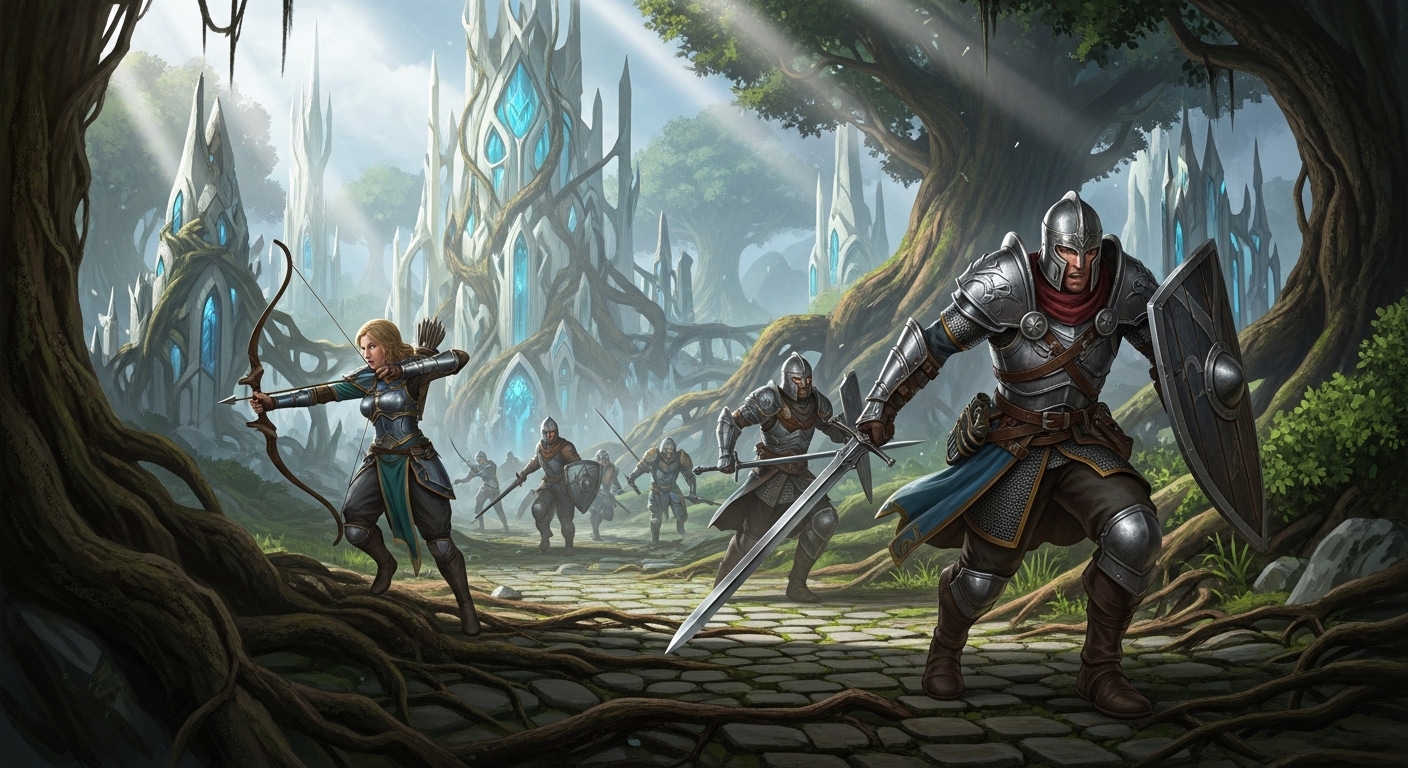
Getting Started: Your First Steps in Elvenar
Welcome to Elvenar, InnoGames’ enchanting fantasy city-builder where your strategic decisions shape the destiny of an ancient world. Whether you’ve chosen the mystical Elves with their nature-infused architecture or the industrious Humans with their medieval fortifications, this guide will help you navigate the complexities of building a thriving kingdom from humble beginnings to majestic empire
.
Your journey begins with a critical choice that affects aesthetics, building designs, and thematic elements—but rest assured, both races share identical core mechanics. Elves feature sleek, organic structures intertwined with flowers and magical elements, while Humans construct sturdy, practical buildings with industrial flair
. This choice is permanent for your city, so select the visual style that resonates with your preferences.
Understanding Core Resources and Buildings
The Foundation: Coins, Supplies, and Population
Three fundamental resources drive your city’s growth. Coins, generated primarily from Residences through taxation, fund construction, upgrades, and research. Supplies, produced in Workshops, power production activities, building improvements, and military training. Your Population, housed in Residences, determines how many workers you can support across all buildings
.
Residences serve dual purposes: they provide both population capacity and coin generation. Upgrade these regularly to increase both outputs. Strategic placement matters—positioning Residences adjacent to Cultural Buildings boosts their productivity significantly
.
Workshops are your supply engines. Early game, maintain at least 4-6 Workshops to meet quest demands and production needs. As you progress, upgrade these before adding more, as higher-level workshops offer better efficiency per tile
.
The Culture System: More Than Decoration
Unlike typical city-builders where decorations serve purely aesthetic purposes, Elvenar’s Culture Buildings directly impact productivity. Every cultural structure generates happiness, which translates to production bonuses when you reach specific thresholds (125%, 150%, 160%, and 170% culture bonus levels)
.
Place sanctuaries, sculptures, trees, and other ornaments strategically. The “Ensorcelled Endowment” spell can double a building’s culture output temporarily, making it invaluable for reaching higher bonus tiers. Veteran players recommend maintaining at least two large culture buildings (3×4 or 3×3) that can be “sparkled” by neighbors to ensure consistent high-level bonuses
.
Quests and Progression: The Storyline Framework
Following the Tutorial Quests
Storyline quests serve as your tutorial and primary progression mechanism. These guided objectives introduce core mechanics gradually while providing essential rewards—Coins, Supplies, Knowledge Points (KP), and even premium Diamonds
. Complete these diligently; they unlock new buildings, technologies, and game areas while providing resources that accelerate early development.
Key early quests include building your first Residences and Workshops, researching the Trader, constructing Barracks, and completing initial province encounters
. Pay special attention to quests marked in red on community guides—these are mandatory progression gates that cannot be skipped
.
Chapter-Based Advancement
Elvenar organizes progression into 22 chapters, each with specific questlines and unlockable technologies. Chapter 1 establishes your foundation with basic production and military units. Chapter 2 introduces Fellowships (guilds), advanced buildings, and the Training Grounds
. By Chapter 3, you’ll unlock refined goods production (Crystal, Scrolls, Silk), and Chapter 4 opens Ancient Wonders and Tournaments
.
Each chapter demands careful planning. For example, Chapter 3 requires upgrading your Main Hall to level 4, maintaining 8 Residences at level 4, and completing numerous provinces
. Chapter 4 intensifies with requirements like upgrading two Tier 1 factories to level 8, building your first Ancient Wonder, and reaching 53 completed provinces
.
City Layout and Space Optimization
The Grid System and Road Networks
Elvenar operates on a grid system where every building requires road connections to function. Your Main Hall serves as the connection hub, with roads extending to reach other structures. This creates spatial puzzles where efficient placement maximizes your limited area
.
Key layout principles:
- Group buildings by type to minimize road usage
- Place cultural buildings to cover multiple production structures
- Leave minimal “dead space” between buildings
- Plan for future expansions—don’t build permanently in areas you’ll need later
The 4×4 and Expansion Strategy
Experienced players often recommend planning around a 4×4 grid concept, though this becomes insufficient by Chapter 5
. Prioritize unlocking city expansions early through research, province completion, and premium purchases if desired. Each expansion represents permanent value, while buildings can be sold or teleported as strategies evolve
.
Use temporary structures like 1×1 signposts to fill empty tiles until you need the space. Remember: open tiles are wasted tiles, but poorly placed permanent buildings create long-term inefficiencies
.
Military Strategy: Combat and Unit Management
Understanding the Combat Triangle
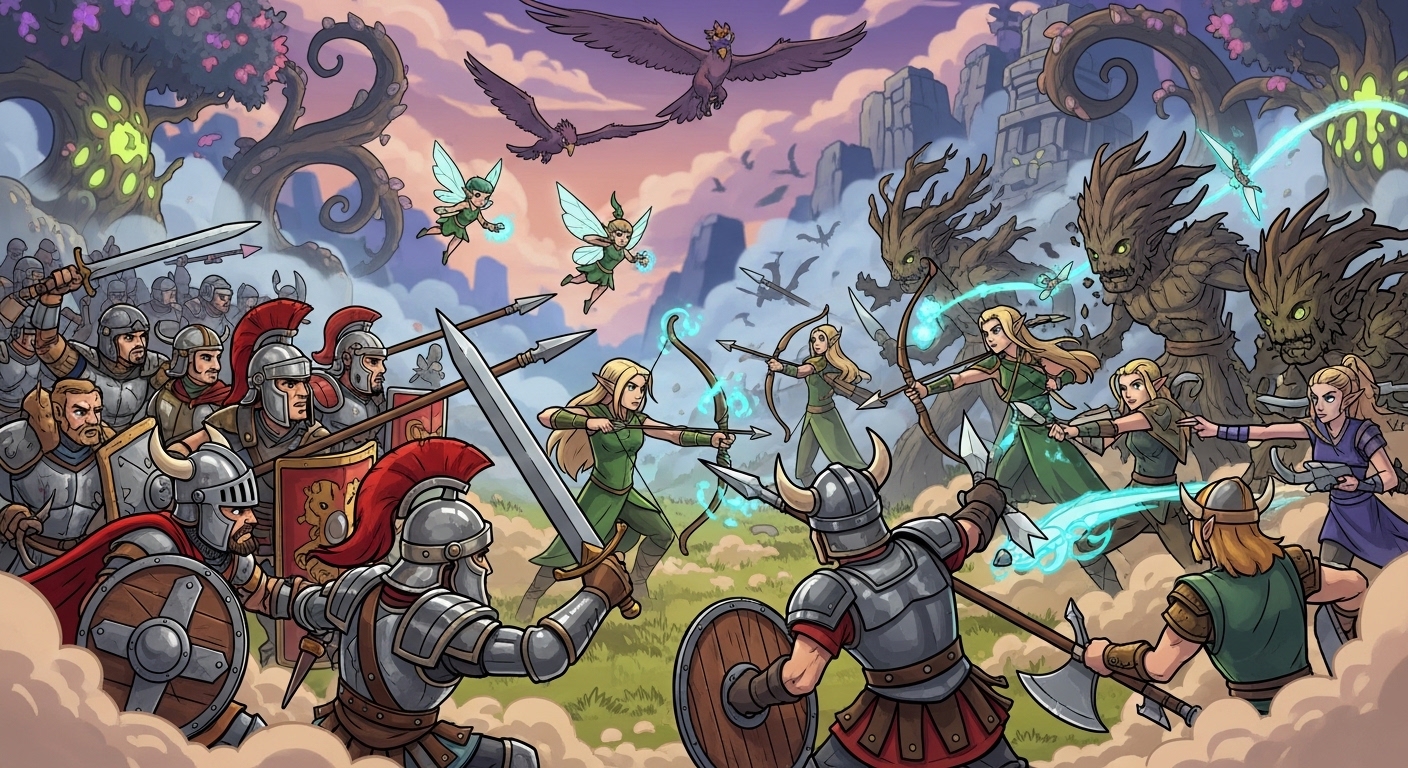
Elvenar features five unit types in a rock-paper-scissors dynamic: Light Melee, Light Ranged, Mages, Heavy Melee, and Heavy Ranged. Each type excels against two others while struggling against two more
.
Combat fundamentals:
- Light Melee defeats Light Ranged and Mages; loses to Heavy Melee and Heavy Ranged
- Light Ranged defeats Heavy Melee and Heavy Ranged; loses to Light Melee and Mages
- Mages defeat Heavy Melee and Heavy Ranged; lose to Light Melee and Light Ranged
- Heavy Melee defeats Light Melee and Light Ranged; loses to Mages and Heavy Ranged
- Heavy Ranged defeats Light Melee and Heavy Melee; loses to Light Ranged and Mages
Scout enemy compositions before battles and counter-pick accordingly. Manual control generally outperforms auto-fight, especially in challenging encounters
.
Training and Army Composition
Early game, focus on your boosted units and versatile combinations. Training Grounds (unlocked Chapter 2) allow simultaneous training of two unit types—essential for maintaining diverse armies
. Many veterans succeed using just two unit types for 95% of encounters, such as Cerberi paired with Treants/Paladins for Elves
.
Armories increase your training queue capacity, but balance these against production buildings. One level 8+ Armory suffices for many players, supplemented by other troop-producing structures
.
Economic Mastery: Production and Trading
The Boosted Goods System
Your kingdom has three “boosted” goods—one from each tier (Basic, Refined, Precious)—that produce at 100% efficiency. All other goods manufacture at 25% efficiency, making trade essential
.
Production strategy:
- Focus manufacturing on your three boosted goods exclusively
- Use the Trader to exchange surplus for needed materials
- Never produce non-boosted goods unless absolutely necessary
Trading and Fellowship Economics
The Trader interface allows you to create offers exchanging your abundant goods for needed resources. Fair trades follow a 1:1 ratio for same-tier goods or 4:1/16:1 cross-tier ratios
. Joining an active Fellowship (guild) provides trading partners who understand these economics and often offer favorable internal rates.
Neighborly Help enables daily visits to other players’ cities. Prioritize “polishing” (boosting) cultural buildings, as this provides the most significant mutual benefit
.
Advanced Systems: Ancient Wonders and Events
Ancient Wonders
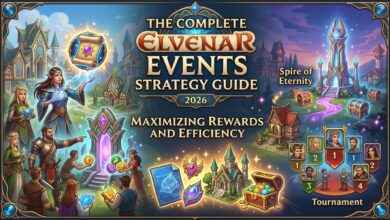
These massive structures provide permanent empire-wide bonuses but require significant investment. Your first Ancient Wonder becomes available in Chapter 4 through the “Secret Ancient Wonder” research
. Choose based on your playstyle—some boost military production, others enhance economy or culture.
Upgrading Wonders requires rune shards, which come from provinces, tournaments, and events. Plan your Wonder investments carefully; they’re permanent and expensive to change
.
Seasonal Events and Limited Buildings
Elvenar regularly hosts seasonal events offering unique multi-purpose buildings that combine population, culture, and production benefits. These “grand prizes” often outperform standard buildings of similar size, making event participation crucial for efficient city development
.
Prioritize events that offer buildings matching your current needs. A building providing 500 population, 400 culture, and 300 supplies daily saves significant space compared to separate structures offering equivalent benefits.
Long-Term Strategy and Patience
The Marathon Mindset
Elvenar rewards patience over rushing. Later chapters can take months—or even a year for Chapter 22—to complete
. This deliberate pacing targets mature players seeking a long-term hobby rather than instant gratification
.
Sustainable practices:
- Log in multiple times daily for short sessions rather than occasional marathon plays
- Maintain consistent production cycles (3-hour, 9-hour, or 1-day productions based on your schedule)
- Participate in weekly Tournaments for rewards and fellowship bonding
- Plan upgrades during “build” events that offer bonus rewards
Free-to-Play Success
Elvenar remains genuinely playable without spending money, though progress requires more time. Free players should prioritize:
- Daily quest completion for Diamond rewards
- Tournament participation for premium currency chances
- Efficient space usage to minimize need for premium expansions
- Fellowship membership for trading advantages and support
Common Pitfalls to Avoid
New players frequently make several mistakes that hinder long-term success:
Over-building military structures early game drains resources needed for economic expansion. Focus on production first, military second
.
Ignoring culture creates production bottlenecks. Maintain at least 170% culture bonus for optimal efficiency
.
Producing non-boosted goods wastes enormous resources. Always trade for these instead
.
Rushing chapter advancement without preparing resources leads to “paywall” situations where progress stalls. Complete all available research and upgrades before advancing
.
Neglecting neighborly relationships reduces your culture bonuses and trading opportunities. Visit neighbors daily and join an active Fellowship as soon as possible
.
Conclusion: Your Kingdom Awaits
Elvenar offers a rich, strategic city-building experience that rewards thoughtful planning and patient execution. By understanding the interplay between culture and production, mastering the combat system, optimizing your city layout, and engaging with the community through Fellowships and trading, you’ll build a kingdom that stands the test of time.
Remember that Elvenar is a marathon, not a sprint. The choices you make today—building placement, research priorities, economic focus—ripple through months and years of gameplay. Take time to enjoy the journey, appreciate the beautiful fantasy aesthetic you’ve chosen, and celebrate each milestone as your small settlement grows into a magnificent empire.