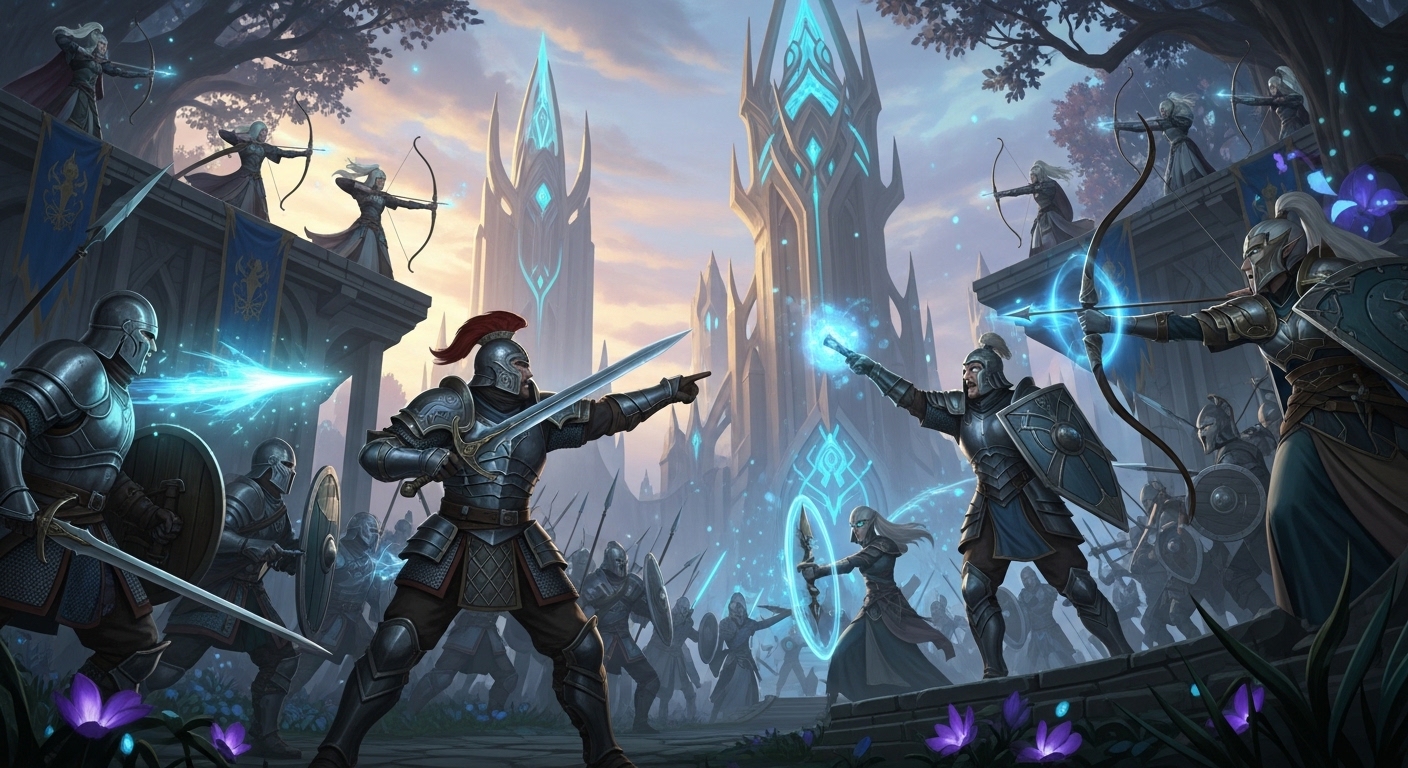
Introduction to a Magical World
In the crowded landscape of online strategy games, Elvenar stands out as a distinctive fantasy city-building experience that has captivated players since its launch in April 2015. Developed by the German studio InnoGames—known for hits like Forge of Empires and Grepolis—Elvenar transports players to an ancient, untouched world where they must choose between two distinct civilizations: the mystical Elves or the industrious Humans. This browser-based MMO combines traditional city-building mechanics with turn-based combat, resource management, and a unique culture system that sets it apart from typical entries in the genre
.
What makes Elvenar particularly appealing is its accessibility. The game runs smoothly on virtually any modern web browser and requires minimal hardware specifications—just 512 MB of RAM and any graphics card, including integrated ones
. This low barrier to entry has helped the game maintain a high playerbase nearly a decade after its initial release, contributing to InnoGames reaching 100 million Euros in revenue in 2015 alone
.
Choosing Your Path: Elves vs. Humans
The first and most significant decision players face in Elvenar is their choice of race. This isn’t merely a cosmetic difference; it fundamentally shapes the gameplay experience, aesthetic direction, and strategic approach throughout the entire game
.
The Elven Kingdom embodies sophistication and harmony with nature. Their architecture features sleek, organic designs intertwined with flowers, plants, and magical elements. Elven buildings curve and flow like living things, creating cities that appear grown rather than constructed. Their units and abilities lean toward magical prowess, making them ideal for players who appreciate ethereal beauty and mystical themes
.
The Human Empire, by contrast, represents ambition and industrial might. Their cities feature sturdy medieval architecture with practical, angular designs. Smokestacks, forges, and stone fortifications dominate the landscape, reflecting humanity’s engineering capabilities and martial traditions. Players who prefer a more grounded, historical-fantasy aesthetic will find the Human option more appealing
.
While both races share identical core mechanics—the same resource types, building functions, and research trees—their visual presentations and thematic flavors create genuinely different gaming experiences. This dual-path system effectively doubles the game’s replay value, encouraging players to eventually try both options
.
Core Gameplay Mechanics
City Building and Resource Management
At its heart, Elvenar is a city-builder where efficient space management proves crucial. Players begin with a small starter area containing their Main Hall and must carefully plan their expansion. Every building requires road connections to function, and the limited grid space forces meaningful decisions about placement and prioritization
.
The resource system operates on multiple tiers. Coins, generated primarily from Residences through taxation, serve as the basic currency for construction and upgrades. Supplies, produced in Workshops, fuel production activities, building improvements, and military training. As players advance, they unlock Manufactories that produce nine distinct types of goods across three classes: Basic (Marble, Steel, Planks), Refined (Crystal, Scrolls, Silk), and Precious (Elixir, Magic Dust, Gems)
.
A unique element is the Culture System. Unlike many city-builders where decorations serve purely cosmetic purposes, in Elvenar, cultural buildings directly impact productivity. Placing sanctuaries, sculptures, trees, and other ornaments increases citizen happiness, which in turn boosts resource generation rates. This creates a delicate balancing act between functional buildings and aesthetic elements, preventing players from simply min-maxing their layouts
.
The Technology Tree and Progression
Elvenar features an extensive research system with over 200 different improvements to discover
. Players earn Knowledge Points (KP) hourly (up to a default cap of 10 for free players) and through exploring the world map, completing quests, and participating in events. These points unlock new buildings, units, production capabilities, and game features
.
The progression is deliberately paced. Unlike mobile games that encourage or enable rapid advancement through grinding, Elvenar embraces a slower, more methodical rhythm. Research becomes increasingly expensive and demanding as players advance through the game’s 22 chapters, with later chapters potentially taking months—or even a full year for Chapter 22—to complete
. This design philosophy targets mature players who appreciate long-term planning over instant gratification
.
Exploration, Combat, and Diplomacy
The World Map
Beyond city management, Elvenar offers a vast World Map for exploration. Players can scout neighboring provinces, revealing territories controlled by NPC enemies or other players. Each province offers opportunities to acquire Relics—powerful artifacts that boost specific production types when collected
.
Conquering provinces serves dual purposes: it expands the player’s sphere of influence and unlocks the ability to scout further territories. However, claiming these lands requires either military force or diplomatic negotiation
.
Turn-Based Tactical Combat
Elvenar distinguishes itself from many browser strategy games through its hands-on combat system. Rather than sending units into auto-battle, players directly control their forces in turn-based tactical encounters on hexagonal grids
.
The combat system features a rock-paper-scissors dynamic among five unit types: Light Melee, Light Ranged, Mages, Heavy Melee, and Heavy Ranged. Each type has specific strengths against two others and weaknesses against two more. For example, Light Melee units excel against Light Ranged and Mages but struggle against Heavy Melee and Heavy Ranged opponents
. This creates strategic depth where scouting enemy compositions and counter-picking units becomes essential for victory.
Players can field up to five squads per battle, and the system allows for meaningful tactical decisions about positioning, engagement order, and ability usage. For those less interested in micromanagement, an auto-battle option exists, though manual control generally yields better results
.
Negotiation as Alternative
Not every conflict requires bloodshed. Players can choose to negotiate with province owners, offering goods in exchange for peaceful passage. This approach appeals to traders and builders who prefer economic development over military conquest. The choice between fighting and negotiating adds meaningful role-playing elements to the game, allowing players to define their kingdom’s character through actions rather than just dialogue choices
.
Community and Social Features
Fellowships and Cooperation
Elvenar emphasizes community interaction through its Fellowship system—essentially guilds that players can join after unlocking the appropriate technology in the second age. Fellowships provide group chat functionality, easier trading among members, and participation in Tournaments where collective effort earns rewards for all participants
.
The Neighborly Help mechanic encourages positive social interaction. Players can visit neighboring kingdoms daily to provide assistance, with the most valuable help being cultural boosts that double a building’s culture output for a limited time. This creates reciprocal relationships where active, helpful players tend to receive help in return
.
Trading Economy
The Trader feature forms the economic backbone of Elvenar’s multiplayer experience. Since each kingdom can only have three “boosted” goods types (one per class), players must trade to acquire non-boosted resources efficiently. The trading interface allows players to create offers exchanging their abundant goods for needed materials, with the system rating deals from one to three stars based on fairness
.
This interdependence creates a living economy where active trading proves essential for progression. Veteran players consistently advise focusing production on boosted goods and trading for everything else, as producing non-boosted items is notoriously inefficient
.
The Free-to-Play Experience and Controversies
Elvenar operates on a free-to-play model with optional in-game purchases using Diamonds—the premium currency. The game is genuinely playable without spending money, but the experience differs significantly between free and paying players
.
Patient players can progress through all content given sufficient time. As one dedicated free player noted after two years: “It’s all about strategy, patience, and of course, time involved. Don’t expect to come once a week and be at TOP… You can play it casual, or competitive, its pretty fun”
. However, the pace slows considerably in later chapters, and city expansions become increasingly difficult without premium purchases.
Critics argue that the game has become more aggressive in its monetization over time. Some players report hitting “paywalls” where progress effectively stalls without purchasing city expansions or premium cultural buildings
. Recent updates have introduced additional rare resources required for upgrading Ancient Wonders, which some community members view as deliberate monetization tactics
.
The developer, InnoGames, continues to update Elvenar regularly, adding new chapters, events, and features. However, these updates sometimes include controversial “balancing” changes that reduce existing player advantages, creating friction with the community
.
Events and Seasonal Content
Elvenar maintains player engagement through regular seasonal events like the Winter Magic, Autumn Zodiac, and various festival celebrations. These limited-time activities offer unique buildings that provide multiple benefits—combining population, culture, and goods production in single structures. Veteran players consistently recommend prioritizing these events, as the rewards often prove superior to standard buildings available through regular progression
.
The Magic Academy introduces spell-casting mechanics, allowing players to bless buildings with temporary boosts like increased production or extended Knowledge Point caps. Spells such as “Power of Provision” for Workshops and “Magical Manufacturing” for Manufactories reward active play and strategic timing, adding another layer of optimization for dedicated players
.
Conclusion
Elvenar represents a mature, thoughtfully designed city-building experience that respects players’ time while offering genuine strategic depth. Its dual-race system, culture mechanics, and turn-based combat create a unique identity in the browser strategy genre. The game’s emphasis on patience, planning, and community interaction appeals to players seeking a long-term hobby rather than a quick diversion.
However, potential players should approach with realistic expectations about the free-to-play model. While entirely possible to enjoy without spending money, Elvenar rewards those who either invest financially or commit significant time. The slow pacing that defines the game’s charm can become frustrating for those accustomed to faster progression systems.
For fans of fantasy settings, city-building, and strategic combat who appreciate a methodical pace, Elvenar offers hundreds of hours of engaging gameplay. Its nearly decade-long lifespan and continued development demonstrate InnoGames’ commitment to the title, ensuring that the world of Elvenar will continue evolving for years to come.
Leave a Reply