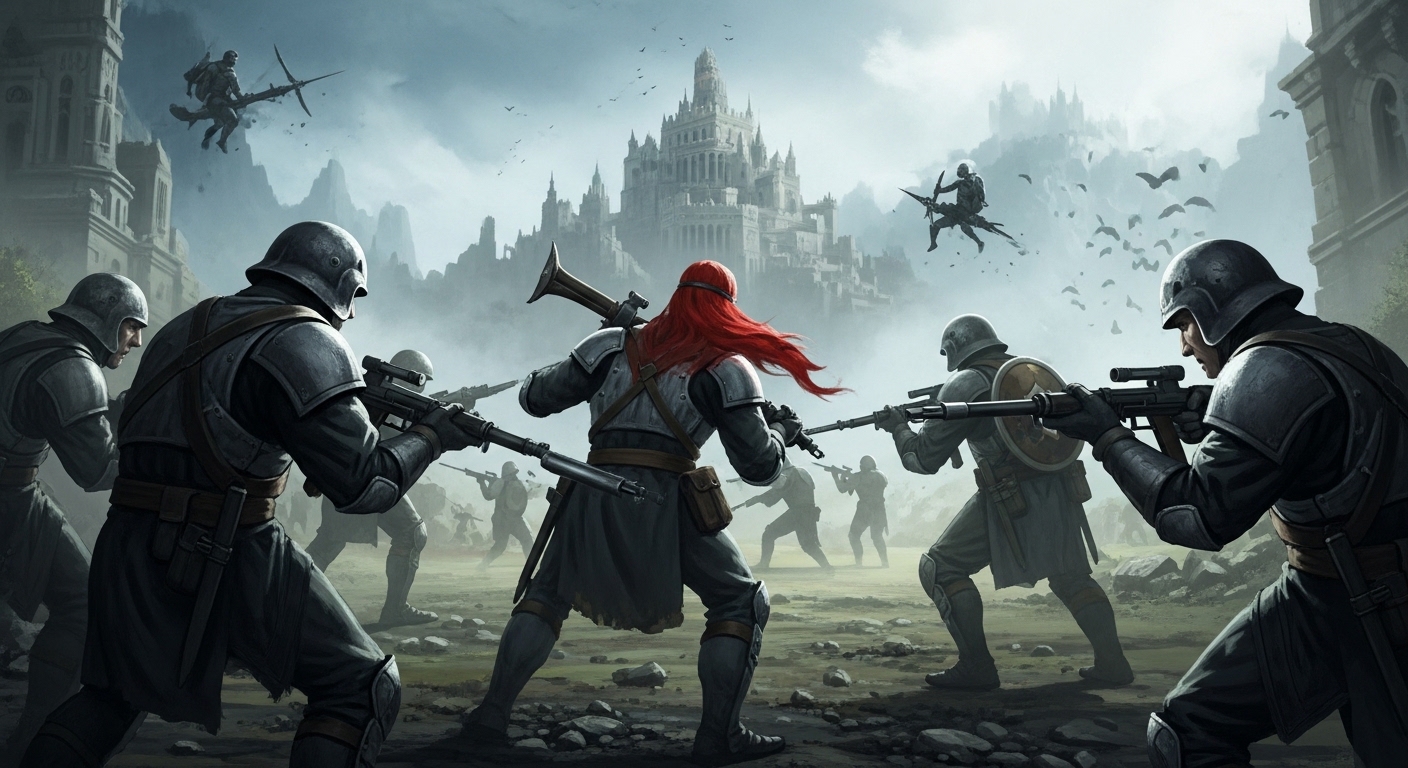
The Enduring Appeal of Elvenar
In the crowded landscape of browser-based strategy games, few titles have demonstrated the longevity and dedicated player base of Elvenar, the fantasy city-building game developed by Hamburg-based InnoGames. Since its launch, Elvenar has carved out a unique niche by combining city-building mechanics with turn-based tactical combat, all wrapped in a visually stunning fantasy aesthetic that distinguishes it from its more historically-grounded sibling, Forge of Empires
.
Elvenar invites players to choose between two distinct factions—Elves or Humans—each offering unique architectural styles, units, and gameplay approaches. The Elves favor graceful, nature-inspired structures with organic curves and forest aesthetics, while Humans construct imposing stone buildings with medieval architectural elements. This fundamental choice shapes the visual identity of each player’s city throughout their journey
.
Recent Content Expansions: Chapters 22-24
The past year has been particularly significant for Elvenar’s content roadmap, with the release of three major chapter updates that have substantially expanded the game’s narrative and mechanical depth.
Chapter 22 arrived in September 2024, continuing the ongoing storyline that has captivated players for years
. However, it was Chapter 23 – Secrets of the Unicorn, released in May 2025, that truly captured the community’s attention. This chapter introduced a compelling narrative arc centered on the resurrection of Vallorion, a malevolent deity threatening the realm with natural disasters. Players are tasked with seeking an audience with Enar, the god of the forest, by constructing a replica of the Treants’ sacred sanctuary and planting the legendary Unicorn Tree
.
Chapter 23 also brought significant gameplay innovations, most notably Divine Protection, a powerful new ability for level 5 units that allows them to block debuffs from enemy unit types they’re strong against. This mechanic promises to influence not only Chapter 23 but future content as well
. Additionally, players gained access to two new Ancient Wonders: the Unicorn Park, which produces Dryads every three hours and enhances the Magic Academy’s disenchantment bonus, and the Fabulous Delivery Service, which boosts standard good production and reduces the decay of canned goods
.
Building upon this momentum, Chapter 24 launched in November 2025, further extending the endgame content for dedicated players
. These regular chapter releases demonstrate InnoGames’ commitment to providing long-term progression for its established player base, though some community members have expressed fatigue with this approach as the primary content delivery method
.
The Event Calendar: Constant Activity
Elvenar’s event structure remains one of its most engaging features, with a steady stream of limited-time events keeping the gameplay experience fresh. The 2025-2026 period has seen an impressive array of themed events, each introducing unique buildings, quests, and rewards
.
Recent highlights include The Living Chorus (March 2026), Cosmic Phoenix Rite (March 2026), The Summit Trials (February 2026), and The Duplication Disaster (December 2025). Seasonal staples like Winter Magic (November 2025) and Autumn Zodiac (August 2025) continue to anchor the event calendar, providing familiar touchstones for returning players
.
These events serve multiple purposes: they offer exclusive buildings that enhance city production, provide narrative variety through questlines, and create urgency that encourages regular logins. The Elvarian Games (June 2025) and Crystal Expedition (July 2025) exemplify how InnoGames varies event themes while maintaining core mechanics that players have come to expect
.
The Crafting Controversy: Community Friction
Despite the steady content pipeline, Elvenar’s community has experienced significant turbulence surrounding the Crafting Updates implemented in early 2026. What InnoGames positioned as an improvement to the Magic Academy crafting system has been met with substantial player backlash
.
The update increased crafting slots from five to six but fundamentally altered the reward structure. According to player reports from the Beta server, the new system drastically reduced the availability of valuable long-term time boosters (20-hour, 14-hour, and 8-hour variants), replacing them with minimal rewards like 10-15 minute boosters, small amounts of knowledge points, and common relics
.
Particularly concerning for players is the apparent removal of reliable access to Sips of Clarity, military buildings, and pet food from regular crafting rotations. While three “bonus” slots occasionally offer premium items, they require expensive blueprint investments—creating a system that many players interpret as a disguised monetization push rather than a genuine improvement
.
Community feedback has been overwhelmingly negative, with veteran players expressing frustration at what they perceive as a pattern of nerfs disguised as enhancements. One player noted: “This crafting overhaul, I believe, is the biggest nerf the game has ever experienced”
. The controversy highlights a growing tension between InnoGames’ monetization strategies and player expectations, particularly among long-term community members who remember more generous reward structures.
Community Manager Silmaril acknowledged the feedback, stating that the mechanic had been “majorly reworked since the first version appeared on Beta” and that additional feedback would be welcomed once live server players experienced the changes
. However, skepticism remains high, with players questioning the purpose of Beta testing when controversial changes proceed to live servers despite negative reception.
Spire of Eternity and Guardian Updates
Beyond chapters and events, InnoGames has invested in expanding The Spire of Eternity, one of Elvenar’s key endgame features. Recent updates have introduced new Ancient Wonders, shop improvements, and additional challenges for high-level players
. The Elvenar Guardians system, introduced in October 2025, represents another significant addition, offering players new ways to develop their cities and armies
.
These updates demonstrate InnoGames’ strategy of layering new systems atop the established foundation, providing multiple progression paths for different player types—whether they prefer narrative-driven chapter advancement, competitive tournament play, or the methodical optimization of city layout and production chains.
The 10-Year Milestone and Future Outlook
As Elvenar approaches its tenth anniversary, the game stands at a crossroads. The 2026 preview announcement hinted at two additional chapters in development, though community response suggests some players are seeking innovation beyond the established chapter-release cycle
. The repeated formula of new chapters with guest races, Ancient Wonders, and expanded settlements—while proven—may be showing signs of diminishing returns in terms of player excitement.
The crafting controversy serves as a microcosm of broader challenges facing mature free-to-play games: balancing sustainable monetization with player satisfaction, maintaining trust through transparent communication, and evolving systems without alienating established players. InnoGames’ handling of these tensions will likely determine whether Elvenar continues to thrive in its second decade or begins a gradual decline.
Community Resources and Third-Party Support
One indicator of Elvenar’s health is the robust ecosystem of community-created tools and resources. The iDavis Elvenar database has become an essential companion for serious players, tracking every building, event, and game mechanic with meticulous detail. This resource has evolved alongside the game, recently introducing a chapter selection feature and a new City Planner tool
.
The existence of such comprehensive third-party resources speaks to the dedication of Elvenar’s player base and the complexity that keeps players engaged long-term. These tools transform what could be overwhelming information management into strategic decision-making, allowing players to optimize their cities with precision.
Conclusion
Elvenar remains a visually striking and mechanically deep city-builder that continues to receive substantial content updates from its developer. The 2025-2026 period has brought narrative expansion through Chapters 22-24, regular event content, and system additions like the Guardians feature. However, the crafting update controversy reveals underlying tensions between InnoGames’ business model and player expectations.
For new players, Elvenar offers an accessible entry point with its beautiful aesthetics and gradual learning curve. For veterans, the game provides ongoing challenges through tournament competition, fellowship adventures, and the endless optimization puzzle of city design. Whether InnoGames can navigate the current community dissatisfaction while maintaining the content velocity that keeps players engaged will determine Elvenar’s trajectory in the years ahead.
As the game industry increasingly shifts toward mobile-first experiences and battle passes, Elvenar’s commitment to its browser-based roots and its dedicated community of city-builders represents a refreshing alternative—one that hopefully can sustain itself without sacrificing the player-friendly systems that built its reputation.