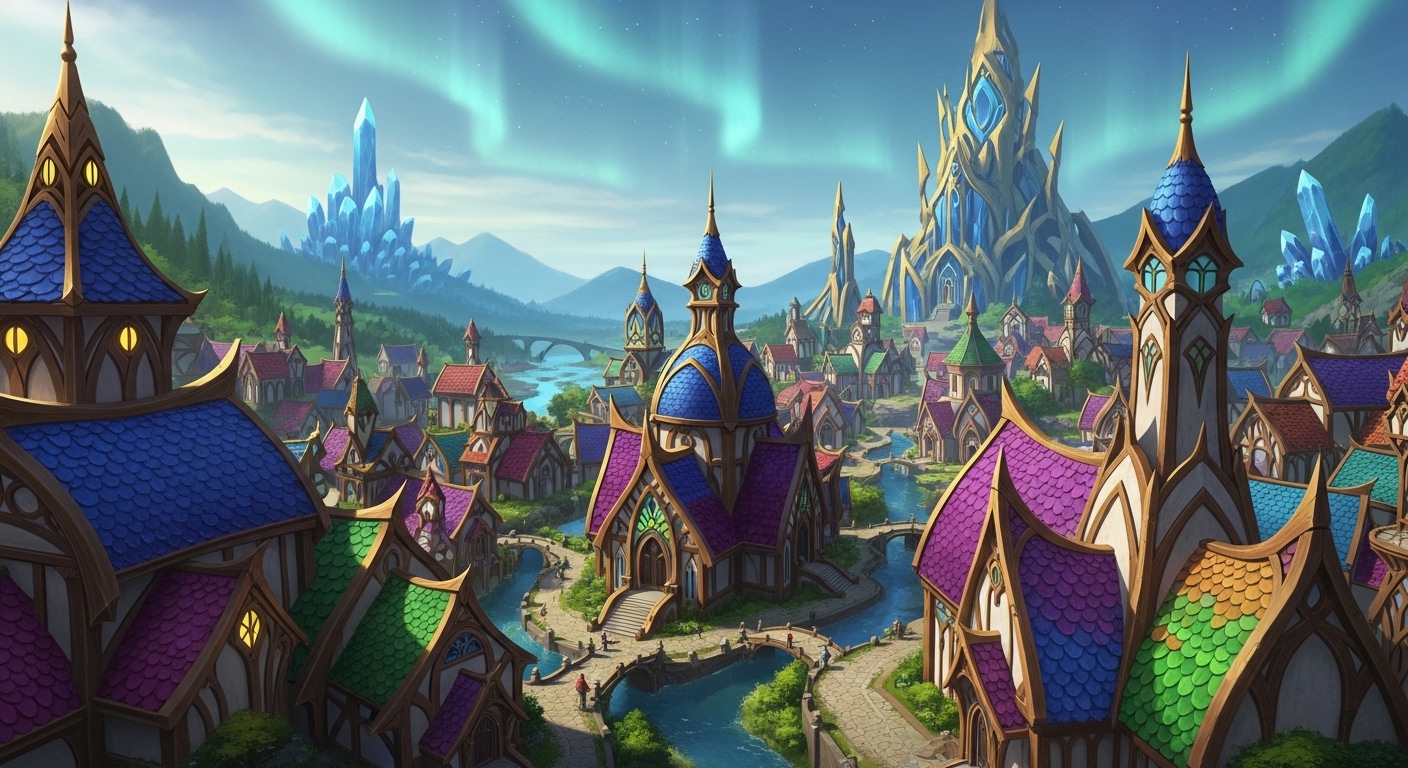
In the city-builder strategy game Elvenar, few technologies cause as much quiet confusion—or offer as much subtle power—as Advanced Scouts. At first glance, it appears to be just another minor research option: a small, temporary bonus to scouting. In reality, it is one of the most important permanent upgrades you will ever unlock. Understanding Advanced Scouts is the difference between a smooth, prosperous expansion and a slow, resource-starved grind.
This guide will explain exactly what Advanced Scouts does, how its math works, why it matters for both fighters and negotiators, and how to use it strategically across all chapters of the game.
What Exactly Are Advanced Scouts?
Advanced Scouts is a special, repeatable technology that appears near the beginning of most chapters (usually as the first or second research option after unlocking the chapter’s new settlement buildings). Unlike standard technologies that unlock a new building or unit, Advanced Scouts provides a permanent, multiplicative reduction to three key activities on the world map:
- Scouting cost (the gold and sometimes goods required to send your scout to a new province)
- Catering cost (the goods required to negotiate with a province instead of fighting)
- Combat difficulty (the inherent strength of enemy units when you choose to fight)
Crucially, this reduction applies to all provinces you scout after completing the research. It is not a temporary boost, nor does it affect provinces you have already discovered.
The Mathematics of Diminishing Returns
Each Advanced Scouts technology reduces the current cost and difficulty by approximately 25%. However, because it applies to an already-reduced number, the effective percentage improvement from one chapter to the next shrinks. This is known as diminishing returns, and it is intentional game design.
Let us walk through a concrete numerical example. Assume a brand new province in Chapter 1 has a baseline cost of 100 units of gold to scout, requires 100 goods to cater, and has enemies with 100% of their normal strength.
- After completing Advanced Scouts in Chapter II, the costs drop to 75% of Chapter I’s baseline.
New cost: 75 gold, 75 goods, 75% enemy strength.
Actual reduction from previous chapter: 25% - After Chapter III’s Advanced Scouts, the reduction is 25% of *75*, not of 100.
New cost: 56.25 gold, 56.25 goods, 56.25% enemy strength.
Actual reduction from previous chapter: 18.75% - After Chapter IV: 25% of 56.25 = 42.19.
Reduction: 14.06% - After Chapter V: 31.64.
Reduction: 10.55% - After Chapter VI: 23.73.
Reduction: 7.91% - After Chapter VII: 17.80.
Reduction: 5.93%
As you can see, the earliest Advanced Scouts technologies provide massive, game-changing reductions. The later ones still help, but the marginal benefit shrinks. However, because province costs naturally increase exponentially with distance from your city, even a 5–6% reduction late-game can save millions of resources.
Why This Matters: The Hidden Cost of Ignoring Advanced Scouts
Many new players make the same mistake: they beeline for the “exciting” technologies like new troops or guest race buildings, leaving Advanced Scouts for later. This is a trap. Here is why.
In Elvenar, the world map is not just a side activity—it is central to progression. Provinces provide:
- Relics needed to boost your boosted goods production
- Expansion slots to place more buildings
- Access to tournaments and fellowship activities
- Necessary resources for certain event quests
If you scout too many provinces before researching the current chapter’s Advanced Scouts, you permanently lock in higher costs for those provinces. The game does not retroactively reduce them. Consequently, you might find yourself facing a province that costs 500,000 gold to scout and 50,000 goods to cater, simply because you scouted it two chapters too early.
Conversely, a player who always researches Advanced Scouts immediately upon unlocking a new chapter will pay a fraction of those costs for all subsequent provinces. Over the course of 15–20 chapters, the cumulative savings reach astronomical levels.
Strategic Implications for Fighters vs. Negotiators
Your playstyle affects how much you should prioritize Advanced Scouts.
For the Pure Fighter
If you prefer to defeat provinces through auto-fight or manual combat, Advanced Scouts remains vital. The 25% reduction to enemy strength is not merely a number—it directly affects:
- Squad size of the enemy relative to yours
- Damage dealt by enemy units
- Health pools of enemy troops
Fighting a province at 75% strength vs. 100% strength can mean the difference between losing zero units and losing half your army. Since training troops costs time and resources (especially orcs and other sentient goods later on), reducing enemy difficulty saves you more than just goods—it saves hours of training time.
For the Pure Negotiator
If you prefer to cater provinces using goods, Advanced Scouts is arguably even more critical. Catering costs scale aggressively with province difficulty. A province that costs 10,000 marble at 100% difficulty might cost only 5,600 marble at 56% difficulty (Chapter III). That is a 44% real savings.
Moreover, because negotiators must maintain diverse goods production across all tiers, reducing catering costs means you can:
- Allocate more goods to upgrading buildings
- Trade less frequently on the market
- Participate more heavily in tournaments without bankrupting your stockpiles
For the Hybrid Player
Most players mix fighting and negotiating depending on the province and their current troop availability. Advanced Scouts benefits both approaches simultaneously, making it the single most efficient research for hybrid players. You pay once (in knowledge points) and receive permanent benefits for both combat and catering.
When to Research Advanced Scouts: A Turn-by-Turn Priority
Given the above, the optimal strategy is clear: Research Advanced Scouts as the first or second technology in every chapter. The only exception might be if you are desperately blocked by a mandatory guest race building that produces a unique resource required for further research. Even then, delay Advanced Scouts only as long as absolutely necessary.
Here is a recommended priority order at the start of any new chapter:
- Advanced Scouts (if available)
- First Guest Race Production Building (if required to unlock the rest of the tech tree)
- Any other scouting or expansion-related techs
- Military upgrades
- Guest race culture and decoration techs
If a chapter forces you to build a specific portal or settlement structure before Advanced Scouts appears, complete that minimum requirement, then immediately pivot to Advanced Scouts before scouting a single new province.
Common Misconceptions and Mistakes
Let us address three frequent misunderstandings about Advanced Scouts.
Mistake #1: “I’ll just scout a few provinces now and get Advanced Scouts later.”
This is the most dangerous error. Every province you scout before researching Advanced Scouts is permanently more expensive and more difficult. Unless a quest explicitly requires you to scout immediately, wait.
Mistake #2: “Advanced Scouts only helps scouting cost, not combat.”
False. The technology explicitly reduces both negotiation and combat difficulty. Check your province window before and after researching—you will see enemy squad sizes drop.
Mistake #3: “Later Advanced Scouts are useless because the reduction is tiny.”
While the percentage reduction shrinks, the absolute resource savings remain significant. In later chapters (e.g., Fairies, Orcs and Goblins, Woodelves), a single province might cost over 1 million gold to scout. A 6% reduction saves 60,000 gold per province—multiplied by dozens of provinces, that is millions saved.
Practical Example: Two Players, Same Chapter
Imagine two players reaching Chapter V (Dwarves) at the same time. Both have scouted 50 provinces.
- Player A researches Advanced Scouts immediately, then scouts 30 more provinces over the chapter. Each of those 30 provinces costs 32% of the baseline (due to cumulative reductions from Chapters II, III, IV, and V).
- Player B ignores Advanced Scouts, scouts those same 30 provinces first, then researches Advanced Scouts later. Each of those 30 provinces costs 100% of the baseline.
By the end of the chapter, Player A has saved roughly 68% of all scouting, catering, and combat difficulty on those 30 provinces. That could be millions of gold, hundreds of thousands of goods, and dozens of hours of troop training.
Now extrapolate that over 15 chapters. Player A will reach the endgame provinces faster, with more resources, and with less frustration.
Advanced Scouts and Events
Special events (like the Fellowship Adventure, Pharaoh event, or Misty Forest) often include quests that require scouting provinces or solving encounters. If you have neglected Advanced Scouts, those event quests become expensive barriers. A player up-to-date on Advanced Scouts can complete those quests cheaply and quickly, earning more event currency and better rewards.
Final Verdict: Always Prioritize Advanced Scouts
To summarize:
- What it does: Permanently reduces scouting cost, catering cost, and combat difficulty for all future provinces by ~25% (multiplicative, diminishing returns).
- When to research: As soon as it becomes available in each new chapter, before scouting any new provinces.
- Who benefits: Everyone—fighters, negotiators, hybrids, casuals, and hardcore min-maxers alike.
- What to avoid: Never scout a province before researching the current chapter’s Advanced Scouts unless forced by a quest.
In the grand strategy of Elvenar, knowledge points are abundant but resources are not. Advanced Scouts is one of the few technologies that directly saves you resources forever. Treat it with the respect it deserves, and your city will prosper through every age from the humble beginnings of Chapter I to the advanced sentient goods of the Amuni and beyond.